Midas has held a specific reputation in pro live sound for over four decades: the consoles that sound the most analog in a digital world. Founded in the UK in 1970, Midas built its early reputation on the XL3 and XL4 analog touring consoles — instruments that defined arena rock sound through the 1980s and 1990s. After Behringer acquired the brand in 2009, Midas continued the analog character lineage in digital form via the Pro series and the Heritage 3000 (which is, despite the name, a current-production digital flagship). For engineers who want a digital console that sounds like an XL4 — warm, dimensional, with a characteristic low-mid presence — Midas remains the natural specification.
This guide covers the modern Midas flagship line from a professional FOH/monitor engineer’s perspective.
Midas Pro X: the flagship
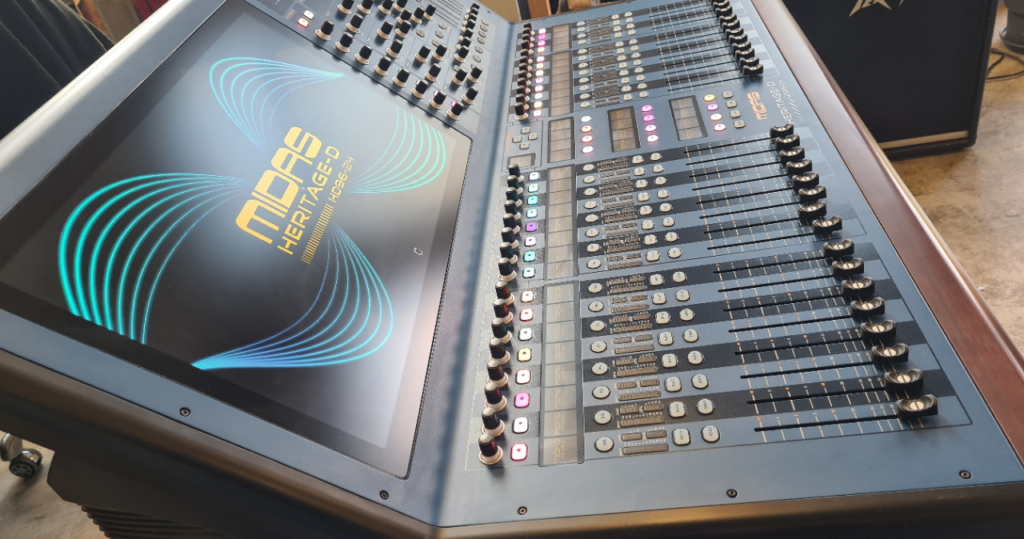
Midas Pro X is the current flagship — 96 input channels, 35 output buses, 28-fader surface (expandable to 56), and the Midas Heritage processing engine that emulates the analog character of the legacy XL series. Pro X systems with full DL series stage I/O run 65,000 to 110,000 USD depending on configuration.
Pro X’s defining technical features:
- Heritage 3000 processing engine — the core DSP architecture shared with Heritage 3000 console
- DL series modular stage I/O (DL231, DL251, DL252) — robust touring-grade racks with redundant network and power
- AES50 networking — proprietary low-latency network shared with Behringer X32 and Klark Teknik DN9650 bridges
- POPulation groups — dynamic VCA-style fader grouping for live mixing
Pro X is widely deployed on tours where Midas character is the explicit specification — bands that want the XL4 sound but require modern recall, automation, and DSP processing depth. Major tour clients include heritage rock acts and established singer-songwriters who want the British analog flavor.
Midas Pro 9, Pro 6, Pro 2
Pro 9 (96 channels, 27-fader surface) was the predecessor flagship before Pro X. Many Pro 9 frames remain in active touring service and on rental house inventories. Used Pro 9 frames trade at 30,000 to 50,000 USD.
Pro 6 (64 channels, 27-fader surface) is the mid-format flagship — same Heritage processing engine as Pro 9/X at smaller channel count. New Pro 6 systems run 45,000 to 65,000 USD. Pro 6 is the natural choice for touring acts with smaller channel count requirements who still want full Midas character.
Pro 2 (64 channels, 21-fader surface) is the most compact of the Pro series. Pricing 28,000 to 40,000 USD. Pro 2 is widely used on theater tours, mid-size corporate events, and rental inventories.
Midas Heritage 3000
The Heritage 3000 (96 input channels, 31-fader main surface plus 13-fader extender, in-line monitor architecture) is Midas’s flagship installed and broadcast console. It shares the same processing engine as Pro X but with an installed-style architecture and surface design rather than a touring-style modular surface. Heritage 3000 pricing runs 90,000 to 140,000 USD.
The Heritage 3000 is the rare flagship that explicitly targets engineers who want to mix on a digital console as if it were an XL4 — same fader layout philosophy, same in-line topology, same channel strip ergonomics. For installed venues with an analog-trained engineering staff, Heritage 3000 is a natural choice.
Sonic character: Midas vs the alternatives
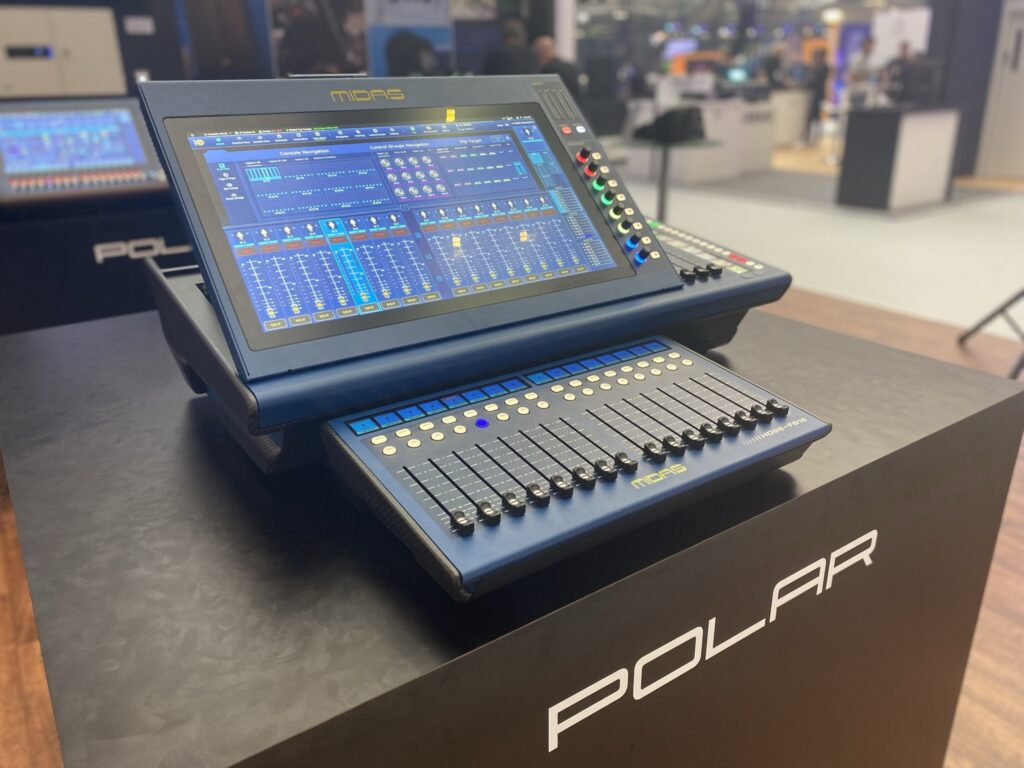
What makes Midas sound like Midas is the channel strip processing topology — specifically, the Heritage processing engine’s dynamics and EQ algorithms model the analog character of the XL series rather than aiming for transparency. The result is a console that imparts a low-mid warmth and a characteristic high-frequency softening that engineers describe as « musical » or « forgiving » — particularly useful on aggressive vocal sources, brass, and rock guitars.
Compared to alternatives:
- vs DiGiCo Quantum — DiGiCo is more transparent and more processing-flexible; Midas is warmer and more characterful. See DiGiCo vs Avid VENUE comparison for related context.
- vs Yamaha Rivage — Yamaha is more neutral; Midas is more colored. See our Yamaha vs Midas Pro flagship live comparison.
- vs Avid VENUE S6L — Avid is purely transparent; Midas brings Heritage analog character. See Avid VENUE S6L guide.
Where Midas fits in a 2026 facility
Midas is the natural specification for:
- Heritage rock and singer-songwriter touring acts
- Installed live venues with an analog-trained engineering aesthetic
- Theater productions (particularly those with character-focused musical content)
- Mid-tier festival main stages where character matters
- Houses of worship with traditional music programs at the flagship tier
It’s a less natural choice for pure broadcast applications (where Studer Vista, Lawo mc², and Calrec are the incumbent specifications) or for the most processing-intensive arena tours (where DiGiCo Quantum 7 typically wins).
For application-specific guidance, see best digital mixing console for arena tour 2026.
Where to buy Midas Pro and Heritage consoles
New Midas flagship consoles are available from Sweetwater (US), B&H Photo (US), and Thomann (EU). Thomann is competitively priced on the Pro 2 and Pro 6 in the European market. Sweetwater handles complete Pro X and Heritage 3000 installations with on-site support.
Used Pro 9 and Pro 2 frames trade on Reverb.com and through specialist live sound dealers. Heritage 3000 used market is thinner — most installations stay in service for 10+ years.
Bottom line
Midas Pro X and Heritage 3000 are the right specifications when you want a digital console that sounds analog. The Heritage processing engine remains a meaningful sonic differentiator in 2026, and the Midas brand carries weight with engineers trained on the legacy XL4 lineage.
For the broader context on professional mixing consoles, return to our professional mixing console 2026 expert guide.
→ See all our Le Fader ratings
See mixing consoles on Thomann →
🎚️ Essential accessories for your mixing console
As an Amazon Associate I earn from qualifying purchases.