Few brands have shaped commercial recording the way Solid State Logic has. Founded in Oxford in 1969 by Colin Sanders, SSL became the de facto standard in major recording studios worldwide from the late 1970s onward. The SSL sound — punchy, controlled, with the unmistakable character of the SSL bus compressor — defined three decades of pop and rock production. In 2026, SSL remains a benchmark for commercial studios, with a product line spanning fully analog flagships, hybrid analog-digital workflows, and modern in-line consoles.
This guide covers the SSL line from a professional buyer’s perspective: what each console is built for, what makes it sound the way it does, and how to choose between them.
The SSL 4000 series: the console that defined modern records
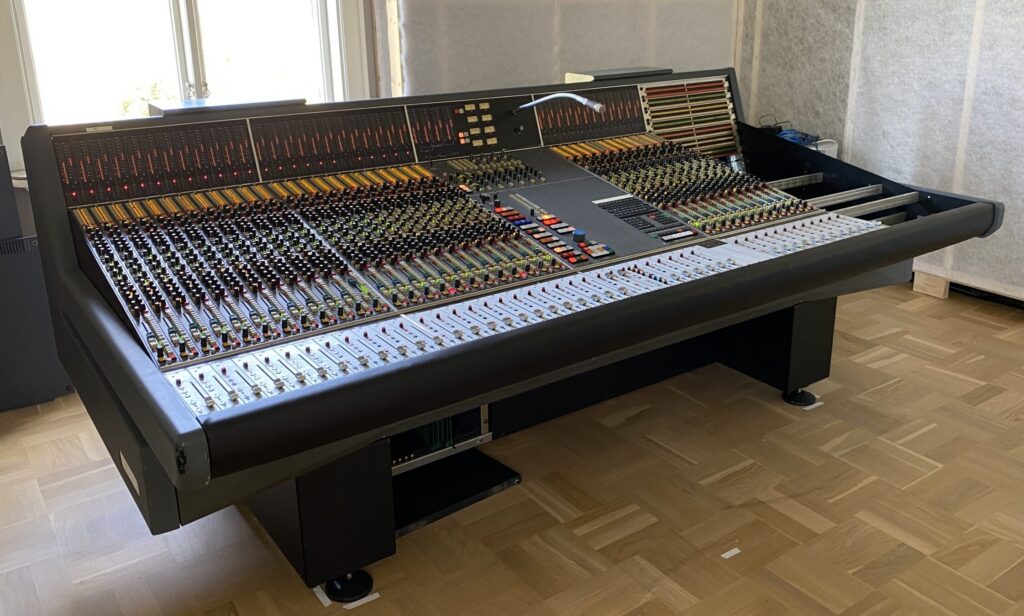
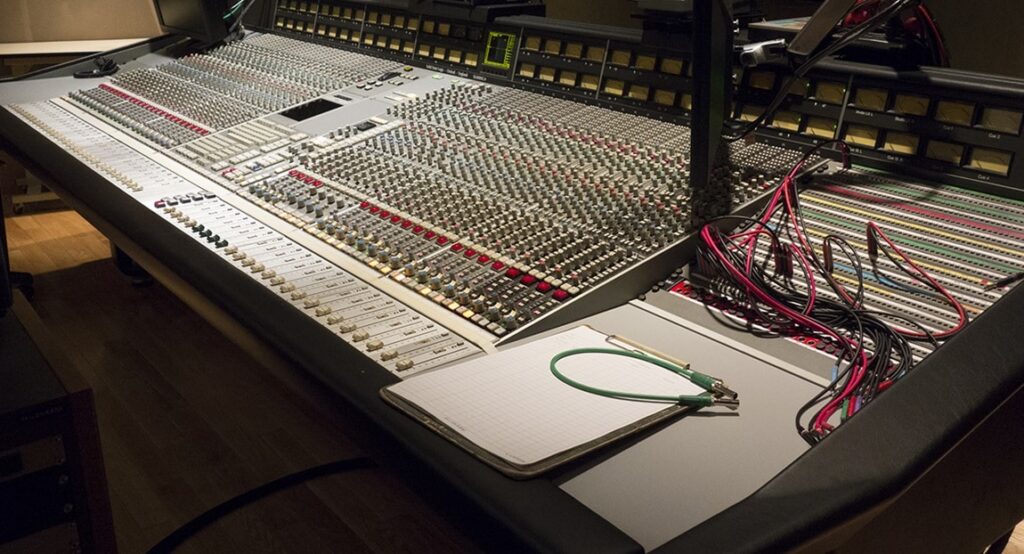
The SSL 4000 series (4000B, 4000E, 4000G, 4000G+) is the most recorded-on console family in history. From Quincy Jones’s Thriller to Nirvana’s Nevermind, from countless Madonna sessions at Olympic Studios to thousands of UK pop records at Sarm West, the 4000 was everywhere. Production ran from 1979 to the mid-1990s, with progressive revisions of the channel strip EQ (the famous « black knob » 02 EQ versus the « brown knob » 242 EQ) and the master section bus compressor.
The defining characteristics: a fast attack, the iconic Quad bus compressor (now sold as a standalone 500-series and rack module), the in-line monitoring topology that gave engineers two channels of routing per physical channel strip, and total recall — a revolutionary feature in 1980 that recorded all knob positions for session restoration.
For deep history of the series, see our SSL 4000 series history article. Restored 4000G and 4000G+ frames currently trade between 80,000 and 180,000 USD on the used market depending on size, condition, and whether automation has been retrofitted.
Modern SSL: Origin, Duality, AWS, ORIGIN16/32
SSL’s current analog console line addresses different segments of the professional market:
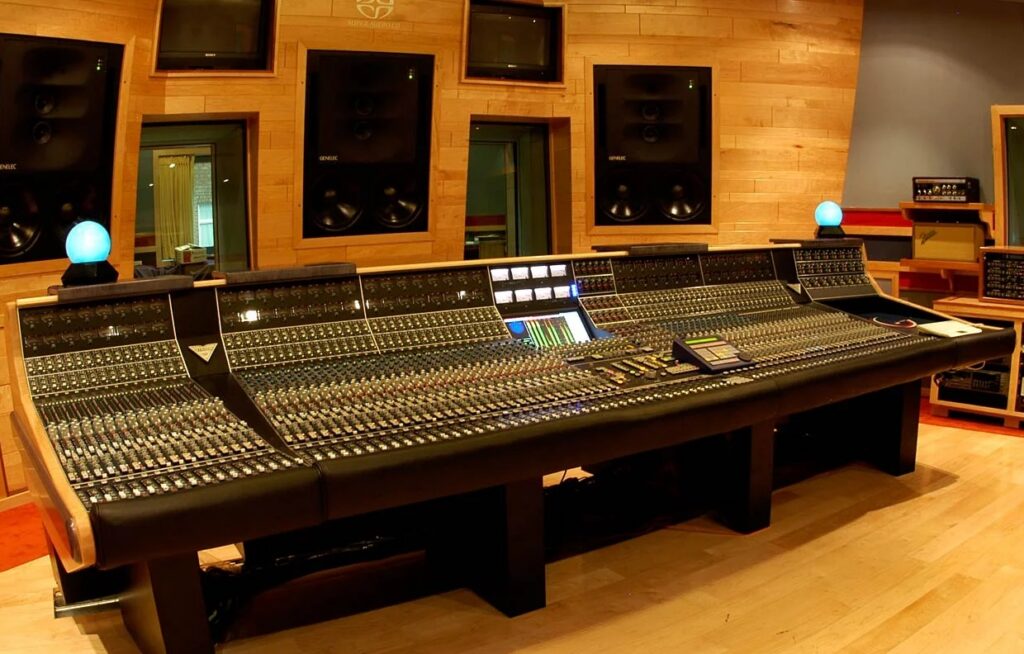
SSL Origin (32 channels in-line, ~80,000 USD / ~73,000 EUR) is a pure analog tracking and mixing console aimed at modern commercial studios. The Origin uses SuperAnalogue circuitry — the same approach SSL introduced on the 9000 series in the late 1990s — for extended frequency response and low noise. The bus compressor is built in, the channel strip carries the E-series EQ topology, and the console accepts 500-series modules in the center section.
SSL Duality δelta (24, 36, or 48 channels, 130,000 to 220,000 USD) is SSL’s flagship hybrid console. It combines analog signal path with deep DAW integration: every fader is motorized and controls Pro Tools, Logic, or Cubase via HUI/MCU; every channel can be reconfigured between analog summing and ITB workflow per session. Duality is the console of choice for studios that need both worlds.
SSL AWS 924/948 (24 or 48 channels) is the smaller-format hybrid, popular with high-end project studios and producers who run hybrid workflows in modest control rooms.
SSL ORIGIN16 and ORIGIN32 are 16- and 32-channel rack-format summing systems aimed at engineers who mix in the box but want analog summing through an SSL bus. Pricing starts around 6,500 USD for ORIGIN16.
SSL System T and Live: digital flagship for broadcast and live
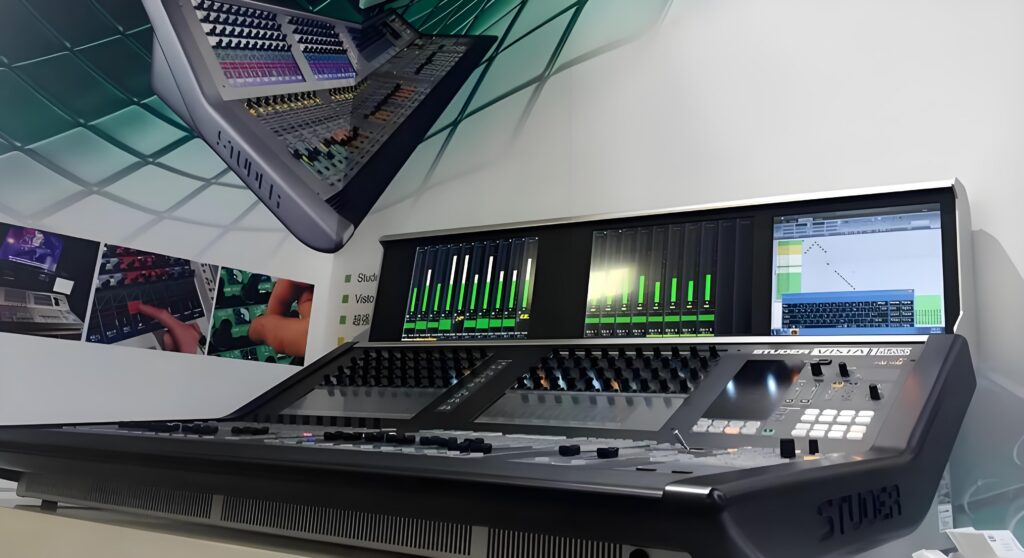
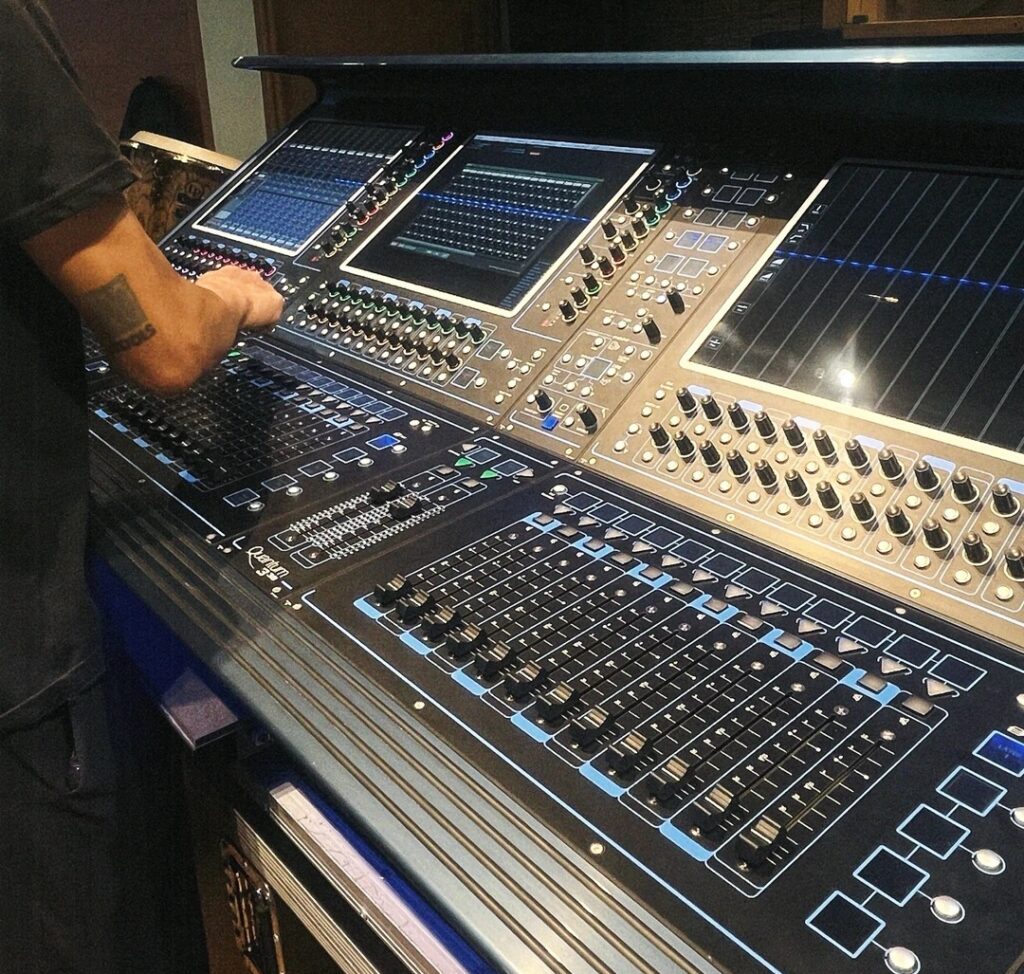
For broadcast and large-format live applications, SSL produces the System T broadcast console and the SSL Live L350/L550 for touring. System T has gained traction at major broadcasters (Sky Sports, BBC outside broadcast units, NHK) thanks to its IP-native architecture and Tempest processing engine. SSL Live competes directly with DiGiCo Quantum on flagship FOH applications, though DiGiCo retains the larger touring market share.
Sonic character: what does an SSL sound like?
The SSL sound is hard to summarize without lapsing into cliché, but a few things are objectively true: the SSL channel strip EQ has a characteristic bell-shape with audible phase behavior at extreme settings, the bus compressor produces a fast, glued-together master bus regardless of program material, and the SuperAnalogue topology in modern Origin/Duality has measurably lower THD than the original 4000 series — sometimes too clean for engineers who want vintage character, in which case Neve or API are typical alternatives.
For a head-to-head, see SSL vs Neve comparison and digital vs analog pro mixing console comparison.
Where SSL fits in a 2026 facility
SSL Origin and Duality are the natural choice for a commercial recording facility that wants analog character with modern reliability and DAW integration. The 4000-series legacy market remains active, but vintage frames require serious maintenance — annual cleaning, capacitor replacement every 15-25 years, and ongoing fader reconditioning. Budget 8,000-15,000 USD per year on an active 4000-series console for service.
For broadcast and live, System T and SSL Live are credible competitors but face entrenched competition from Lawo, Calrec, and Avid VENUE S6L.
Where to buy SSL consoles
New SSL consoles are available from Sweetwater (US), B&H Photo (US), and Thomann (EU). Sweetwater handles white-glove installations of Duality and Origin frames; Thomann offers competitive EU pricing on AWS and ORIGIN16/32. Vintage 4000-series frames typically come through Vintage King Audio (US) or Funky Junk (UK), with full restoration documentation.
Bottom line
SSL remains a default choice for commercial recording facilities in 2026. The Origin offers the cleanest entry into the SSL ecosystem at 80K USD; the Duality δelta is the workhorse for serious hybrid studios; and the 4000-series legacy market continues to deliver world-class character for engineers willing to maintain a vintage frame.
For the broader context on professional mixing consoles, return to our professional mixing console 2026 expert guide.