
The Neve VR series occupies a specific and increasingly valuable position in pro audio history: the bridge between the legacy Class A transformer-coupled Neve 80-series and the modern AMS Neve era that followed in the late 1990s. Produced from 1991 through 2000, the VR60 and VR72 were Neve’s flagship installation consoles during a transitional decade — automation was now standard, recall was sophisticated, and the analog signal path was approaching its mature form. By 2026, restored VR frames have become coveted vintage instruments, with prices on the major-frame market reaching 100,000-150,000 USD.
This guide covers the Neve VR series history and its place in 2026 pro audio.
VR series origins and production history
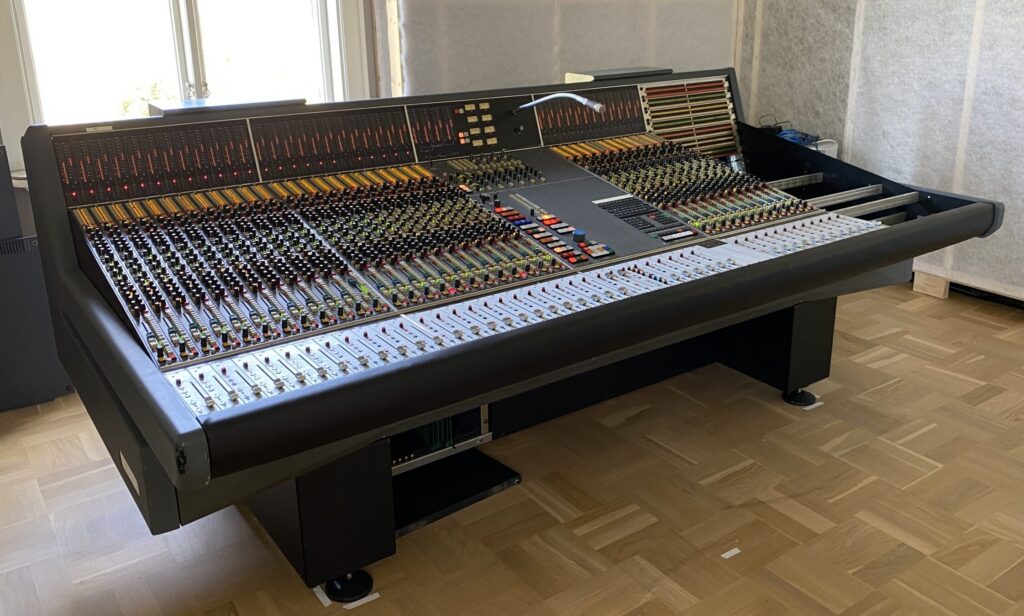
The VR series launched in 1991 as Neve’s response to the dominance of the SSL 4000G in commercial recording. Where the 1980s Neve V series had targeted the same automation-and-recall market segment, the VR added several refinements: more sophisticated Flying Faders or GML automation, deeper recall capability, more flexible bus routing, and progressive refinements to the channel strip topology.
Two main configurations dominated the production run:
VR60 — 60-channel frame, in-line monitoring, the more common configuration installed at mid-to-large commercial recording studios. Production ran from 1991 to approximately 1998.
VR72 — 72-channel frame, the largest VR configuration, installed at flagship facilities targeting orchestral scoring and large-ensemble work. Production overlapped with VR60 through the mid-1990s.
Total VR production was relatively small — estimates suggest 200-300 frames across the production run, compared to 1,500+ SSL 4000-series frames over a similar period. This scarcity contributes to current vintage pricing.
VR sonic character: the late-Neve aesthetic
The VR represents a specific and distinct phase in the Neve sonic timeline. The signal path uses Class AB amplifier topology (versus the Class A of the legacy 80-series) with output transformers from St. Ives or Carnhill (depending on production year). The channel strip topology is derived from the 1081 with progressive refinements; the EQ is a four-band parametric with switchable Q on the mid bands.
Engineers describe the VR sound as “the smoother Neve” — preserving the warmth and harmonic richness associated with the brand, but with less of the aggressive low-mid presence that defines the legacy 80-series. For mid-1990s pop, R&B, and adult contemporary production, the VR was widely considered ideal — softer than an SSL, less colored than an 8068, with the operational maturity that the 80-series lacked.
Major VR installations in the 1990s included:
- AIR Lyndhurst (London) — VR72 used on countless film scores including major Hans Zimmer productions
- Record Plant (Los Angeles) — multiple VR60 frames
- Larrabee Sound Studios (LA) — VR for major R&B productions
- Skywalker Sound (Northern California) — VR for film scoring
- The Hit Factory (NYC and London) — VR for major pop productions
For broader Neve context, see our Neve mixing consoles vintage and modern guide.
The transition from VR to 88R
The VR’s production run ended around 2000 when AMS Neve (the successor company after the 1992 acquisition) introduced the 88R as the new flagship. The 88R carried forward many VR design principles — Class AB topology, four-band parametric EQ derived from the V/VR lineage, integrated Encore automation — but added refinements: more sophisticated routing, integrated 5.1 surround monitoring, total recall improvements, and a redesigned center section.
For studios currently considering vintage VR versus modern 88R, the trade-offs are:
- VR (vintage) — established sonic character, lower upfront cost (90K-150K USD for a restored frame versus 400K+ for new 88R), but requires ongoing maintenance investment
- 88R (modern) — newer technology, full factory support, current automation systems, but significantly higher purchase cost and a slightly different sonic signature than the VR
VR market in 2026: pricing and availability
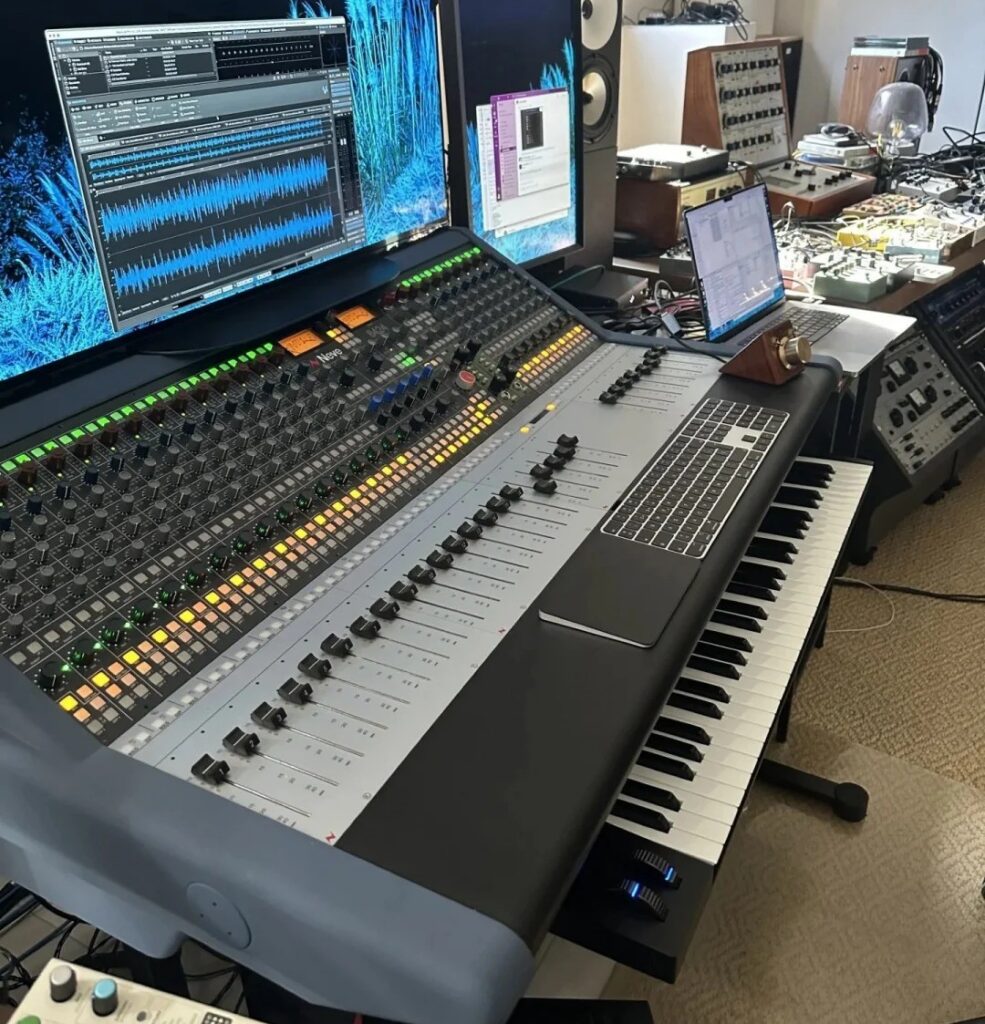
The VR vintage market in 2026 is characterized by:
Limited supply. Most VR frames in good condition are owned by established commercial studios that don’t sell unless they’re closing or downsizing. Frames coming to market are infrequent.
Strong pricing. Restored VR60 frames typically trade at 90,000-120,000 USD; restored VR72 frames at 110,000-150,000 USD. Unrestored or partially functioning frames can sell for less but require immediate restoration investment.
Restoration ecosystem. Specialist firms (Funky Junk in the UK, Vintage King Audio’s restoration team in the US, occasional independent specialists in Europe) handle full VR restorations including capacitor replacement, fader reconditioning, automation system updates, and integration of modern recall systems via DAW interfaces.
For comprehensive guidance, see our vintage mixing console restoration guide and pro mixing console maintenance guide.
Where VR fits in a 2026 facility
A vintage Neve VR is the right specification for:
- Commercial recording studios targeting major-label and high-budget independent clients who specifically request a Neve
- Film scoring and orchestral facilities (where the VR’s smooth sonic character suits large-ensemble recording)
- Studios with established technical staff capable of long-term maintenance
- Heritage production environments where the Neve VR is part of the studio’s identity and marketing
It’s a less natural choice for studios primarily doing modern hybrid ITB workflows (where a Neve Genesys G32 at 120K-180K offers similar sonic character with modern session integration) or for facilities without dedicated maintenance capability.
For application context, see best high-end mixing console for pro studio 2026 and flagship recording studio setup.
Where to buy a Neve VR
VR frames are not sold through general pro audio retail. The path to acquiring a VR is through specialist vintage dealers:
- Funky Junk (UK) — the largest specialist in vintage Neve, SSL, and broadcast consoles, with deep expertise in VR restoration
- Vintage King Audio (US) — handles certified used vintage Neve consoles with documented restoration
- Reverb.com — occasional listings from established brokers; verify provenance and restoration history carefully
Avoid unrestored frames without provenance — the cost of full VR restoration can run 60,000-100,000 USD beyond purchase price, and partial restorations often create more problems than they solve.
Bottom line
The Neve VR series is a vintage flagship of meaningful and increasing value in 2026. For studios able to acquire and maintain a restored VR60 or VR72, the console delivers a distinctive Neve sonic character that bridges the legacy 80-series and modern 88R aesthetics. The market is tight, the prices are firm, and the maintenance commitment is significant — but for the right studio, the VR is among the most rewarding instruments in pro audio.
For the broader context on professional mixing consoles, return to our professional mixing console 2026 expert guide.
Sources — manufacturer documentation consulted for this article: AMS Neve.
🎚️ Essential accessories for your mixing console
As an Amazon Associate I earn from qualifying purchases.