
A flagship mixing console is a 15-25 year capital investment. Whether you’re operating a vintage SSL 4000G+, a modern Neve Genesys G32, a DiGiCo Quantum 7, or a Studer Vista 9, the console requires ongoing maintenance to deliver flagship performance over its operational life. This guide covers the maintenance and care requirements of professional mixing consoles from a working pro audio operations perspective — what needs doing, when it needs doing, what it costs, and who should do the work.
This guide assumes a flagship or high-end commercial tier console. Project-tier mixers and consumer-grade equipment have fundamentally different maintenance economics that aren’t addressed here.
Daily and weekly maintenance
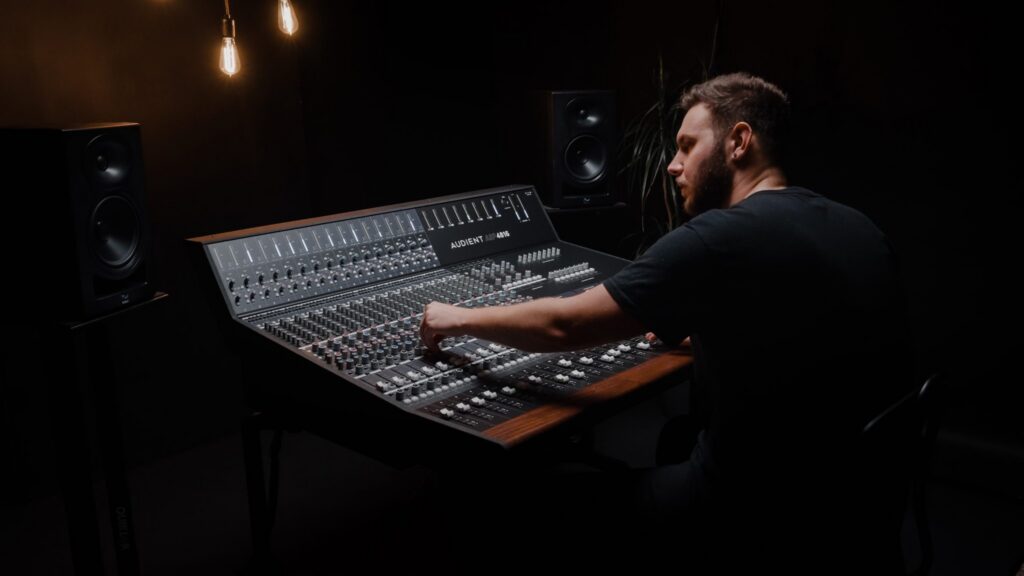
The most basic ongoing maintenance is preventive operation:
Daily:
- Visual inspection of console surface for spilled liquids, debris, or impact damage
- Verification that all faders move smoothly through full travel
- Confirmation that no error indicators are showing on master section displays
- Verification of master section monitoring matrix function (control room, headphones, talkback)
Weekly:
- Compressed air cleaning of fader tracks and rotary control surfaces
- Visual inspection of patchbays for bent pins or damaged jacks
- Verification of network connectivity and redundant path failover (digital consoles)
- Check of automation system memory utilization
Monthly:
- Surface cleaning with appropriate console-grade cleaning products (avoid alcohol or solvents that can damage component surfaces)
- Patchbay reseating to maintain contact integrity
- Backup of session/show files and console configuration (especially digital consoles)
- Verification of all I/O connections and signal flow integrity
Quarterly:
- Power supply voltage measurement and verification (analog consoles especially)
- Fan and ventilation cleaning (digital console DSP engines, analog console PSU racks)
- Full backup of console operating system, automation data, and stored sessions/snapshots
Annual service procedures
Once per year, more thorough service procedures are recommended:
Analog console annual service:
- Full surface deep cleaning (modules can be removed for thorough cleaning)
- Fader track cleaning and conductive plastic strip inspection
- Switch contact cleaning with appropriate contact cleaner (DeoxIT or equivalent)
- Power supply capacitor inspection for bulging or leakage
- Full automation system check (Encore, Total Recall, GML Flying Faders depending on console)
- Recalibration of channel strip gain matching
- EQ frequency response verification on sample channels
- Bus summing integrity check
- Master section bus compressor function verification
Digital console annual service:
- DSP engine fan cleaning and ventilation verification
- Power supply UPS battery replacement (typically every 3-4 years, but inspected annually)
- Network switch firmware updates and configuration backup
- Software update to current stable release (after testing on backup unit if available)
- Snapshot system database integrity check
- Touch screen calibration and functional test
- Full I/O signal flow verification
- Latency measurement across all processing paths
Annual service for a flagship analog console typically requires 2-4 days of skilled technician time and costs 3,000-8,000 USD depending on console size and complexity. Annual service for a flagship digital console typically requires 1-2 days and costs 2,000-5,000 USD.
Major service: capacitor replacement (recap)
The largest maintenance event in an analog console’s operational life is electrolytic capacitor replacement, typically required every 15-25 years:
Why recap matters. Electrolytic capacitors degrade through electrochemical processes that cause dielectric breakdown over time. As capacitors age, their effective capacitance decreases and their equivalent series resistance (ESR) increases. The audible result is loss of low-frequency extension, reduction in headroom, and increased noise floor. The performance degradation is gradual and often unnoticed until comparison with a recently-recapped reference.
What gets replaced. A typical 1980s-1990s flagship console has 5,000-10,000 capacitors across channel strips, master section, and power supplies. Recap involves systematic replacement of every electrolytic capacitor, with new components matched to original specifications.
Who does the work. Specialist firms (Funky Junk in the UK, Vintage King Audio in the US, dedicated SSL/Neve service technicians) handle full recaps. The work cannot be done by general electronics technicians without console-specific expertise — wrong capacitor types or values can damage the console.
Cost. Full recap of a 32-48 channel flagship console typically runs 30,000-60,000 USD. Larger 60-72 channel frames can run 60,000-100,000 USD.
Downtime. Full recap typically takes 8-16 weeks depending on console size and specialist availability. Studios planning major service should schedule around major production cycles.
For comprehensive vintage restoration context, see vintage mixing console restoration guide.
Fader maintenance and replacement
Console faders are the most heavily-used component on the surface and require ongoing attention:
Routine cleaning. Every 6-12 months, faders should be exercised through full travel to identify intermittent contact issues, sluggish movement, or audible scratchiness. Compressed air can clear immediate dust accumulation; deeper issues require disassembly.
Reconditioning. Every 3-7 years, faders should be reconditioned — disassembled, cleaned of accumulated oil and debris on the conductive plastic strip, and recalibrated. Cost: typically 200-400 USD per fader for full reconditioning. A 32-channel console might require 8,000-15,000 USD for full fader reconditioning.
Replacement. Faders can fail outright, with the conductive plastic strip showing wear that can’t be cleaned. Replacement faders are available for most flagship consoles but may have lead times. Cost varies by console; flagship-grade faders can run 200-600 USD per replacement.
Motorized fader maintenance (digital and hybrid consoles). Motorized faders have additional motor assemblies, position sensors, and control electronics that require periodic service. Most motorized fader designs in flagship consoles are robust but eventually need motor replacement after 10-15 years of heavy use.
Switch and rotary control maintenance
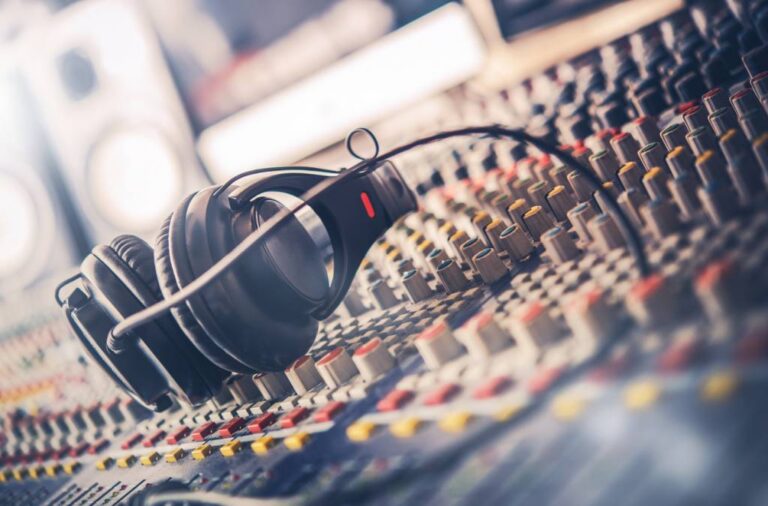
Switches and rotary potentiometers accumulate oxidation, dust, and (in heavily-used consoles) accumulated fingerprint residue:
Routine cleaning. DeoxIT D5 or equivalent contact cleaner, applied sparingly to switch contacts and rotary potentiometer wiper contacts. Excessive cleaner causes more problems than it solves — proper application uses a small amount and works the control through full travel multiple times.
Replacement of failed components. Failed switches and pots are common in vintage consoles. Replacement requires console-specific component availability — original switches are often no longer in production, and substitution requires careful matching of resistance values, switching topology, and mechanical fit.
Encoder maintenance (digital consoles). Rotary encoders on digital consoles typically don’t fail mechanically but can have bouncing contact issues that cause jumpy parameter response. Most flagship digital consoles use optical encoders that are robust but eventually need cleaning or replacement.
Power supply care
Power supplies are often the weakest link in long-term reliability:
Voltage measurement and adjustment. Annual measurement of all PSU rails (typically ±15V, ±18V, +5V, and console-specific rails) verifies that PSU performance is within specifications. Adjustment may be required as components age.
Capacitor replacement in PSU. PSU capacitors typically need replacement on a similar schedule to console capacitors (15-25 years). Some studios proactively rebuild PSUs alongside annual service to avoid catastrophic failure during sessions.
UPS and conditioning. Flagship consoles should always operate on conditioned power with UPS protection. Furman, Equi=Tech, or comparable power conditioning protects PSU components from voltage transients. UPS protection provides graceful shutdown in the event of power loss — particularly critical for digital consoles where power loss can corrupt session files.
Cooling. PSU racks accumulate dust and require periodic cleaning. Inadequate cooling shortens PSU component life dramatically.
Common troubleshooting issues
Several recurring issues appear in pro console operations:
Intermittent channel issues. Most often caused by oxidized contacts in patchbays, switches, or backplane connectors. Systematic exercise of all relevant connections often resolves intermittent issues without component replacement.
Channel level mismatch. Drift in channel gain calibration over time. Annual calibration as part of preventive maintenance addresses this.
Bus summing imbalance. Drift in bus mixing components over time. Requires technician-level attention to identify and correct.
Automation system glitches. Most often firmware-related on modern consoles. Update to current firmware version after testing.
Motorized fader hunting or jitter. Position sensor or motor assembly issues. Often resolved by recalibration; sometimes requires hardware replacement.
Network connectivity issues (digital consoles). Most often cable, switch, or fiber transceiver issues. Systematic isolation testing identifies the failed component.
Specialist service providers
Several types of specialists serve the pro console maintenance market:
Manufacturer factory service. SSL Factory Services, AMS Neve, DiGiCo, Avid, Yamaha all offer factory-level service for current-production consoles and many legacy products. Factory service is typically the most expensive option but provides authoritative repair quality.
Authorized service centers. Most flagship manufacturers maintain authorized service centers in major regional markets. Service quality is generally comparable to factory service at modest cost savings.
Independent specialists. Funky Junk (UK), Vintage King Audio’s restoration team (US), Brent Averill Engineering for Neve specifically, and various regional independent technicians provide specialized service. Quality varies by reputation; established specialists deliver factory-equivalent work.
In-house technical staff. Studios with sufficient operational scale (multiple flagship rooms, 15+ year operational horizon) often justify in-house technical staff. A senior console technician runs 80,000-130,000 USD annually fully-loaded but provides immediate response to issues and consistent maintenance quality.
Long-term ownership economics
Realistic annual maintenance budgets for flagship consoles:
- Modern flagship analog (10-15 years old): 5,000-12,000 USD/year
- Active vintage flagship (15-30 years old): 10,000-25,000 USD/year
- Highly-used vintage flagship (30+ years old, daily commercial use): 20,000-40,000 USD/year
- Modern flagship digital (5-10 years old): 3,000-8,000 USD/year
- Older digital flagship (10-15 years old): 5,000-15,000 USD/year (rising as components age)
These figures don’t include major service events (recap, fader replacement, automation updates) which represent 10-25% of console value spread across 15-25 year operational horizons.
Bottom line
Professional mixing console maintenance is an ongoing operational responsibility, not an occasional event. Studios committing to flagship console ownership should budget for routine maintenance, plan for major service events, and identify specialist service relationships before problems arise. For long-term operations, the maintenance commitment is part of what justifies flagship console economics — a well-maintained console delivers world-class sound for 15-25 years; a neglected console becomes operationally compromised within 5 years of purchase.
For the broader context on professional mixing consoles, return to our professional mixing console 2026 expert guide.
Read also: VCA vs DCA in pro mixing consoles: complete technical guide · Mixing console signal flow: complete pro audio technical guide
🎚️ Essential accessories for your mixing console
As an Amazon Associate I earn from qualifying purchases.