Catégorie : Vintage

  • SSL 4000 series history: the console that defined modern records

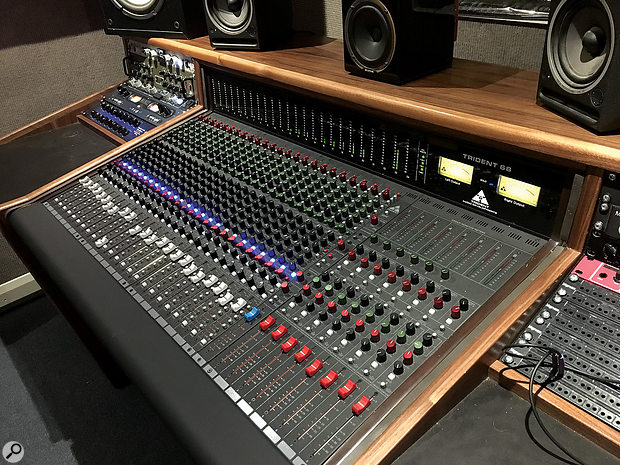
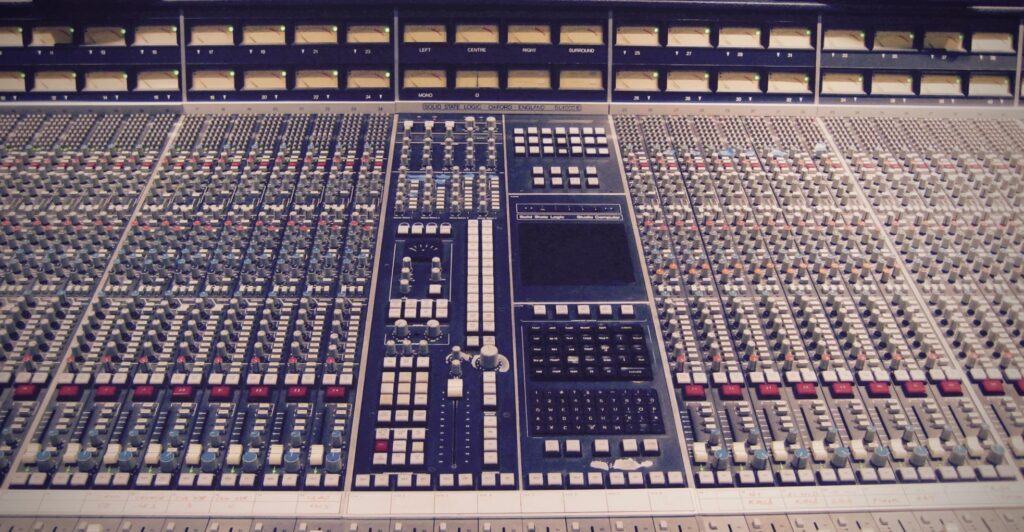
    The SSL 4000 series is the most consequential mixing console family in recording history. Across roughly 1,500 units produced between 1979 and the mid-1990s, the 4000-series defined the sonic vocabulary of three decades of pop, rock, R&B, and hip-hop production. Quincy Jones produced Thriller on a 4000B at Westlake. Mutt Lange mixed Def Leppard’s Hysteria on a 4000G at Wisseloord. Madonna, Phil Collins, Whitney Houston, U2, Nirvana, and a substantial share of every major-label release between 1980 and 2005 went through SSL 4000 channel strips at some stage. By 2026, restored 4000-series frames are coveted vintage instruments, and the SSL channel strip topology lives on in 500-series modules, plugin emulations, and the modern Origin and Duality consoles.

    This is the history of the SSL 4000 series, from a working pro audio perspective.

    SSL 4000B: the original (1979-1982)

    The original SSL 4000B launched in 1979 with two features that would change the industry permanently: total recall, which used a photographic system to record every knob position on the console for session reset; and the integrated Quad bus compressor on the master section, the most influential bus compressor design in pop production history.

    The 4000B channel strip carried a four-band parametric EQ (the original « 02 EQ », with black knobs on early frames), a comprehensive dynamics section with separate gate and compressor, and the in-line monitoring topology that gave engineers two channels of routing per physical strip. The center section included the Quad bus compressor, master VCA fader grouping, and an extensive monitor matrix.

    Major early 4000B installations included Westlake Audio (LA), Sigma Sound (Philadelphia), and the Townhouse Studios complex (London). The Westlake 4000B is the console on which Quincy Jones and Bruce Swedien recorded Thriller in 1982 — making it arguably the most documented and culturally significant individual mixing console in history.

    SSL 4000E: the workhorse (1982-1987)

    The SSL 4000E launched in 1982 as a progressive refinement of the 4000B. The most significant change was the introduction of the Black Knob 02 EQ as standard, with progressive refinements to the bus compressor and automation system. The 4000E became the dominant flagship at major commercial studios from 1983 through the late 1980s.

    The list of records made on 4000E frames is essentially the canonical 1980s pop and rock catalog: Madonna’s Like a Virgin (Sigma Sound), Tears for Fears’ Songs from the Big Chair (The Wool Hall), Phil Collins’s No Jacket Required (Townhouse), countless Whitney Houston productions at Westlake, and a substantial share of the UK pop output of the mid-1980s.

    The 4000E’s automation was Total Recall version 1, which used a photographic system: the engineer pressed a button, the console photographed every knob position, and recall meant manually setting every knob back to match the photograph. By modern standards this is primitive, but in 1982 it was revolutionary — sessions could be recalled days or weeks later, transforming the economics of mixing.

    For broader context on how this fit into the 1980s flagship era, see our 1980s mixing consoles history.

    SSL 4000G: the refined flagship (1987-1995)

    The SSL 4000G launched in 1987 with several refinements to the 4000E architecture: the introduction of the Brown Knob 242 EQ (a smoother, more musical EQ topology that engineers describe as preferable for vocals and acoustic sources), enhanced bus compressor with switchable detection options, and a more sophisticated automation system using the G+ Computer with proper data-based recall (no more photographs).

    The 4000G became the standard flagship at major commercial studios from 1988 through the mid-1990s, and remained in active service at most installations well into the 2000s. The list of 4000G records includes Pearl Jam’s Ten, Nirvana’s Nevermind basic tracks (the album was recorded primarily at Sound City but with significant 4000G mixing at other studios), and countless major-label productions of the early-to-mid 1990s.

    A meaningful refinement happened with the 4000G+ designation introduced around 1990, which integrated automation refinements and progressive electrical updates. By the time production wound down in the mid-1990s, 4000G+ was the canonical « best » version of the 4000-series for most engineers.

    The 4000-series sonic signature

    What does an SSL 4000 sound like? Several characteristics define the signature:

    1. The bus compressor. The Quad bus compressor on the master section produces a fast, glued-together master bus regardless of program material. The compressor’s specific attack and release behavior — particularly the option settings on the 4000E and 4000G+ — became the de facto reference for « modern pop bus compression ». Plugin emulations (Waves SSL Bus Compressor, UAD SSL 4000G, and dozens of others) attempt to reproduce this character.

    2. The channel strip EQ. The Black Knob 02 (4000B/E) versus Brown Knob 242 (4000G/G+) distinction is well-known among engineers. The 02 is more aggressive, with audible phase behavior at extreme settings — well-suited to drum and percussion work. The 242 is smoother and more linear-phase-like at moderate settings — better for vocals and acoustic sources.

    3. The dynamics section. The integrated channel-strip compressor on the 4000-series uses a fast attack and a particular release behavior that engineers describe as « punchy » or « in-your-face ». This is distinct from the bus compressor and contributes meaningfully to the SSL character.

    4. The summing topology. SSL summing (using IC op-amps with active mixing topology) is cleaner and more transparent than Neve transformer summing, but contributes less harmonic enhancement. This is why engineers often describe SSL as « cleaner » and Neve as « warmer ».

    For broader context, see our SSL vs Neve comparison and Solid State Logic SSL mixing consoles guide.

    The 4000-series market in 2026

    By 2026, the 4000-series vintage market is mature and active:

    • 4000B frames — rare, with most surviving examples in major studios that don’t sell. Restored 4000B frames trade at 100,000-180,000 USD when available.
    • 4000E frames — more common, restored frames trade at 70,000-130,000 USD depending on size (typically 32-48 channels) and condition.
    • 4000G and 4000G+ frames — the most common 4000-series on the used market, restored frames trade at 80,000-180,000 USD depending on size (32-72 channels) and whether automation has been updated to current SSL UF8 control or kept original.

    The cost of full 4000-series restoration — capacitor replacement, fader reconditioning, automation system updates — typically runs 50,000-100,000 USD on top of purchase price. Specialist firms include Funky Junk (UK) and Vintage King Audio’s restoration team (US).

    For comprehensive guidance, see our vintage mixing console restoration guide and pro mixing console maintenance guide.

    Where 4000-series consoles fit in 2026

    A vintage SSL 4000G is the right specification for:

    • Commercial recording studios targeting major-label clients who specifically request the SSL sound
    • Pop, R&B, and hip-hop production rooms (genres that the 4000-series defined sonically)
    • Studios with established technical staff capable of long-term maintenance
    • Heritage production environments where the SSL legacy is part of the studio’s identity

    For application context, see best high-end mixing console for pro studio 2026 and flagship recording studio setup.

    Bottom line

    The SSL 4000 series is the most consequential mixing console family in recording history. The 4000B introduced the architectural vocabulary; the 4000E made it the industry standard; the 4000G refined it to maturity. In 2026, restored 4000-series frames remain world-class instruments — and the SSL channel strip topology continues to define what « modern pop production » sounds like.

    For the broader context on professional mixing consoles, return to our professional mixing console 2026 expert guide.

  • Vintage mixing console restoration guide: complete pro overview

    Restoring a vintage flagship mixing console is among the most ambitious projects in pro audio. A full restoration of an SSL 4000G+ or Neve VR60 involves dozens of skilled labor weeks, careful component sourcing, and significant capital investment — typically 50,000 to 150,000 USD beyond the purchase price of the frame itself. But for studios able to commit to the project, a restored vintage console delivers sonic character that no modern console fully replicates, and offers ownership of an instrument with documented historical significance.
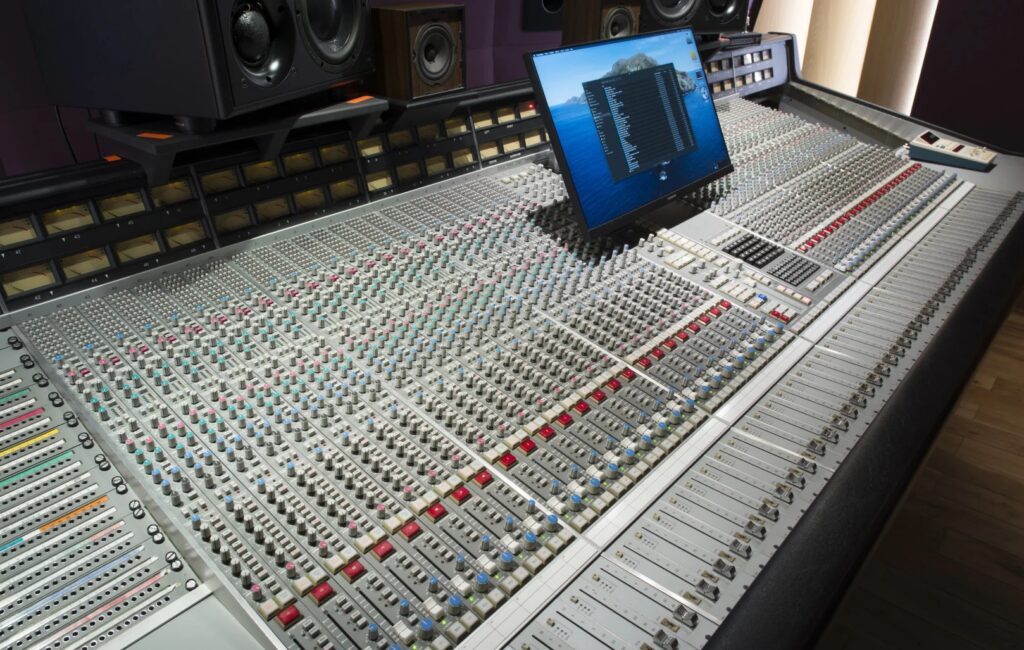
    This guide covers vintage mixing console restoration from a working pro audio perspective: what gets done, what it costs, who does the work, and what to expect from the process.

    What « restoration » actually means

    A full vintage console restoration typically includes:

    1. Capacitor replacement (recap). Electrolytic capacitors degrade over 15-25 years; tantalum and film capacitors last longer but eventually need replacement. A typical 1980s flagship console has 5,000-10,000 capacitors across the channel strips, master section, and power supplies. Recap involves removing each module, desoldering and replacing every electrolytic capacitor with new components matched to the original specifications, then testing and recalibrating each module. Cost: typically 30,000-60,000 USD for a full 32-48 channel frame.

    2. Fader reconditioning. Console faders accumulate dust, oxidation, and mechanical wear over decades. Reconditioning involves disassembly, cleaning of the resistance track and wiper contacts, replacement of the conductive plastic strip if needed, and recalibration. Cost: typically 5,000-15,000 USD for a full frame.

    3. Switch and pot cleaning. Every switch, rotary potentiometer, and bus selector contributes potential intermittent contact issues over time. Full cleaning and reconditioning of the control surface is labor-intensive but essential. Cost: typically 8,000-20,000 USD.

    4. Power supply rebuild or replacement. The power supplies in 1980s and 1990s consoles are often the weakest link in long-term reliability. A full PSU rebuild — replacing capacitors, regulators, and rectifiers — is typically performed alongside the frame recap. Cost: 5,000-15,000 USD.

    5. Automation system updates. Original automation hardware (SSL G+ Computer, GML Flying Faders, Neve Encore) is often updated to current systems. SSL frames are commonly retrofitted with SSL UF8 controllers or the modern Total Recall system. This is the most variable cost — typically 10,000-40,000 USD depending on scope.

    6. Cosmetic restoration. Replacing damaged module faceplates, refinishing the wooden trim, recovering armrests, and restoring the master section aesthetics. Cost: 5,000-20,000 USD.

    7. Full electrical recalibration and testing. After all components are replaced, the console must be calibrated to original specifications — gain matching across channels, EQ frequency accuracy, dynamics behavior, bus summing characteristics. This is performed by senior technicians and typically requires 2-4 weeks.

    Total typical cost for a comprehensive restoration of a 1980s/1990s flagship: 80,000-150,000 USD, plus the purchase price of the frame.

    When to restore vs replace

    Several factors determine whether a vintage console is worth restoring:

    Worth restoring:

    • Major flagship frames (SSL 4000G/G+, Neve VR60/VR72, legacy Neve 80-series, API Legacy, Trident A-Range)
    • Frames with documented studio provenance
    • Frames in essentially complete condition (all modules present, frame undamaged)
    • Studios committed to long-term ownership (10+ year horizon)

    Marginal cases:

    • Smaller-format vintage consoles (24-32 channels) where modern alternatives offer better economics
    • Frames with significant damage or missing modules
    • Frames from manufacturers with limited parts availability or service support

    Not worth restoring:

    • Frames with structural damage (chassis, busbars, summing rails)
    • Frames missing significant numbers of modules (>20% of original channel count)
    • Frames from manufacturers no longer producing parts or providing service support

    Specialist restoration firms

    Several firms specialize in flagship console restoration:

    Funky Junk (UK) — the largest specialist in vintage Neve, SSL, and broadcast consoles. Funky Junk handles full restorations of Neve 80-series, VR, and SSL 4000-series frames, with extensive component sourcing and documented restoration processes.

    Vintage King Audio (US) — Detroit-based with offices in LA and Nashville. Maintains a dedicated console restoration team handling Neve, SSL, API, and other flagship frames. Their certified-used catalog is one of the most reliable sources for restored vintage consoles in the US market.

    Brent Averill Engineering (US) — boutique specialist in Neve restoration, with deep expertise in 1073, 1081, and 80-series channel-strip-level restoration. Often subcontracted by other restoration firms for Neve module work.

    SSL Factory Services (UK) — SSL itself offers restoration and refurbishment services for legacy 4000-series frames, particularly for studios undertaking automation updates to current Total Recall systems.

    Independent specialists — several individual technicians worldwide handle restoration projects, often with deep specialization in particular brands. Reputation and references matter enormously when selecting an independent specialist.

    Common pitfalls in vintage restoration

    Several recurring issues appear in vintage console restoration projects:

    1. Underestimating cost. Initial budgets for restoration consistently underestimate final cost by 30-50%. A « 60,000 USD restoration » frequently becomes a 90,000 USD restoration once additional issues emerge during the recap process.

    2. Component sourcing. Some original components — particular capacitor types, transformer cores, original SSL EQ chips — are no longer in production. Restoration sometimes requires sourcing NOS (new old stock) parts from collectors, with significant cost and lead-time implications.

    3. Cosmetic versus electrical priorities. Studios sometimes over-invest in cosmetic restoration while under-investing in electrical reliability. The opposite is the correct priority — a console that sounds and operates correctly but looks slightly worn is more valuable than a beautiful console with intermittent electrical issues.

    4. Automation system mismatch. Updating the automation system to a current standard (e.g., SSL UF8) sometimes creates compatibility issues with the rest of the legacy console. Careful planning of automation updates with the restoration firm is essential.

    5. Insurance and shipping. Vintage flagship consoles are 1,000-2,000 lb instruments worth 100,000-300,000 USD. Shipping insurance, freight handling, and on-site uncrating require professional specialist transport. Damage during shipping is the most common large-cost incident in vintage console transactions.

    For broader maintenance context, see our pro mixing console maintenance and care guide.

    Restoration timeline expectations

    A typical full restoration project follows this rough timeline:

    • Acquisition and inspection — 2-4 weeks (frame inspection, condition documentation, scope agreement)
    • Disassembly and component sourcing — 4-6 weeks
    • Module-level restoration — 8-12 weeks (recap, switch cleaning, calibration)
    • Frame-level work — 4-6 weeks (PSU rebuild, structural restoration, automation updates)
    • Reassembly and testing — 2-4 weeks
    • Calibration and final QC — 2-4 weeks
    • Shipping and installation — 2-4 weeks

    Total: typically 6-9 months from purchase to operational installation.

    Where to find vintage consoles for restoration

    The path to acquiring a vintage flagship console for restoration:

    • Specialist dealers — Funky Junk (UK), Vintage King Audio (US), occasional listings from established brokers
    • Auction houses — Bonhams and other auction houses occasionally feature pro audio sales
    • Direct studio acquisitions — when major commercial studios close or relocate, their consoles sometimes come to market through brokers or directly
    • Reverb.com — listings appear, but verify provenance and condition carefully

    Avoid eBay listings without specialist verification — the risk of misrepresented condition is high.

    For deeper context, see our 1980s mixing consoles history covering the most coveted vintage flagships.

    Bottom line

    Vintage mixing console restoration is a serious, multi-quarter, six-figure capital project. For studios committed to long-term ownership of a major flagship frame, it can be transformative — delivering sonic character and historical significance that no modern console fully replicates. For studios without dedicated technical staff or long-term commitment, modern alternatives (Neve Genesys, SSL Origin or Duality, API 1608-II) typically offer better economics.

    For the broader context on professional mixing consoles, return to our professional mixing console 2026 expert guide.

  • 1980s mixing consoles: history of the iconic flagship era

    The 1980s were the most consequential decade in mixing console history. Between 1980 and 1989, virtually every console architecture and feature set that defines modern pro audio was either introduced or perfected: total recall automation, in-line monitoring, integrated bus compression, large-frame VCA grouping, and the standardization of 24-track production. The flagship consoles of this decade — the SSL 4000G, the Neve V series, the API Legacy, the Trident A-Range, the MCI JH-600, the Mitsubishi 32-track digital systems — recorded a substantial share of the most commercially successful and artistically influential music ever produced. Many of these consoles remain in active service in 2026, and the design vocabulary they established still defines how engineers approach mixing.
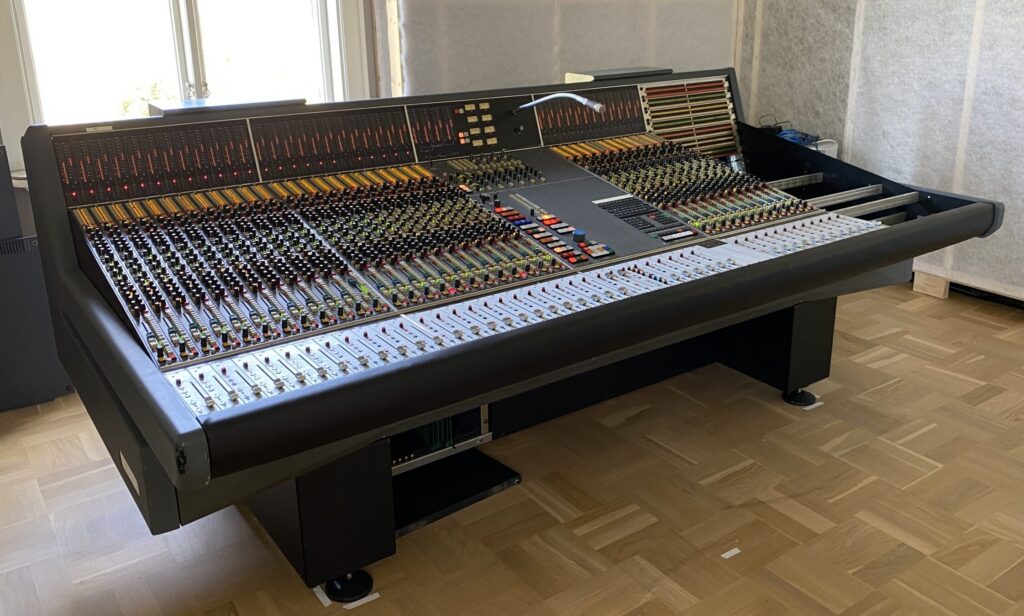
    This is the story of the 1980s flagship console era, from a working pro audio perspective.

    The pre-1980s context

    To understand why the 1980s consoles mattered, it helps to recall what came before. The 1970s flagship consoles — the Neve 8068, 8078, 8088, the early SSL frames, MCI JH-500, Cadac, Trident A-Range — were transformer-coupled, Class A, mostly hand-wired, and operationally manual. There was no automation. Recall meant photographs and detailed notes. Sessions ran long, with engineers physically holding fader rides through entire songs, often with multiple assistants. Production was an athletic event.

    The 1980s solved this — not by replacing analog signal path (which remained Class A or Class AB discrete throughout the decade) but by automating it.

    SSL 4000: the console that changed everything

    The Solid State Logic 4000B launched in 1979 with two features that immediately shifted the industry: total recall, which photographed every knob position for session reset, and the now-iconic Quad bus compressor on the master section. By 1982, the SSL 4000E added the Black Knob 02 EQ; by 1987, the SSL 4000G added the Brown Knob 242 EQ and progressive automation refinements. Studios that installed SSL 4000s in the early-to-mid 1980s could mix sessions in a fraction of the time required on legacy consoles, and could recall sessions weeks or months later for revisions.

    The list of records made on SSL 4000s in the 1980s is the canonical list of 1980s pop and rock production: Michael Jackson’s Thriller (4000B at Westlake), Madonna’s Like a Virgin (4000E at Sigma Sound), Phil Collins’s No Jacket Required (4000G at Townhouse), countless UK pop productions at Sarm West, Olympic, and Townhouse, and a substantial share of Quincy Jones’s production output. The SSL 4000 didn’t just record the 1980s — it shaped the sonic vocabulary of the entire decade.

    For deep history of the SSL 4000 series specifically, see our SSL 4000 series history article.

    Neve V series: the 1980s Neve

    The Neve V series (V1, V2, V3) launched in 1985 as Neve’s response to SSL’s automation revolution. Where the legacy 80-series Neves had been transformer-coupled Class A discrete tracking consoles without automation, the V series brought Neve sonic character into a fully automated, recall-capable, larger-format frame. The V3 in particular became a flagship at major studios — Manhattan Center, A&M Studios, AIR Lyndhurst — through the late 1980s and into the 1990s.

    The V series sat alongside the SSL 4000G as the two dominant 1980s flagships, with engineers and studios choosing between them based on sonic preference: SSL for tight, punchy, modern productions; Neve V for warmth and harmonic richness.

    The V series eventually gave way to the Neve VR series in 1991, which carried the V’s basic architecture into the 1990s with progressive refinements. For deeper history, see our Neve VR vintage flagship history article.

    API Legacy and Trident A-Range: the alternatives

    Several 1980s flagships sat alongside the SSL/Neve duopoly:

    API Legacy (introduced in the late 1970s, in active production through the 1980s) was the choice for studios specializing in American rock and rhythm-driven production. The API discrete topology — 2520 op-amps, output transformers, proportional-Q EQ — produced a brighter, more aggressive sound than either SSL or Neve. Major Legacy installations in the 1980s included Record Plant LA, Henson Recording, and various Nashville studios.

    Trident A-Range (originally late 1970s, in production through the early 1980s) was the British alternative — a transformer-coupled console with a distinctive EQ topology that engineers describe as exceptionally musical. The A-Range was used at Trident Studios for the canonical David Bowie, Queen, and Elton John productions; surviving frames are now extremely valuable on the vintage market.

    MCI JH-600 and JH-636 were US-built flagships popular at major US commercial studios (Sigma Sound, Atlantic Studios). MCI was acquired by Sony in 1982 and the consoles continued in production through the late 1980s.

    Mitsubishi X-86 and X-86HS digital systems introduced digital recording at flagship studios — though the consoles themselves remained analog through the 1980s, with digital tape machines connected via SDIF.

    What 1980s consoles had in common

    Despite different sonic signatures, the 1980s flagships shared several architectural commitments that defined the era:

    1. In-line monitoring. Each channel strip carried two signal paths — a tape input for tracking and a separate monitor return — allowing the engineer to monitor and process tracking signals without disrupting the recording chain. This architecture, introduced on the SSL 4000B and adopted across the industry, made 24-track production manageable.

    2. VCA fader grouping. Voltage-controlled amplifier (VCA) grouping let engineers control multiple physical faders from a single master fader. Drum buses, vocal stacks, and orchestral sections could be ridden as a unit. For more on this, see our VCA vs DCA explained.

    3. Total recall. Whether implemented via SSL’s photographic system or competitor approaches, the ability to recall a session days or weeks later changed the economics of mixing.

    4. Discrete Class A or Class AB analog signal path. The 1980s consoles were not yet digital. Signal path architectures were still discrete amplifier circuits with transformer coupling at strategic points (input, output, bus summing). The character of these consoles came from these analog topologies.

    For broader signal flow context, see mixing console signal flow pro explained.

    Where 1980s consoles fit in 2026

    A substantial share of 1980s flagship consoles remain in active service in 2026. SSL 4000G frames at Westlake, Manhattan Center, and dozens of other studios still record sessions. Neve V series frames continue to operate at facilities that have invested in long-term maintenance. API Legacy frames remain at studios specializing in heritage rock production.

    For studios considering a vintage 1980s console acquisition, the relevant context includes:

    • Annual maintenance budgets of 8,000-20,000 USD for active operation
    • Capacitor replacement every 15-25 years (typically 30,000-80,000 USD per recap cycle)
    • Fader reconditioning requirements
    • Insurance and parts availability considerations

    For comprehensive guidance, see our vintage mixing console restoration guide and pro mixing console maintenance guide.

    Bottom line

    The 1980s established the architectural and operational vocabulary of modern mixing consoles. The SSL 4000G, Neve V series, API Legacy, and Trident A-Range remain the reference points against which every modern flagship is implicitly measured. Many of these consoles continue to deliver world-class sound in 2026 — for studios able to maintain them, a 1980s flagship is a uniquely valuable instrument.

    For the broader context on professional mixing consoles, return to our professional mixing console 2026 expert guide.

  • Neve VR series vintage flagship: complete history and pro guide

    The Neve VR series occupies a specific and increasingly valuable position in pro audio history: the bridge between the legacy Class A transformer-coupled Neve 80-series and the modern AMS Neve era that followed in the late 1990s. Produced from 1991 through 2000, the VR60 and VR72 were Neve’s flagship installation consoles during a transitional decade — automation was now standard, recall was sophisticated, and the analog signal path was approaching its mature form. By 2026, restored VR frames have become coveted vintage instruments, with prices on the major-frame market reaching 100,000-150,000 USD.

    This guide covers the Neve VR series history and its place in 2026 pro audio.

    VR series origins and production history

    The VR series launched in 1991 as Neve’s response to the dominance of the SSL 4000G in commercial recording. Where the 1980s Neve V series had targeted the same automation-and-recall market segment, the VR added several refinements: more sophisticated Flying Faders or GML automation, deeper recall capability, more flexible bus routing, and progressive refinements to the channel strip topology.

    Two main configurations dominated the production run:

    VR60 — 60-channel frame, in-line monitoring, the more common configuration installed at mid-to-large commercial recording studios. Production ran from 1991 to approximately 1998.

    VR72 — 72-channel frame, the largest VR configuration, installed at flagship facilities targeting orchestral scoring and large-ensemble work. Production overlapped with VR60 through the mid-1990s.

    Total VR production was relatively small — estimates suggest 200-300 frames across the production run, compared to 1,500+ SSL 4000-series frames over a similar period. This scarcity contributes to current vintage pricing.

    VR sonic character: the late-Neve aesthetic

    The VR represents a specific and distinct phase in the Neve sonic timeline. The signal path uses Class AB amplifier topology (versus the Class A of the legacy 80-series) with output transformers from St. Ives or Carnhill (depending on production year). The channel strip topology is derived from the 1081 with progressive refinements; the EQ is a four-band parametric with switchable Q on the mid bands.

    Engineers describe the VR sound as « the smoother Neve » — preserving the warmth and harmonic richness associated with the brand, but with less of the aggressive low-mid presence that defines the legacy 80-series. For mid-1990s pop, R&B, and adult contemporary production, the VR was widely considered ideal — softer than an SSL, less colored than an 8068, with the operational maturity that the 80-series lacked.

    Major VR installations in the 1990s included:

    • AIR Lyndhurst (London) — VR72 used on countless film scores including major Hans Zimmer productions
    • Record Plant (Los Angeles) — multiple VR60 frames
    • Larrabee Sound Studios (LA) — VR for major R&B productions
    • Skywalker Sound (Northern California) — VR for film scoring
    • The Hit Factory (NYC and London) — VR for major pop productions

    For broader Neve context, see our Neve mixing consoles vintage and modern guide.

    The transition from VR to 88R

    The VR’s production run ended around 2000 when AMS Neve (the successor company after the 1992 acquisition) introduced the 88R as the new flagship. The 88R carried forward many VR design principles — Class AB topology, four-band parametric EQ derived from the V/VR lineage, integrated Encore automation — but added refinements: more sophisticated routing, integrated 5.1 surround monitoring, total recall improvements, and a redesigned center section.

    For studios currently considering vintage VR versus modern 88R, the trade-offs are:

    • VR (vintage) — established sonic character, lower upfront cost (90K-150K USD for a restored frame versus 400K+ for new 88R), but requires ongoing maintenance investment
    • 88R (modern) — newer technology, full factory support, current automation systems, but significantly higher purchase cost and a slightly different sonic signature than the VR

    VR market in 2026: pricing and availability

    The VR vintage market in 2026 is characterized by:

    Limited supply. Most VR frames in good condition are owned by established commercial studios that don’t sell unless they’re closing or downsizing. Frames coming to market are infrequent.

    Strong pricing. Restored VR60 frames typically trade at 90,000-120,000 USD; restored VR72 frames at 110,000-150,000 USD. Unrestored or partially functioning frames can sell for less but require immediate restoration investment.

    Restoration ecosystem. Specialist firms (Funky Junk in the UK, Vintage King Audio’s restoration team in the US, occasional independent specialists in Europe) handle full VR restorations including capacitor replacement, fader reconditioning, automation system updates, and integration of modern recall systems via DAW interfaces.

    For comprehensive guidance, see our vintage mixing console restoration guide and pro mixing console maintenance guide.

    Where VR fits in a 2026 facility

    A vintage Neve VR is the right specification for:

    • Commercial recording studios targeting major-label and high-budget independent clients who specifically request a Neve
    • Film scoring and orchestral facilities (where the VR’s smooth sonic character suits large-ensemble recording)
    • Studios with established technical staff capable of long-term maintenance
    • Heritage production environments where the Neve VR is part of the studio’s identity and marketing

    It’s a less natural choice for studios primarily doing modern hybrid ITB workflows (where a Neve Genesys G32 at 120K-180K offers similar sonic character with modern session integration) or for facilities without dedicated maintenance capability.

    For application context, see best high-end mixing console for pro studio 2026 and flagship recording studio setup.

    Where to buy a Neve VR

    VR frames are not sold through general pro audio retail. The path to acquiring a VR is through specialist vintage dealers:

    • Funky Junk (UK) — the largest specialist in vintage Neve, SSL, and broadcast consoles, with deep expertise in VR restoration
    • Vintage King Audio (US) — handles certified used vintage Neve consoles with documented restoration
    • Reverb.com — occasional listings from established brokers; verify provenance and restoration history carefully

    Avoid unrestored frames without provenance — the cost of full VR restoration can run 60,000-100,000 USD beyond purchase price, and partial restorations often create more problems than they solve.

    Bottom line

    The Neve VR series is a vintage flagship of meaningful and increasing value in 2026. For studios able to acquire and maintain a restored VR60 or VR72, the console delivers a distinctive Neve sonic character that bridges the legacy 80-series and modern 88R aesthetics. The market is tight, the prices are firm, and the maintenance commitment is significant — but for the right studio, the VR is among the most rewarding instruments in pro audio.

    For the broader context on professional mixing consoles, return to our professional mixing console 2026 expert guide.