
Arena and festival live sound mixing console setups are operationally complex, with multiple console positions (front-of-house, monitors, broadcast), high channel counts (96-256+ inputs), strict redundancy requirements, and tight changeover times between acts. A major arena tour or festival mainstage system represents 800,000 to 4,500,000 USD in audio infrastructure when accounting for consoles, stage I/O, networking, PA system, monitoring, and supporting electronics. This guide covers the console-centric architecture decisions and supporting infrastructure for professional touring and festival deployments.
For broader context on the consoles deployed in these applications, see our pillar guide to professional mixing consoles 2026 and our best digital mixing console for arena tour 2026 buyer guide.
Console positions in a major touring system
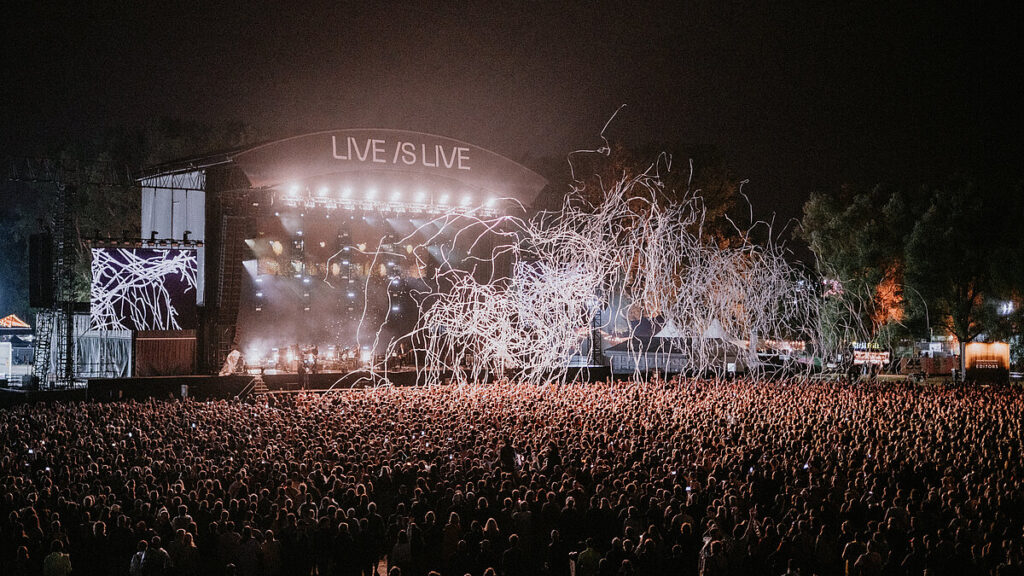
A flagship touring or festival system typically deploys consoles at three or four operational positions:
Front-of-house (FOH) — the primary mix position controlling what the audience hears. Located in the audience area, typically 25-35 meters from the stage. The FOH engineer is the lead audio role on a tour.
Monitors — the side-stage mix position controlling artist in-ear monitors and stage wedges. The monitor engineer manages 16-48+ separate mix outputs for individual band members and crew.
Broadcast — for arena shows that feed broadcast TV, streaming, or pay-per-view, a separate console handles the mix for transmission. This console may be operated by a dedicated broadcast mixer.
Recording — for tours that record every show for live album releases or archive, a fourth console position handles the multitrack capture and live mix monitoring.
Each console position is independent, with its own console, processing, monitoring, and operator. They share the stage I/O via the audio network.
Flagship FOH console choices
Three consoles dominate flagship FOH at this tier:
DiGiCo Quantum 7 (~85,000 USD console only) — the international touring standard. Stealth Core 2 processing, Quantum FPGA architecture, 128+ channel paths, modular Optocore + DMI I/O. Found on most major rock, pop, and country tours.
Avid VENUE S6L-32D (~95,000 USD console only) — the Pro Tools-integrated standard. AAX plugin processing, native Pro Tools recording integration, common at award shows, Broadway, broadcast events.
Yamaha Rivage PM7 (~120,000 USD console only) — Yamaha’s flagship FOH platform. VCM modeling, TWINLANe networking, used on premier tours and broadcast events.
For a head-to-head, see our DiGiCo vs Avid VENUE comparison and Yamaha vs Midas comparison. Midas Pro X (~75,000 USD) deploys at the high-end on certain tours, particularly where Heritage processing character is desired.
Monitor console requirements
Monitor consoles handle different demands than FOH — many more output mixes (32-64+ artist mixes), aggressive low-latency operation for in-ear monitor feel, and rapid recall for festival multi-act changeovers. Common monitor consoles:
- DiGiCo Quantum 5 (~70,000 USD) — preferred by monitor engineers on Quantum tours for shared workflow with FOH
- Avid VENUE S6L-24D (~70,000 USD) — monitor option for Avid systems
- Yamaha Rivage PM3 / CL5 — Yamaha monitor options for PM tours
- DiGiCo SD12 (~45,000 USD) — common at festivals where multiple acts share monitor consoles
The monitor console manages 24-64 separate stereo or mono mix outputs feeding wireless in-ear monitor transmitters and stage wedge amplifiers.
Stage I/O and networking
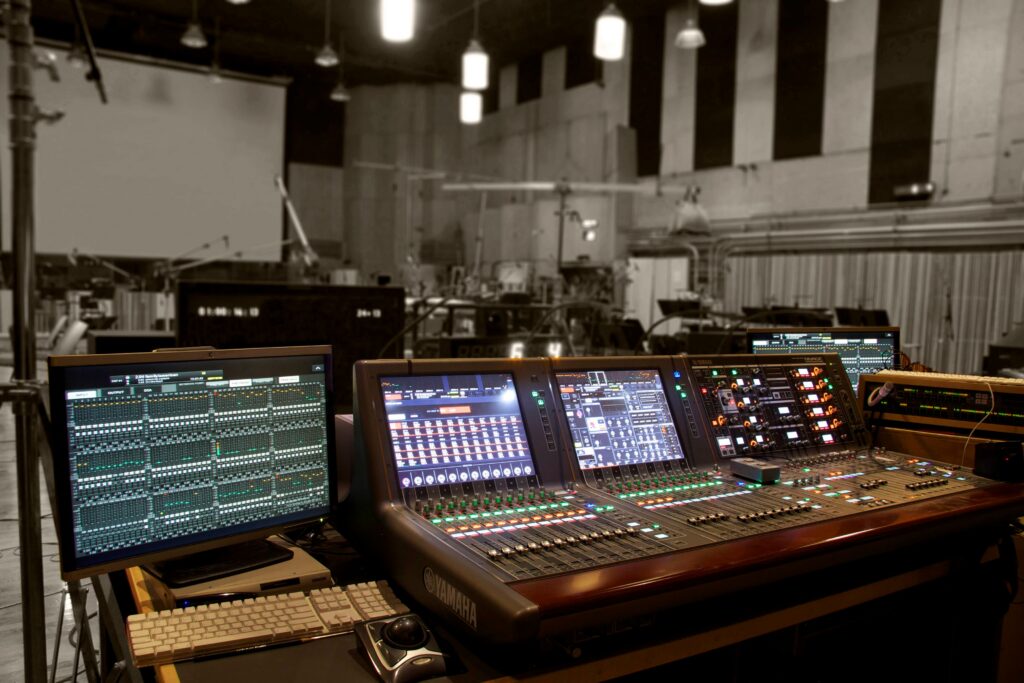
Stage I/O converts microphones and instrument signals to digital audio for transport to FOH, monitors, broadcast, and recording. Common stage I/O:
- DiGiCo SD-Rack (~24,000 USD per rack) — 56 mic inputs/56 outputs in a single rack
- Avid Stage 64 (~35,000 USD per stage rack) — 64 mic inputs/32 outputs
- Yamaha RPio622 — Rivage stage I/O with 88 mic input capacity
- Midas DL231/DL251 — Midas Pro stage I/O
A flagship arena setup typically deploys 2-4 stage racks with 128-200+ input channels and 64-128+ outputs.
Networking transports digital audio between stage and console positions:
- Optocore — DiGiCo’s primary backbone (2 Gbit fiber loop)
- Avid AVB / Ethernet AVB — Avid VENUE network
- TWINLANe — Yamaha Rivage proprietary fiber network
- AES50 — Midas Pro Series legacy network
- Dante — common as secondary network for broadcast feeds, recording splits, and aux devices
Multi-mode fiber runs between stage and FOH typically span 60-120 meters. Redundant fiber loops are mandatory at this tier — single fiber failures must not interrupt the show.
Redundancy architecture
Flagship touring requires complete signal-chain redundancy:
Console redundancy — DiGiCo Quantum and Yamaha Rivage support fully redundant mirror-image consoles at the same position. If the primary console fails, the backup takes over with seamless audio.
Network redundancy — fiber loops are dual-redundant. If one fiber path fails, the network self-heals to the alternate path within milliseconds.
Power redundancy — all consoles, stage I/O, and critical equipment run dual-redundant power supplies. UPS systems back the entire audio chain for at least 10 minutes during power events.
Stage I/O redundancy — split stage racks send to FOH and monitors via independent network paths. Some configurations split mic inputs to redundant stage racks for full stage-side failure tolerance.
A fully redundant flagship system adds 30-50% to the cost of a single-path system, but it’s mandatory for major tours where show cancellation has multi-million-dollar consequences.
Festival-specific considerations
Festivals add complexity beyond touring:
Console line-up — multiple festivals run a “festival line-up” of consoles at FOH. A typical mainstage might offer DiGiCo Quantum 7, Avid VENUE S6L, and Yamaha Rivage PM7 — each act selects which console they prefer, and tech crew swaps between them in 15-25 minutes during changeover.
Shared stage racks — stage racks remain in place across acts, with each act’s console connecting to the network and recalling its session.
Festival patch sheet — universal patch sheets standardize input numbering across acts so changeovers are consistent.
Backup acts and contingencies — festivals run backup consoles ready to deploy if a primary fails between acts.
Festival audio systems typically deploy through specialized rental companies (Clair, Eighth Day Sound, Britannia Row, Sound Image, Solotech) that maintain the inventory and crew expertise to operate at this scale.
Sample budget — flagship arena tour audio system
For a 90-day major arena tour:
- FOH console (Quantum 7 + redundant): 170,000 USD
- Monitor console (Quantum 5 + redundant): 140,000 USD
- Stage I/O (4× SD-Rack with redundancy): 195,000 USD
- Network infrastructure (Optocore, fiber, switches): 60,000 USD
- Console-side outboard (effects, summing, monitor wedges): 85,000 USD
- Cabling, racks, anvil cases: 80,000 USD
- Total console-side audio package: ~730,000 USD
This excludes the PA system (typically 800,000-2,500,000 USD for a flagship arena rig), wireless mic and IEM systems (200,000-400,000 USD), and the supporting infrastructure (truck packs, generators, cable looms).
Bottom line
Arena and festival live sound mixing console setups demand integrated thinking across multiple console positions, network architecture, stage I/O, redundancy, and rapid changeover capability. The flagship tier (DiGiCo Quantum, Avid VENUE S6L, Yamaha Rivage) defines what major tours and premier festivals deploy, with total console-side investment of 600,000-1,200,000 USD before the PA system.
These setups are typically owned and operated by specialty touring rental companies rather than artists or venues. Engineers move between rental company inventories show-to-show, expecting the same flagship-tier infrastructure regardless of which company is providing the service for a particular leg.
For deeper technical understanding, see our VCA vs DCA explained and signal flow guide. For broadcast-specific routing within these systems, see our multi-format routing for broadcast guide.
Return to our pillar guide to professional mixing consoles 2026 for the complete professional mixing console landscape.
Read also: Flagship recording studio mixing console setup: pro reference · Broadcast TV and radio mixing console setup guide: pro reference
🎚️ Essential accessories for your mixing console
As an Amazon Associate I earn from qualifying purchases.