Catégorie : Use Cases

  • Flagship recording studio mixing console setup: pro reference

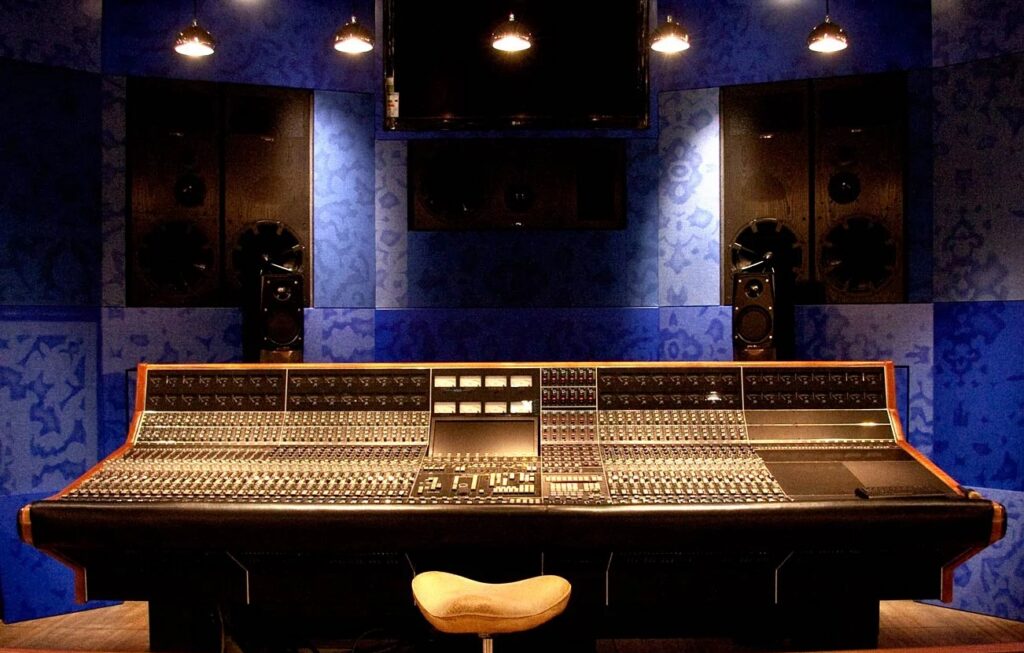
    A flagship recording studio mixing console setup is more than a console purchase — it’s an integrated facility design where the console, outboard rack, monitoring infrastructure, patchbay, and acoustic environment must work together at world-class standards. Studios at this tier (Capitol, Electric Lady, Blackbird, Sunset Sound, Hansa, AIR Lyndhurst) command 1,500-3,500 USD day rates, and clients expect every element of the signal chain to perform without compromise. This guide walks through the components and decisions involved in specifying and installing a flagship-tier recording studio centered around a professional mixing console. Total facility budgets typically range from 400,000 to 2,500,000 USD, with the console itself representing 80,000-500,000 USD of that figure.

    For broader context on the consoles that anchor these facilities, see our pillar guide to professional mixing consoles 2026 and our best high-end mixing console for pro studio 2026 buyer guide.

    Console as the architectural anchor

    The console choice is not just a sonic decision — it physically defines the control room layout. A 64-fader SSL ORIGIN32 needs roughly 2.4 meters of width and 1.5 meters of operator depth. A 72-channel Neve 88R or vintage VR72 frame approaches 3.5 meters wide and weighs over 1,200 kg, requiring reinforced flooring. The room must accommodate the console, the producer/client area behind it, the rear monitoring sweet spot, and the equipment racks within reach.

    Three console categories anchor flagship recording studios in 2026:

    Modern analog flagshipsSSL ORIGIN32 (~210,000 USD), Neve Genesys G32 (~175,000 USD), API 1608-II (~135,000 USD), or the larger API 2448 (~250,000 USD) define the modern analog tracking and mixing experience.

    Vintage flagships — restored SSL 4000G+ (90,000-130,000 USD), Neve VR60/VR72 (60,000-110,000 USD), or rarer Trident A-Range and vintage Neve 80-series consoles (150,000+ USD) bring documented historical character. See our vintage console restoration guide for ownership realities.

    Hybrid digital-analog — Avid VENUE S6L systems with analog summing, or smaller analog consoles (24-32 channels) used for summing and front-end character with extensive ITB workflow. See console vs DAW comparison.

    Most major-label-targeting studios choose modern analog flagships for warranty support, while heritage-positioned studios (the Abbey Road / Capitol / Hansa model) maintain vintage consoles as their distinctive identity.

    Outboard rack — the supporting cast

    A flagship recording studio runs 30-80 channels of outboard processing alongside the console. Typical outboard for a major-tier studio includes:

    Preamps — Neve 1073/1081, API 312/512, Telefunken V72/V76, Neumann V476, Manley SLAM!, Avalon VT-737sp, Universal Audio LA-610. Studios often run 16-24 channels of premium pre on top of the console’s onboard preamps.

    Compressors — Fairchild 670 (or Heritage Audio reissue), Teletronix LA-2A originals or reissues, Urei 1176 originals or reissues, SSL G-series Bus Compressor, Manley Vari-Mu, Empirical Labs Distressor, Tube-Tech CL1B, Smart C2.

    EQ — Pultec EQP-1A and MEQ-5 originals or Manley/Tube-Tech variants, Massive Passive, GML 8200, Sontec, Maag EQ4.

    Effects — Lexicon 480L, EMT 250 (or Universal Audio plate reissue), AKG BX20, Bricasti M7, Eventide H3000/H9000.

    A/D-D/A — Prism Sound ADA-8XR or Lyra 2, Apogee Symphony Mk II, Burl B80 Mothership, Antelope Galaxy 64. Conversion quality at the highest tier matters more than most engineers realize.

    Total outboard investment in a flagship facility ranges 150,000-400,000 USD.

    Patchbay infrastructure

    The patchbay is the unsung hero of professional studios. A flagship facility typically runs 1,200-2,400 patchbay points across 12-24 patchbays, all wired with high-quality cable (Mogami 2792 or Canare star-quad bulk cable). Bantam TT (1/4-inch tinier-tinier) is the professional standard; full-size 1/4-inch TRS bays are now legacy. Some broadcast-leaning studios use Bittree HD Series patchbays or dedicated AES67 networking patchbays for digital audio.

    Wiring labor alone for a flagship facility runs 30,000-80,000 USD. Studios employ specialists like Walters-Storyk Design Group, BOTO Design, or independent technicians like Klaus Heyne or John Klett to oversee installation.

    Monitoring infrastructure

    Reference monitoring at flagship level typically includes three to five tiers:

    Mains — large soffit-mounted main monitors. ATC SCM150ASL Pro (~28,000 USD/pair), PMC BB6-XBD (~50,000 USD/pair), Quested H210 (~40,000 USD/pair), Augspurger Duo-15s, or custom builds.

    Mid-fields — large near-fields for primary mix reference. ATC SCM45A, PMC IB1S-AIII, Adam S5H, Genelec 1234A.

    Near-fields — Yamaha NS-10M (legacy), Genelec 8351B, Focal Trio6, ATC SCM25A.

    Cube reference — Auratone 5C, Avantone Mixcube — for mid-range reality checks.

    Headphones — Sennheiser HD650, Audeze LCD-X, Sony MDR-7506 — for client listening and mix verification.

    Monitoring infrastructure typically represents 80,000-250,000 USD in a flagship facility.

    Networking and infrastructure

    Modern flagship studios run hybrid analog and digital networks. A typical infrastructure includes:

    Analog — multi-pin snakes (Mogami 3162) or mass-termination panels between live room and control room Dante/AES67/Ravenna — for digital audio routing and integration with Pro Tools systems MADI — for legacy connectivity and bulk channel transport Pro Tools HDX — flagship Pro Tools systems with 64+ channels of conversion

    Pro Tools systems range from a single HDX/HD Native (12,000-25,000 USD) to fully redundant rigs with multiple interfaces and surface controllers (45,000-120,000 USD).

    Acoustic treatment and electrical

    The control room must meet professional acoustic standards. Reverb time targets are typically 0.25-0.35 seconds across the spectrum, with carefully managed first reflections and bass trapping. Acoustic treatment costs typically run 80,000-200,000 USD depending on room size and finish quality.

    Electrical infrastructure requires dedicated isolated grounding and power conditioning. Equi=Tech, Furman P-3600 SMP, and Torus Power conditioners are common at the flagship level. Total electrical work typically runs 25,000-60,000 USD.

    Live room considerations

    The live room must match the control room in quality. A flagship live room of 80-200 square meters with 4-6 meter ceilings, variable acoustic treatment, multiple isolation booths, and tie lines to the control room represents another 200,000-500,000 USD investment depending on size and finish.

    Sample budget breakdown — 600,000 USD flagship setup

    • Console (modern SSL Origin or used Neve VR60): 150,000-180,000 USD
    • Outboard rack (preamps, comps, EQs, effects): 200,000 USD
    • Conversion and computers: 60,000 USD
    • Patchbay and wiring: 60,000 USD
    • Monitoring: 80,000 USD
    • Acoustic treatment: 50,000 USD
    • Electrical and HVAC: 20,000 USD
    • Total: ~600,000 USD

    A 1,500,000 USD setup (the Capitol Studios Studio C tier) approximately doubles each line item, with an SSL ORIGIN32 or vintage Neve VR72 as the centerpiece, multiple Pro Tools HDX rigs, ATC SCM300 mains, and concert-grade instrument collection.

    Bottom line

    A flagship recording studio mixing console setup requires integrated thinking across the console, outboard, monitoring, networking, and acoustic dimensions. Each element must operate at world-class standards, and the total facility cost reaches 400,000-2,500,000 USD before accounting for the building lease and operational overhead. The console itself anchors the facility but represents only 25-35% of total spend.

    Studios at this tier are competing for major-label clients, A-list artists, and film score work. The combination of console, outboard, monitoring, and acoustic environment defines the studio’s identity for the next 15-25 years.

    For console-by-console deeper analysis, see our brand guides on SSL, Neve, and API. For ongoing maintenance considerations, see our pro mixing console maintenance and care guide.

    Return to our pillar guide to professional mixing consoles 2026 for full ecosystem context.

  • Arena and festival live sound mixing console setup: pro guide

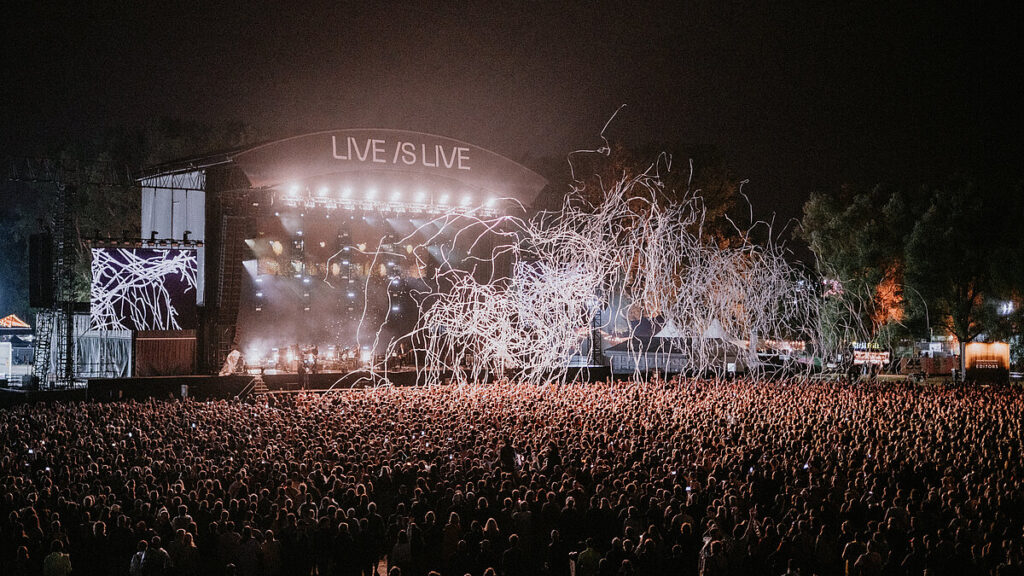
    Arena and festival live sound mixing console setups are operationally complex, with multiple console positions (front-of-house, monitors, broadcast), high channel counts (96-256+ inputs), strict redundancy requirements, and tight changeover times between acts. A major arena tour or festival mainstage system represents 800,000 to 4,500,000 USD in audio infrastructure when accounting for consoles, stage I/O, networking, PA system, monitoring, and supporting electronics. This guide covers the console-centric architecture decisions and supporting infrastructure for professional touring and festival deployments.
    For broader context on the consoles deployed in these applications, see our pillar guide to professional mixing consoles 2026 and our best digital mixing console for arena tour 2026 buyer guide.

    Console positions in a major touring system

    A flagship touring or festival system typically deploys consoles at three or four operational positions:

    Front-of-house (FOH) — the primary mix position controlling what the audience hears. Located in the audience area, typically 25-35 meters from the stage. The FOH engineer is the lead audio role on a tour.

    Monitors — the side-stage mix position controlling artist in-ear monitors and stage wedges. The monitor engineer manages 16-48+ separate mix outputs for individual band members and crew.

    Broadcast — for arena shows that feed broadcast TV, streaming, or pay-per-view, a separate console handles the mix for transmission. This console may be operated by a dedicated broadcast mixer.

    Recording — for tours that record every show for live album releases or archive, a fourth console position handles the multitrack capture and live mix monitoring.

    Each console position is independent, with its own console, processing, monitoring, and operator. They share the stage I/O via the audio network.

    Flagship FOH console choices

    Three consoles dominate flagship FOH at this tier:

    DiGiCo Quantum 7 (~85,000 USD console only) — the international touring standard. Stealth Core 2 processing, Quantum FPGA architecture, 128+ channel paths, modular Optocore + DMI I/O. Found on most major rock, pop, and country tours.

    Avid VENUE S6L-32D (~95,000 USD console only) — the Pro Tools-integrated standard. AAX plugin processing, native Pro Tools recording integration, common at award shows, Broadway, broadcast events.

    Yamaha Rivage PM7 (~120,000 USD console only) — Yamaha’s flagship FOH platform. VCM modeling, TWINLANe networking, used on premier tours and broadcast events.

    For a head-to-head, see our DiGiCo vs Avid VENUE comparison and Yamaha vs Midas comparison. Midas Pro X (~75,000 USD) deploys at the high-end on certain tours, particularly where Heritage processing character is desired.

    Monitor console requirements

    Monitor consoles handle different demands than FOH — many more output mixes (32-64+ artist mixes), aggressive low-latency operation for in-ear monitor feel, and rapid recall for festival multi-act changeovers. Common monitor consoles:

    • DiGiCo Quantum 5 (~70,000 USD) — preferred by monitor engineers on Quantum tours for shared workflow with FOH
    • Avid VENUE S6L-24D (~70,000 USD) — monitor option for Avid systems
    • Yamaha Rivage PM3 / CL5 — Yamaha monitor options for PM tours
    • DiGiCo SD12 (~45,000 USD) — common at festivals where multiple acts share monitor consoles

    The monitor console manages 24-64 separate stereo or mono mix outputs feeding wireless in-ear monitor transmitters and stage wedge amplifiers.

    Stage I/O and networking

    Stage I/O converts microphones and instrument signals to digital audio for transport to FOH, monitors, broadcast, and recording. Common stage I/O:

    • DiGiCo SD-Rack (~24,000 USD per rack) — 56 mic inputs/56 outputs in a single rack
    • Avid Stage 64 (~35,000 USD per stage rack) — 64 mic inputs/32 outputs
    • Yamaha RPio622 — Rivage stage I/O with 88 mic input capacity
    • Midas DL231/DL251 — Midas Pro stage I/O

    A flagship arena setup typically deploys 2-4 stage racks with 128-200+ input channels and 64-128+ outputs.

    Networking transports digital audio between stage and console positions:

    • Optocore — DiGiCo’s primary backbone (2 Gbit fiber loop)
    • Avid AVB / Ethernet AVB — Avid VENUE network
    • TWINLANe — Yamaha Rivage proprietary fiber network
    • AES50 — Midas Pro Series legacy network
    • Dante — common as secondary network for broadcast feeds, recording splits, and aux devices

    Multi-mode fiber runs between stage and FOH typically span 60-120 meters. Redundant fiber loops are mandatory at this tier — single fiber failures must not interrupt the show.

    Redundancy architecture

    Flagship touring requires complete signal-chain redundancy:

    Console redundancy — DiGiCo Quantum and Yamaha Rivage support fully redundant mirror-image consoles at the same position. If the primary console fails, the backup takes over with seamless audio.

    Network redundancy — fiber loops are dual-redundant. If one fiber path fails, the network self-heals to the alternate path within milliseconds.

    Power redundancy — all consoles, stage I/O, and critical equipment run dual-redundant power supplies. UPS systems back the entire audio chain for at least 10 minutes during power events.

    Stage I/O redundancy — split stage racks send to FOH and monitors via independent network paths. Some configurations split mic inputs to redundant stage racks for full stage-side failure tolerance.

    A fully redundant flagship system adds 30-50% to the cost of a single-path system, but it’s mandatory for major tours where show cancellation has multi-million-dollar consequences.

    Festival-specific considerations

    Festivals add complexity beyond touring:

    Console line-up — multiple festivals run a « festival line-up » of consoles at FOH. A typical mainstage might offer DiGiCo Quantum 7, Avid VENUE S6L, and Yamaha Rivage PM7 — each act selects which console they prefer, and tech crew swaps between them in 15-25 minutes during changeover.

    Shared stage racks — stage racks remain in place across acts, with each act’s console connecting to the network and recalling its session.

    Festival patch sheet — universal patch sheets standardize input numbering across acts so changeovers are consistent.

    Backup acts and contingencies — festivals run backup consoles ready to deploy if a primary fails between acts.

    Festival audio systems typically deploy through specialized rental companies (Clair, Eighth Day Sound, Britannia Row, Sound Image, Solotech) that maintain the inventory and crew expertise to operate at this scale.

    Sample budget — flagship arena tour audio system

    For a 90-day major arena tour:

    • FOH console (Quantum 7 + redundant): 170,000 USD
    • Monitor console (Quantum 5 + redundant): 140,000 USD
    • Stage I/O (4× SD-Rack with redundancy): 195,000 USD
    • Network infrastructure (Optocore, fiber, switches): 60,000 USD
    • Console-side outboard (effects, summing, monitor wedges): 85,000 USD
    • Cabling, racks, anvil cases: 80,000 USD
    • Total console-side audio package: ~730,000 USD

    This excludes the PA system (typically 800,000-2,500,000 USD for a flagship arena rig), wireless mic and IEM systems (200,000-400,000 USD), and the supporting infrastructure (truck packs, generators, cable looms).

    Bottom line

    Arena and festival live sound mixing console setups demand integrated thinking across multiple console positions, network architecture, stage I/O, redundancy, and rapid changeover capability. The flagship tier (DiGiCo Quantum, Avid VENUE S6L, Yamaha Rivage) defines what major tours and premier festivals deploy, with total console-side investment of 600,000-1,200,000 USD before the PA system.

    These setups are typically owned and operated by specialty touring rental companies rather than artists or venues. Engineers move between rental company inventories show-to-show, expecting the same flagship-tier infrastructure regardless of which company is providing the service for a particular leg.

    For deeper technical understanding, see our VCA vs DCA explained and signal flow guide. For broadcast-specific routing within these systems, see our multi-format routing for broadcast guide.

    Return to our pillar guide to professional mixing consoles 2026 for the complete professional mixing console landscape.

  • Broadcast TV and radio mixing console setup guide: pro reference

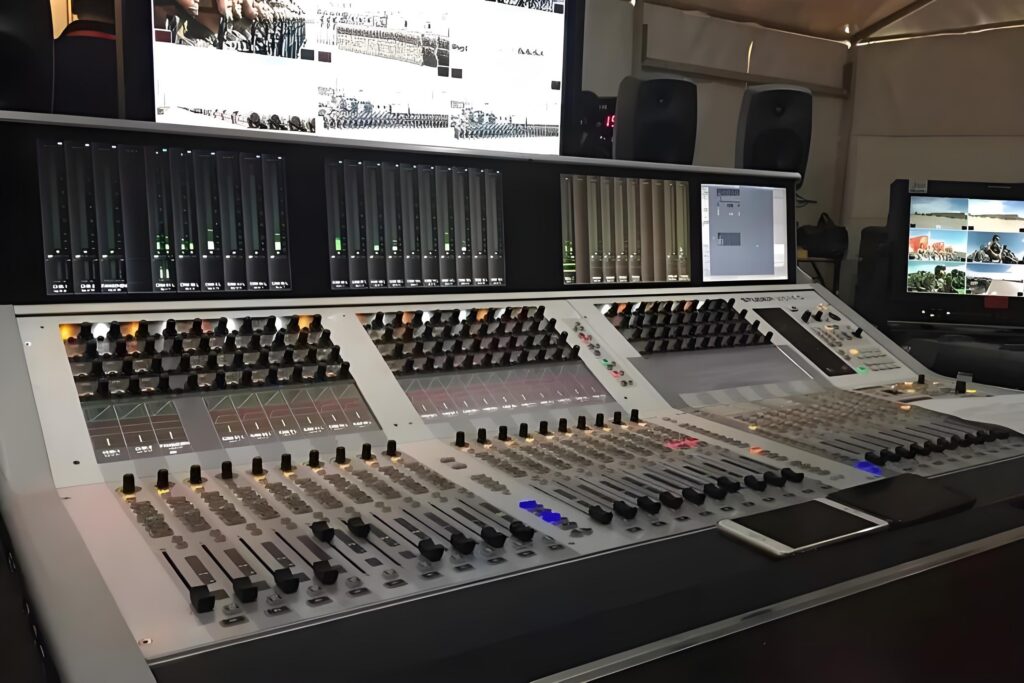
    Broadcast TV and radio mixing console setups operate under fundamentally different constraints than music recording or live sound. The console must handle simultaneous multi-format outputs (stereo, 5.1, Atmos, multilingual feeds), integrate deeply with video facility infrastructure, support 24/7 operation in some installations, and meet broadcast regulatory standards (loudness compliance, EBU R128, ATSC A/85). Total broadcast facility installations range from 400,000 USD for a regional TV studio to 8,000,000+ USD for a flagship public broadcaster’s main TV center or a premier OB truck. This guide covers the console-centric architecture for broadcast TV and radio facilities, including studio installations, master control rooms, and outside broadcast (OB) trucks.

    For broader context, see our pillar guide to professional mixing consoles 2026, our best mixing console for broadcast TV/radio 2026 buyer guide, and our multi-format routing for broadcast guide.

    Console categories for broadcast applications

    Three console categories handle different broadcast use cases:

    Broadcast specialty consoles — purpose-built for TV/radio with multi-format routing, network audio integration, and broadcast-specific feature sets:

    • Studer Vista series — Vista 1, Vista 5, Vista 9, Vista X, Vistonics interface, the European public broadcaster reference
    • Lawo mc² — mc²36, mc²56, mc²96, IP-native, common in flagship TV studios and high-end OB
    • Calrec Apollo / Summa / Brio / Argo — UK broadcast standard, Hydra2 networking, common at BBC, Sky, ITV

    These consoles range 200,000-1,500,000 USD per installation depending on configuration.

    Live sound consoles adapted for broadcast — primarily Avid VENUE for award shows, Olympics broadcasts, and special events:

    • Avid VENUE S6L — common at Grammys, Oscars, late-night TV shows for music performances and large-scale broadcast events with music focus

    Compact broadcast consoles — for small TV studios, regional broadcasters, news studios, smaller radio operations:

    • Lawo mc²36 (~150,000 USD) — entry-level pro broadcast
    • Calrec Brio (~50,000 USD) — compact broadcast
    • Studer OnAir 1500/2500 (~25,000-60,000 USD) — Studer’s compact line
    • Wheatstone L-12 / G-12 — radio-focused compact consoles

    TV studio facility setup

    A flagship TV studio (network or premier public broadcaster) typically includes:

    Studio control room — primary console (Studer Vista X, Lawo mc²96, Calrec Apollo) with 96-256 input channels, 64-128 output buses, multiple monitor positions for sound mixer, music mixer, dialogue mixer, and producer.

    Master control / continuity — Wheatstone, Logitek, Studer OnAir, or compact Lawo / Calrec consoles handle network programming, commercials, and live continuity.

    Production audio routing — typically built around an audio router (Lawo Nova73, Calrec Hydra2, Studer Routing System, or third-party SDI/IP routers). The audio router interconnects studios, edit suites, master control, ingest, and external sources.

    Network audio fabric — Ravenna (AES67), Dante, or proprietary networks (Lawo, Calrec). IP-native installations use ST 2110 standards for SDI replacement.

    Loudness management — TC Electronic, Junger, or Linear Acoustic loudness processors ensure compliance with EBU R128 (Europe), ATSC A/85 (North America).

    Tally and intercom integration — RTS Bolero, Clear-Com FreeSpeak, or Riedel Bolero wireless intercom integrated with the console.

    A typical flagship TV studio audio setup runs 600,000-1,200,000 USD, integrated with the broader video facility costing 5,000,000-25,000,000 USD.

    Outside broadcast (OB) truck setup

    OB trucks bring the broadcast facility to live events — sports, concerts, news, public events. A flagship OB truck (Telegenic, NEP, Mediapro, NHK, BBC) houses an entire broadcast facility in a 14-meter expanding trailer.

    Console — Lawo mc²96 or Calrec Apollo, with 128-256 inputs, 64-128 outputs. Some flagship trucks deploy two consoles for music and dialogue mixers operating simultaneously.

    Stagebox infrastructure — typically 64-200 mic input racks with redundant network paths (fiber to the truck). Calrec Hydra2 stageboxes, Lawo A_stage stageboxes, or Studer Stageboxes.

    Routing and monitoring — internal IP audio fabric (typically Ravenna/AES67 or proprietary) with comprehensive monitoring positions for the audio crew of 4-8 engineers.

    Truck integration — audio integrates with video routing, vision mixing, replay (EVS), graphics, and transmission via SDI embedded audio, MADI, or IP transport. Audio over IP (ST 2110-30) is now standard in modern flagship trucks.

    A flagship OB truck represents 4,000,000-15,000,000 USD complete (audio is typically 800,000-2,500,000 USD of that).

    Radio facility setup

    Radio is operationally simpler than TV but uses purpose-built consoles:

    Studio consoles — Lawo Crystal, Studer OnAir, Wheatstone L-Series, Logitek Mosaic, AEQ Forum/Capitol. Designed for talk and music format management, profile recall for different shows, integrated telephone hybrid management, and codec management.

    Master control — Wheatstone, AEQ, or other broadcast-specialty consoles for network distribution.

    Talkback and IFB — extensive intercom and producer-talent communication infrastructure, often integrated into the console.

    A typical flagship radio studio installation runs 80,000-400,000 USD per studio. Major networks operate 12-30 studios at a single facility.

    Network audio and IP infrastructure

    The 2026 broadcast facility runs on IP audio:

    ST 2110-30 — uncompressed PCM audio over IP, the SDI replacement standard AES67 — vendor-neutral IP audio interoperability standard Ravenna — Lawo’s primary IP audio implementation (AES67-compatible) Dante — Audinate’s IP audio standard, common in TV and radio Calrec Hydra2 — Calrec’s proprietary network (AES67 gateway available) Studer A-Link — Studer’s proprietary network

    Most modern broadcast installations support multiple protocols simultaneously through gateways. A flagship facility might run Hydra2 internally with Dante and ST 2110 gateways for external connectivity.

    Loudness, monitoring, and compliance

    Broadcast operates under strict regulatory loudness standards:

    • EBU R128 (Europe) — target -23 LUFS integrated, -2 dBTP true peak
    • ATSC A/85 (North America) — target -24 LUFS integrated
    • ARIB TR-B32 (Japan) — target -24 LKFS

    Loudness management is integrated through:

    • Loudness meters at every mix position (TC Electronic LM6, Nugen MasterCheck, Junger LD250)
    • Loudness processors at transmission (Junger D*AP, Linear Acoustic AERO, TC Electronic DB6)
    • File-based loudness verification for prerecorded content

    Monitoring infrastructure follows ITU-R BS.1116 standards for critical listening rooms.

    Redundancy in broadcast

    Broadcast facilities require comprehensive redundancy:

    • Console processing redundancy — Lawo Power Core, Calrec Bluefin, Studer DSP run redundant DSP cards with seamless failover
    • Network redundancy — dual-network infrastructure (typically two independent Ravenna or Hydra2 networks)
    • Power redundancy — UPS, generator backup, dual power feeds to all critical equipment
    • Studio redundancy — backup studios ready to take air if primary studio fails

    24/7 operations cannot tolerate downtime — failures must be invisible to viewers and listeners.

    Sample budget — regional flagship TV studio

    A regional TV station main studio with a national network feed:

    • Main console (Calrec Brio or Lawo mc²36): 100,000 USD
    • Master control console (Studer OnAir): 35,000 USD
    • Audio router and Hydra2/Ravenna fabric: 80,000 USD
    • Stagebox infrastructure: 65,000 USD
    • Loudness and processing: 35,000 USD
    • Monitoring and acoustic treatment: 50,000 USD
    • Cabling and integration: 60,000 USD
    • Total audio: ~425,000 USD

    A flagship public broadcaster facility (BBC New Broadcasting House tier) runs 8-15× this figure across multiple studios and master control rooms.

    Bottom line

    Broadcast TV and radio mixing console setups are integrated facility installations rather than standalone console deployments. The console is one component of a broader video, audio, and IP infrastructure, but it remains the critical mixing position where program audio is balanced and prepared for transmission.

    Specialty broadcast manufacturers (Studer, Lawo, Calrec) dominate flagship installations, with their consoles purpose-built for the multi-format routing, network integration, redundancy, and loudness compliance that broadcast demands. Music-focused live sound consoles (Avid VENUE) deploy at music-driven broadcast events but remain secondary in core broadcast facilities.

    For deeper analysis of the broadcast console manufacturers, see our brand guides on Studer, Lawo, and Calrec. For technical depth on the routing demands these systems handle, see our multi-format routing for broadcast guide.

    Return to our pillar guide to professional mixing consoles 2026 for the complete professional mixing console landscape.