Catégorie : Broadcast

  • Lawo mc² IP-native broadcast consoles: complete pro guide

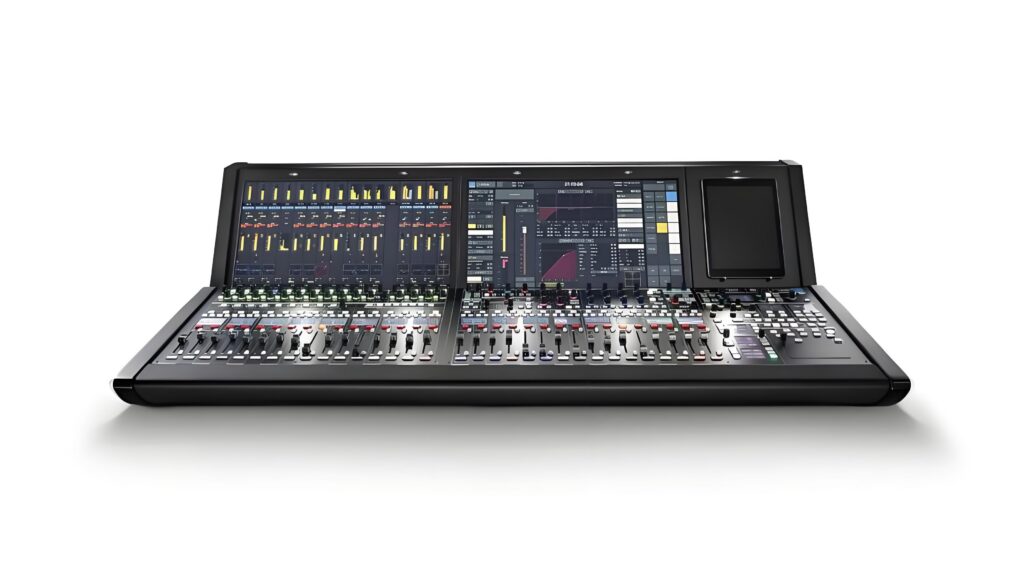
    If broadcast television in Germany, Switzerland, Austria, and increasingly across Europe and Asia has a default flagship console specification in 2026, it’s the Lawo mc² series. Founded in 1970 in Rastatt, Germany, Lawo built its position progressively through the 1990s and 2000s, then consolidated it dramatically when the broadcast industry began the transition to IP-native infrastructure. Where Studer Vista and Calrec had to retrofit IP routing onto consoles originally designed for MADI/SDI workflows, Lawo’s mc² series was IP-native from the ground up — Ravenna AES67 networking, full SMPTE ST 2110 compliance, and integration with the Nova73 router that handles audio, video, and control on a single unified IP fabric.

    This guide covers the mc² family — mc² 36, mc² 56, mc² 96 — from a professional broadcast engineer’s perspective.

    Lawo mc² 36: the compact broadcast flagship

    mc² 36 is the smallest of the modern Lawo broadcast consoles — 16 to 40 faders, up to 192 DSP channels, and full IP-native architecture. The mc² 36 is widely deployed in regional broadcast facilities, smaller OB trucks, university and corporate broadcast operations, and as auxiliary console at major facilities. Pricing typically 90,000 to 180,000 USD depending on fader count and processing configuration.

    The defining technical features:

    • Native Ravenna AES67 / SMPTE ST 2110-30 I/O without bridge devices
    • Lawo Power Core processing engine (the same engine used in mc² 56 and mc² 96, scaled to fit the smaller surface)
    • VisTool integration — Lawo’s screen-based control surface for routing, snapshot management, and IP fabric monitoring
    • Audio and video monitoring integration via the Nova73 router or Lawo’s V_remote4 for IP-routed video

    Lawo mc² 56: the mid-flagship

    mc² 56 is the workhorse of the Lawo broadcast line — 32 to 96 faders, up to 384 DSP channels, deployed at most major German public broadcasters (ARD member stations, ZDF), Swiss SRF, Austrian ORF, French TV channels, and a growing number of US and Asian broadcast facilities. Pricing for mc² 56 systems with redundant Power Core engines and full IP I/O runs 250,000 to 450,000 USD.

    mc² 56 is the natural choice for:

    • Main TV studio production at mid-to-large broadcasters
    • Large OB truck installations (sports, news, live entertainment)
    • Major radio network main studios
    • Corporate broadcast facilities at the flagship tier

    Lawo mc² 96: the full flagship

    mc² 96 is Lawo’s largest console — up to 144 faders, up to 1,024 DSP channels, deployed at the largest broadcast facilities worldwide. mc² 96 installations include major sports broadcast OB trucks, flagship TV studios at top-tier broadcasters, and large theatrical/concert hall installations doing live broadcast. Pricing is project-specific but typically begins at 600,000 USD and scales to 1.5 million USD or more for fully loaded installations with redundant systems.

    The IP-native advantage

    What makes Lawo distinct from the legacy broadcast console competition is the depth of IP-native integration. Specifically:

    Single IP fabric for audio, video, and control. A Lawo mc² installation with Nova73 router handles SMPTE ST 2110-30 (audio), ST 2110-20/22 (video), and NMOS IS-04/IS-05 (control discovery and routing) on a single network. Legacy approaches require separate audio (MADI/Dante), video (SDI), and control infrastructure.

    Routing transparency. Any input on the IP fabric can be routed to any console channel without patch bays, breakout boxes, or format converters. For an OB truck doing a live sports broadcast with 80+ camera feeds, 200+ audio sources, and dozens of intercoms, this single-fabric approach is operationally decisive.

    Scalability and disaster recovery. Adding I/O to a Lawo system means adding a Ravenna-compatible device to the network — no proprietary stage-rack expansion. Multiple consoles can share I/O on a single fabric. Disaster recovery scenarios (failover to backup studio) are simpler when both studios are on the same IP infrastructure.

    Remote production. With low-latency IP transport (Ravenna or ST 2110), Lawo systems handle remote production scenarios where the console operator and the talent are in different cities or countries — increasingly common for sports broadcast, news, and corporate streaming.

    For broader broadcast routing context, see our multi-format routing for broadcast mixing consoles guide.

    Lawo vs Studer vs Calrec

    In the European broadcast market specifically, the three-way competition between Lawo, Studer Vista, and Calrec plays out roughly as follows:

    • Lawo dominates German-speaking territories and is gaining share across Europe and Asia, particularly for new IP-native installations
    • Studer holds entrenched positions at established European public broadcasters (BBC for radio, France Télévisions, RAI) where Vista frames are already in service
    • Calrec dominates UK broadcast (Sky, BT Sport) and major sports broadcasting (NBC Sports, BBC Sport for major events)

    For US broadcast, Avid VENUE S6L and Yamaha hold larger shares than the European specialists, though Lawo is gaining ground at the high end of US sports broadcast.

    Where Lawo fits in a 2026 facility

    Lawo mc² is the natural specification for:

    • New broadcast facility builds where IP-native architecture is the explicit requirement
    • ST 2110 transition projects at established broadcasters
    • Large OB trucks doing major sports and live entertainment
    • Remote production workflows (sports, esports, corporate streaming)
    • Multi-studio facilities sharing common IP fabric

    For application context, see best mixing console for broadcast TV/radio 2026 and broadcast TV/radio setup walkthrough.

    Where to buy Lawo consoles

    Lawo mc² systems are sold primarily through factory direct (Lawo AG, Rastatt) and authorized broadcast integrators rather than through general pro audio retail. Thomann (EU) carries some smaller mc² 36 configurations. Major installations go through Lawo’s regional offices (Lawo USA, Lawo Asia) with custom integration and on-site commissioning.

    Bottom line

    Lawo mc² is the IP-native broadcast flagship for engineers and broadcasters serious about ST 2110 infrastructure. The combination of mature Ravenna networking, deep video integration via Nova73, and scalable processing makes Lawo the default specification for new broadcast IP builds.

    For the broader context on professional mixing consoles, return to our professional mixing console 2026 expert guide.

  • Calrec Apollo, Summa, Brio, Argo broadcast consoles: pro guide

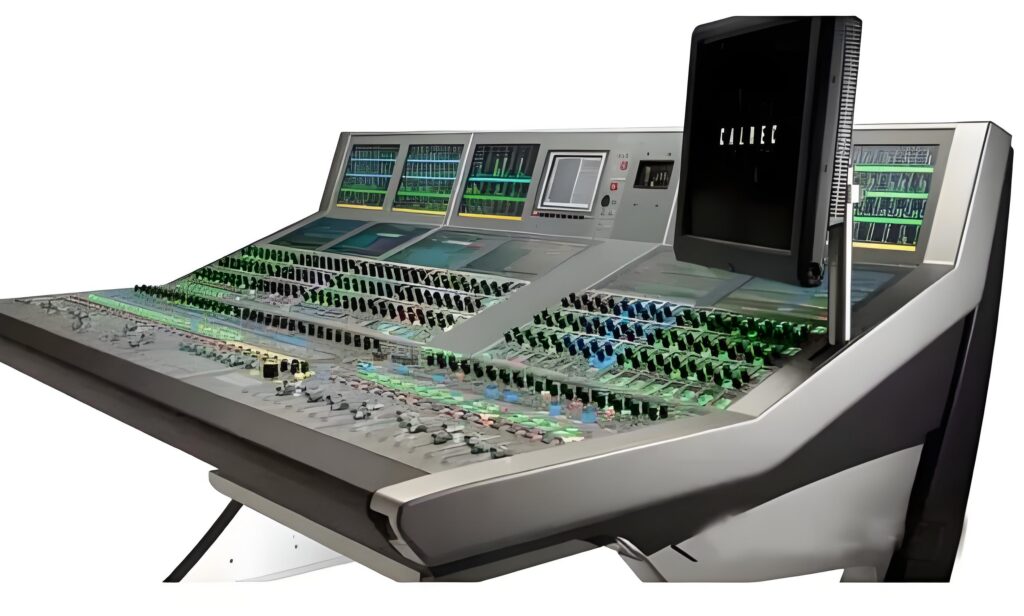
    Calrec Audio has been the UK broadcast console standard since the 1970s. Founded in 1964 in Hebden Bridge, Yorkshire, Calrec built its initial reputation supplying the BBC with custom broadcast consoles. By the 1990s, Calrec had expanded into commercial UK broadcasting (ITV, Sky Sports, BT Sport) and major sports broadcast worldwide. In 2026, Calrec consoles handle a substantial share of the world’s largest sports broadcasts — Premier League football, Six Nations rugby, Wimbledon, the Olympics, NFL coverage on NBC and CBS, and countless other major productions. Owned by US media company Audiotonix since 2020, Calrec continues to develop the Apollo, Summa, Brio, Argo, and Type R lines.

    This guide covers the modern Calrec line from a professional broadcast engineer’s perspective.

    Calrec Apollo Plus: the flagship

    Apollo Plus is Calrec’s flagship console — up to 1,020 input channels, up to 256 faders, and the Hydra2 networking system. Apollo Plus installations are found at the largest broadcast facilities and OB trucks worldwide, particularly for major sports broadcast where its routing scale and reliability are critical. Pricing is project-specific but typically begins at 500,000 USD for compact configurations and scales to 2 million USD or more for fully loaded major-broadcaster installations.

    The defining technical features:

    • Hydra2 networking — Calrec’s proprietary fiber-based audio network with up to 8,192 inputs and outputs across the fabric, with 32 fully redundant connection paths
    • Bluefin DSP engine — high-channel-count processing with the headroom for very large broadcast applications
    • Direct-bus matrix — every input can route directly to any matrix or aux without intermediate patching
    • Surround monitoring — 5.1, 7.1, and Dolby Atmos / 7.1.4 monitoring built into the master section

    Calrec Summa, Brio, and Type R

    Summa is the mid-tier Calrec console — 16 to 96 faders, up to 256 input channels, Hydra2 native. Summa is widely deployed in mid-size TV studios, regional broadcast facilities, and OB trucks where Apollo Plus’s footprint and cost are excessive but full Hydra2 integration is required. Pricing 200,000 to 400,000 USD.

    Brio is the compact Calrec — 36 faders fixed surface, integrated I/O, designed for smaller broadcast applications (regional radio, small TV studios, university broadcast, corporate). Brio is the most accessible entry into the Calrec ecosystem at 50,000 to 80,000 USD.

    Type R (introduced 2018, evolving in 2024-2025) is Calrec’s IP-native console — fully ST 2110-compliant, with a touchscreen-first surface approach designed for radio and TV applications where the operator workflow is largely software-driven. Type R competes with Lawo mc² 36 for new IP-native installations.

    Argo is Calrec’s newest flagship-tier IP-native console (introduced 2022), positioned as the ST 2110 successor to Apollo for new builds. Argo combines Hydra2 ImPulse processing with native IP networking. Pricing for Argo systems begins around 350,000 USD.

    What makes Calrec distinct

    Several factors explain Calrec’s dominance in the highest-stakes broadcast applications:

    1. Sports broadcast specialization. Calrec consoles are designed around the specific demands of multi-feed sports broadcast — multiple concurrent program feeds (international, host broadcast, world feed, talent isolation), large numbers of intercom channels, and the need for bulletproof reliability under high-pressure live conditions. The direct-bus matrix and Hydra2 routing scale are specifically suited to these applications.

    2. Hydra2 reliability. Hydra2 is widely regarded as the most reliable proprietary broadcast network in production. Calrec engineers cite Hydra2’s automatic failover and dual-redundant fiber paths as a primary reason for choosing the system on major sports broadcasts where any audio dropout would be catastrophic.

    3. Operator ergonomics. Calrec surfaces are designed for fast, eyes-up operation in broadcast environments. Channel strips have a consistent layout across the product line; operators trained on a Brio can transition to an Apollo Plus with minimal retraining.

    4. UK broadcast incumbency. For UK-based broadcast operations and UK-trained engineers, Calrec is the default specification. This creates a self-reinforcing cycle in which UK broadcast facilities continue to specify Calrec to maintain workforce continuity.

    For broader broadcast routing context, see our multi-format routing for broadcast mixing consoles guide.

    Calrec vs Studer vs Lawo

    Among the three European broadcast specialists, the choice typically comes down to:

    • Calrec — the right answer for major sports broadcast, UK-incumbent facilities, and applications requiring the largest channel counts with bulletproof reliability
    • Lawo mc² — the right answer for new IP-native installations, German-speaking territories, and integrated audio/video workflows
    • Studer Vista — the right answer for European public broadcast incumbency, post-production, and applications where the Vistonics interface is preferred

    For US broadcast, Avid VENUE S6L and Yamaha Rivage hold larger shares — but Calrec has gained ground at the highest-stakes sports broadcasts (NFL, NBA, MLB major productions).

    Where Calrec fits in a 2026 facility

    Calrec is the natural specification for:

    • Major sports broadcast OB trucks (NFL, Premier League, Champions League, Olympics, World Cup)
    • UK broadcast facilities at every scale (BBC, Sky, ITV, BT Sport)
    • Large international broadcast operations (multiple language feeds, world feed production)
    • Music and entertainment broadcast where reliability is paramount

    For application context, see best mixing console for broadcast TV/radio 2026 and broadcast TV/radio setup walkthrough.

    Where to buy Calrec consoles

    Calrec systems are sold primarily through factory direct (Calrec UK) and authorized broadcast integrators. Thomann (EU) and Sweetwater (US) handle smaller Brio and Type R configurations. Major Apollo Plus, Summa, and Argo installations go through Calrec’s regional offices (Calrec North America in particular) with custom integration and on-site commissioning. For UK broadcast specifically, Calrec maintains direct relationships with virtually every major broadcaster.

    Bottom line

    Calrec remains the broadcast console of choice for the world’s most demanding sports and entertainment broadcasts. Apollo Plus is the flagship; Argo is the IP-native flagship for new builds; Summa and Brio cover the mid and compact tiers. For UK broadcast and major sports productions, Calrec is often the only correct answer.

    For the broader context on professional mixing consoles, return to our professional mixing console 2026 expert guide.