
The digital vs analog mixing console question is essentially settled in 2026 — but the answer differs by application. For commercial recording studios at the flagship tier, analog still rules. For live sound, broadcast, and most modern hybrid workflows, digital has been the default for over a decade. But the line is not absolute: hybrid analog-digital workflows have blurred the distinction, and several modern flagship consoles (SSL Origin, Neve Genesys, API 1608-II) are explicitly designed to integrate with DAW workflows while preserving analog sound character.
This guide cuts through the marketing noise on both sides to give working pro audio engineers a useful framework for the digital vs analog decision in 2026.
What “analog” and “digital” actually mean in 2026
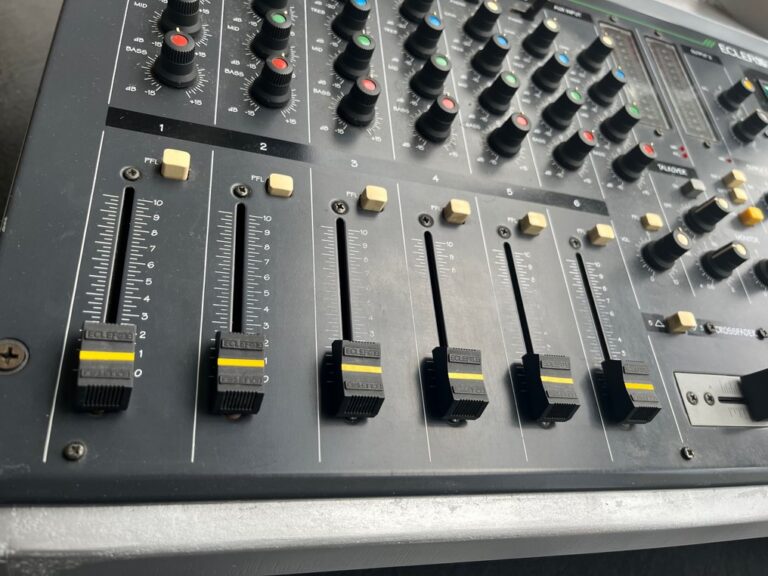
The terms can be confusing — every modern console has digital elements (automation, recall, control surface processing) and many “digital” consoles include analog circuitry (mic preamps, output stages). For this guide:
Analog console = signal path is analog from input to output. Audio passes through analog amplifiers, EQ circuits, dynamics, and bus summing without conversion to digital. Examples: SSL Origin, Duality δelta, vintage 4000-series; Neve 88R, Genesys, vintage 80-series, VR; API 1608-II, Vision, Legacy.
Digital console = audio is converted to digital at the input stage, processed in DSP, and converted back to analog at the output stage. The signal path is bits, not volts. Examples: DiGiCo Quantum series; Avid VENUE S6L; Yamaha Rivage PM, CL, QL; Midas Pro X, Heritage 3000; Studer Vista; Lawo mc²; Calrec.
Hybrid workflow = analog signal path through the console combined with DAW-based processing. The console handles tracking, summing, and final output through analog circuitry; the DAW handles editing, plugin processing, and session management. Most modern flagship analog consoles (Origin, Duality, Genesys) are explicitly designed for this workflow.
Where analog still rules
Flagship commercial recording studios. Major commercial studios — those targeting major-label clients and high-budget independent productions — still specify analog flagship consoles for several reasons:
- Client expectations. Major-label clients expect to see and work with a flagship analog console. The room aesthetic and the perceived sonic character are part of what justifies premium day rates.
- Sonic character. Analog signal path with transformer coupling and Class A/AB topology adds harmonic content and “feel” that digital processing has not fully replicated, despite progress in plugin emulation.
- Engineer training. Senior engineers trained on analog consoles typically prefer the operational ergonomics and tactile feedback of analog frames.
Mastering rooms. Mastering engineers at the highest tier typically work through analog mastering consoles (SPL DMC, Maselec MTC, Crookwood) for the final critical-listening signal path. Even in heavily ITB mastering workflows, the analog monitor controller and final summing stage matter.
Boutique tracking rooms. Smaller commercial studios competing on sonic character — particularly those focused on rock, jazz, classical, and singer-songwriter material — typically specify analog for the same reasons as flagship facilities.
Where digital dominates
Live sound (arenas, festivals, theatrical, corporate). Digital is the universal default for live sound at every tier. Reasons include:
- Snapshot recall — essential for theatrical productions, multi-band festivals, and corporate events with multiple acts/scenes
- Channel count flexibility — modern digital consoles (DiGiCo Quantum 7, Avid VENUE S6L, Yamaha Rivage PM10) handle 192-256 channels with full processing
- Network audio integration — Dante, AVB, MADI, Optocore networking handles complex stage I/O without analog snake routing
- Onboard effects — eliminating need for outboard effects racks reduces operational complexity
- Automation and recall — entire show files can be recalled, edited, and shared between consoles
For application-specific guidance, see best digital mixing console for arena tour 2026.
Broadcast TV/radio. Digital is the default for all modern broadcast applications. IP-native architectures (Lawo mc², Calrec Argo, Studer Vista V, SSL System T) handle SMPTE ST 2110 broadcast routing that has no analog equivalent. See best mixing console for broadcast TV/radio 2026.
Modern hybrid recording workflows. A substantial share of contemporary recording — particularly in genres like electronic music, pop, hip-hop, and bedroom-produced indie — happens primarily ITB with minimal analog signal path. Digital consoles or pure DAW workflows make sense in these contexts. See console vs DAW pro recording studios comparison.
Sonic differences that still matter
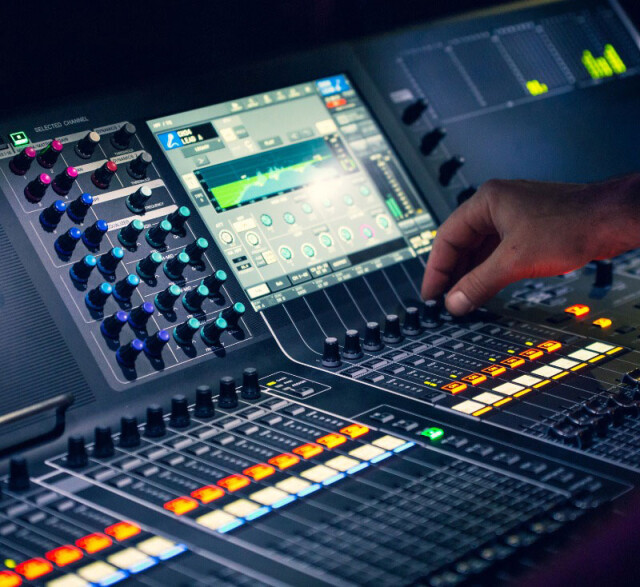
Despite massive progress in plugin emulation and digital signal processing, several differences between digital and analog signal paths remain audible and measurable:
1. Transformer harmonics. Output transformers in analog consoles add 2nd and 3rd order harmonic content that follows program material in a non-linear way. Plugin emulations approximate this but don’t fully replicate the analog interaction with source impedance.
2. Class A discrete amplifier behavior. The “feel” of pushing a Class A discrete amplifier into mild saturation — characteristic of the Neve 80-series and API discrete topology — is a non-linear behavior that responds dynamically to program material in ways that are difficult to emulate digitally.
3. Bus summing topology. Analog summing through transformers (Neve) or discrete op-amps (SSL, API) imparts a particular bus character that’s distinct from digital summing — even bit-perfect digital summing produces measurably different output than analog summing of the same source material.
4. Headroom and clipping behavior. Analog signal paths have soft, harmonically-rich clipping behavior at high levels. Digital signal paths have hard clipping at 0 dBFS with no harmonic enhancement, requiring more careful gain staging in tracking applications.
These differences favor analog at the flagship recording tier. They favor digital in essentially every other application, where the operational advantages outweigh the sonic differences.
Cost comparison
For comparable channel counts:
Flagship analog (32-48 channels):
- SSL Origin (32ch): ~80,000 USD
- Neve Genesys G32: ~180,000 USD
- API 1608-II (32ch): ~110,000 USD
- AMS Neve 88R (48ch): ~400,000-500,000 USD
Flagship digital (32-48 fader equivalent, 96+ channel processing):
- DiGiCo Quantum 5: ~75,000 USD
- Avid VENUE S6L-32D: ~150,000 USD (full system)
- Yamaha Rivage PM7: ~140,000 USD
- Midas Pro X: ~85,000 USD
For comparable specifications, digital consoles offer measurably more channels, more processing depth, and more routing flexibility per dollar. Analog consoles offer sonic character, client perception value, and long-term ownership horizon (a well-maintained analog console can serve 25+ years; digital consoles typically have 10-15 year operational lifespans before replacement).
Hybrid workflow as the modern compromise
For commercial recording studios in 2026, hybrid analog-digital workflow is increasingly the default. The pattern:
- Analog console for tracking, summing, and final output
- DAW (Pro Tools, Logic, Cubase) for editing, plugin processing, and session management
- Console-DAW integration via HUI/MCU control, total recall, and session save/recall
This approach combines analog sonic character on the critical signal path with modern editing flexibility and recall. Modern flagship analog consoles (SSL Duality δelta, Neve Genesys, API 1608-II, API The Box) are explicitly designed for this workflow.
Bottom line
In 2026, the digital vs analog choice is best framed as application-specific:
- Flagship commercial recording → analog (SSL, Neve, API)
- Mastering → analog (SPL DMC, Maselec, Crookwood)
- Live sound (any scale) → digital (DiGiCo, Avid, Yamaha, Midas)
- Broadcast TV/radio → digital (Lawo, Calrec, Studer)
- Modern hybrid recording studios → analog console with DAW integration
- Pure ITB or budget-constrained operations → digital console or DAW-only workflow
Neither technology is universally superior. Both have evolved to maturity, and the right choice depends on what you’re doing, who your clients are, and how you want to work.
For the broader context on professional mixing consoles, return to our professional mixing console 2026 expert guide.
🎚️ Essential accessories for your mixing console
As an Amazon Associate I earn from qualifying purchases.