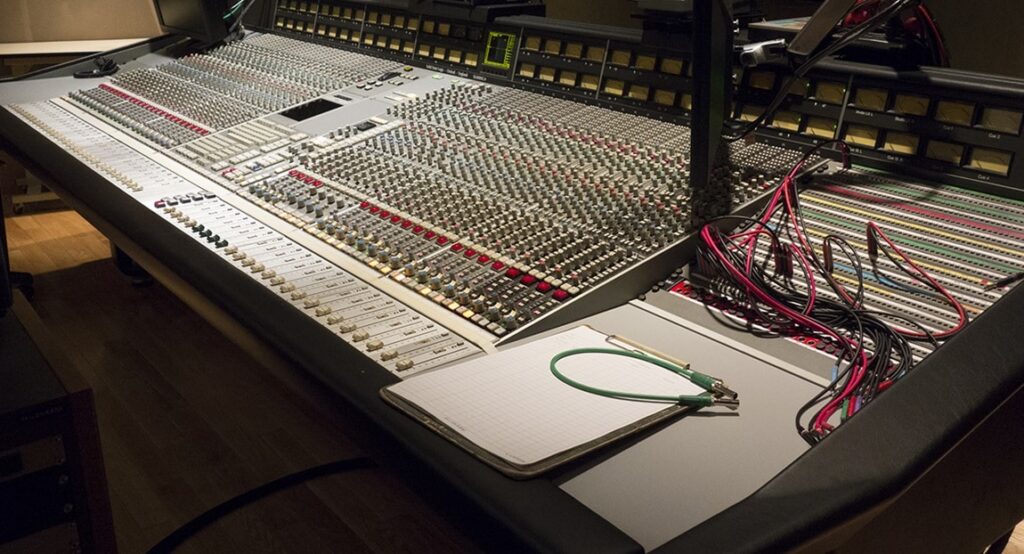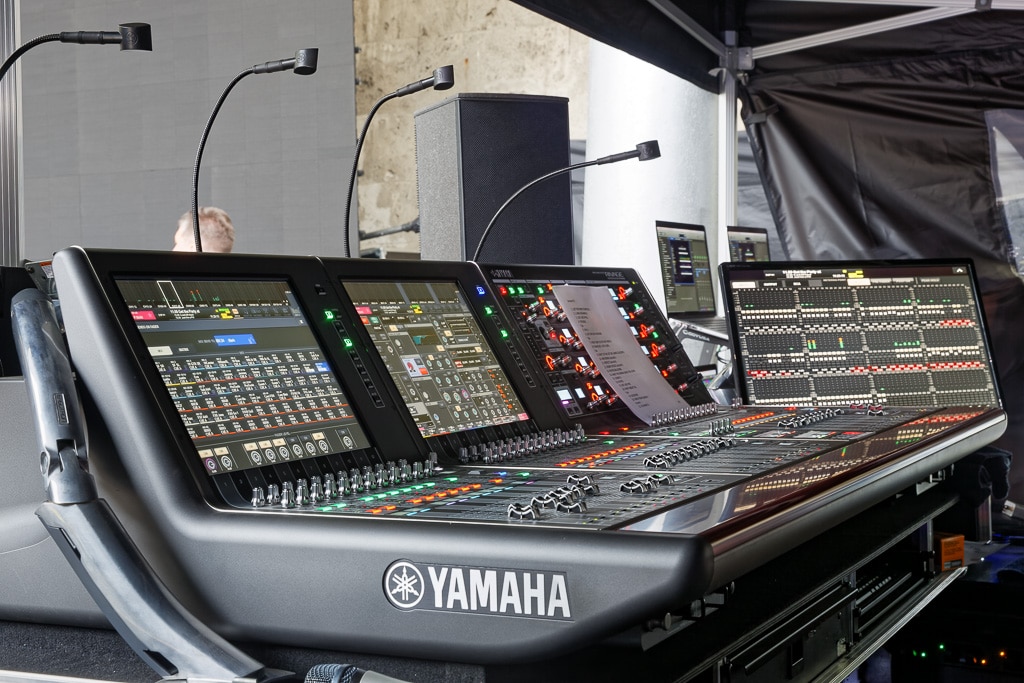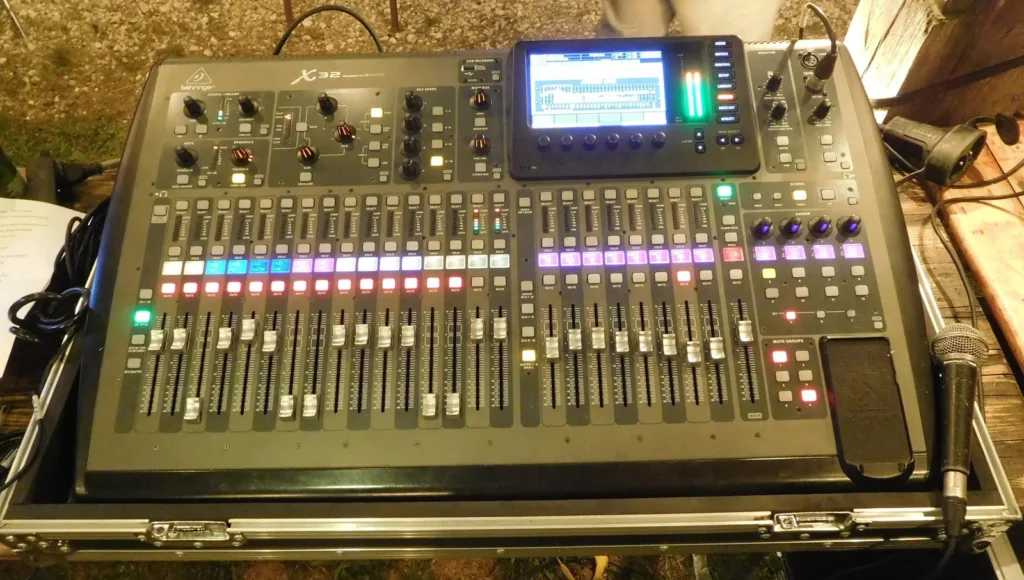
The SSL vs Neve question is the oldest and most consequential debate in commercial recording. From the late 1970s onward, every major commercial studio has had to choose — and the choice shapes the studio’s sonic identity, its operational character, and the kind of clients it attracts. In 2026, the question is just as alive: choosing between an SSL Origin or Duality δelta and a Neve Genesys G32 or 88R is a decision that defines the next 10-20 years of a studio’s character. The right answer depends on what you’re recording, how you want it to sound, and what your clients expect from your room.
This guide compares SSL and Neve from a working pro audio perspective — direct comparison, no marketing language, with specific guidance for studios making the choice.
The fundamental sonic difference
The SSL and Neve sonic philosophies are different in measurable, audible ways:
SSL is cleaner, faster, and more controlled. The SSL signal path uses IC op-amps for summing (versus Neve’s transformer summing on the legacy 80-series, modern designs vary), with discrete amplifiers in the channel strip. The result is lower THD across the frequency spectrum, faster transient response, and a sound that engineers describe as « in front of the speakers » or « modern ». The integrated bus compressor on every SSL frame from the 4000B onward adds a fast, glued-together master bus character that has defined commercial pop production for four decades.
Neve is warmer, richer, and more harmonically complex. The Neve signal path — particularly on the legacy 80-series but preserved meaningfully in modern 88R and Genesys — uses transformer-coupled inputs and outputs (Marinair, St. Ives, or modern Carnhill), Class A discrete amplifier topology in the mic preamps, and bus summing through transformers that contribute harmonic enhancement at higher levels. The result is measurable harmonic content (2nd and 3rd order distortion components at low percentages), a particular « thickness » in the lower midrange, and graceful clipping behavior that engineers describe as « musical ».
These differences are not subtle. An A/B comparison of an SSL 4000G and a Neve VR60 on the same source material will produce immediately distinguishable results, even without trained listening.
What each console is best for
The sonic differences translate into application preferences:
SSL excels at:
- Modern pop production (clean signal path, consistent bus compression)
- Hip-hop and electronic-influenced productions (transient detail, controlled low end)
- R&B and contemporary urban (modern, polished character)
- High-density mixes with many simultaneous elements (transparency keeps the mix from getting muddy)
- Hybrid ITB workflows where the console is the analog summing stage
Neve excels at:
- Rock production (warmth on guitars and drums)
- Singer-songwriter and acoustic-driven material (transformer richness on vocals)
- Orchestral and classical recording (harmonic complexity preserves natural acoustic detail)
- Jazz and acoustic ensemble work
- Productions targeting « vintage » or « warm » sonic aesthetics
These are tendencies, not rules. Major engineers have made clean records on Neve and warm records on SSL — but the consoles’ inherent character makes one direction easier than the other.
Modern lineups: what’s available in 2026
SSL modern flagship line:
- SSL Origin — 32 channels analog in-line, ~80,000 USD. The clean entry point.
- SSL Duality δelta — 24/36/48 channels analog hybrid, 130,000-220,000 USD. The workhorse hybrid flagship.
- SSL ORIGIN16/32 — rack-format summing, 6,500-12,000 USD. For ITB-mostly studios.
- SSL System T / SSL Live — broadcast and live applications.
Neve modern flagship line:
- Neve Genesys G16/G32 — 16/32/48/64 channels analog hybrid, 80,000-220,000 USD. The high-end commercial workhorse.
- AMS Neve 88R — 48/60/72/96 channels analog flagship, 350,000-900,000 USD. The full flagship.
- Rupert Neve Designs 5088 — 16/32 channels analog mixer, 60,000-90,000 USD. Boutique alternative.
For comparable channel counts, Genesys and Origin/Duality are the most direct head-to-head comparison. A Genesys G32 at ~150K USD competes with a Duality δelta 36 at ~165K USD; the choice between them is essentially a sonic preference.
Vintage market: 4000G vs VR60
For studios considering vintage acquisitions, the SSL 4000G/G+ and Neve VR60 are the most directly comparable vintage flagships:
- SSL 4000G/G+ restored frames trade at 80,000-180,000 USD (32-72 channels)
- Neve VR60 restored frames trade at 90,000-150,000 USD (60 channels)
- Neve 80-series (8068, 8088) trade at 250,000-800,000 USD depending on size and provenance
Annual maintenance budgets are comparable (8,000-20,000 USD for active operation), and full restoration costs are similar (50,000-100,000 USD on top of purchase price). The choice between vintage SSL and vintage Neve comes down to sonic preference.
For comprehensive vintage guidance, see vintage mixing console restoration guide and 1980s mixing consoles history.
Operational and ergonomic differences
Beyond sonics, several operational factors differ:
Channel strip layout. SSL uses a more compact channel strip with the dynamics section integrated alongside the EQ. Neve uses a more spread-out layout with separate dynamics and EQ sections. SSL is faster for engineers who do a lot of channel processing; Neve is more comfortable for engineers working primarily with broad EQ moves.
Bus compression. Every SSL has the integrated Quad bus compressor, which is part of the signature SSL sound. Neve consoles do not include integrated bus compression — engineers typically use external compression (often a Neve 33609, an SSL Bus Compressor as outboard, or a similar unit) on the master bus.
Center section monitoring. Both brands offer comprehensive monitoring matrices, but the implementations differ. SSL’s monitor section is typically more streamlined; Neve’s is more elaborate and offers more flexibility for surround monitoring on flagship 88R frames.
Automation. Modern SSL consoles use SSL’s δelta or UF8 control systems; modern Neve consoles use Encore. Both are mature and reliable. Vintage frames can be retrofitted with modern automation systems but at significant cost.
For broader analog-vs-digital context, see digital vs analog pro mixing console comparison.
What about hybrid choices?
For studios that want elements of both philosophies:
- API + Neve combination — installing a Neve console with API 500-series modules in the center section combines transformer warmth with API discrete character on key channels
- SSL + outboard Neve — installing an SSL console with Neve 1073, 1081, or Portico II preamps on the front-end gives SSL operational character with Neve harmonic content on key sources
- Vintage + modern combination — some studios maintain both an SSL 4000G+ and a Neve Genesys in different rooms, allowing client choice based on production needs
Where each fits in a 2026 facility
Choose SSL when:
- Your production calendar is primarily modern pop, hip-hop, R&B, or electronic-influenced material
- Your clients expect the « modern commercial » sound
- You value operational speed and clean signal path
- You want integrated bus compression as part of the console
- Hybrid workflow with a connected DAW is central to your operation
Choose Neve when:
- Your production calendar is primarily rock, singer-songwriter, jazz, acoustic, or orchestral material
- Your clients expect « warm » or « vintage » sonic character
- You value harmonic richness over signal-path transparency
- You’re willing to manage external bus compression as a separate decision
- You’re targeting major-label heritage clients who specifically request a Neve
For application-specific guidance, see best high-end mixing console for pro studio 2026 and flagship recording studio setup.
Bottom line
SSL and Neve represent two different and equally valid sonic philosophies. Neither is « better » in any objective sense — they’re tools for different applications. The right answer for your studio depends on what you record, who your clients are, and what sonic character you want as your room’s identity for the next decade. Both manufacturers will continue to be flagship-tier choices in 2026 and beyond.
For the broader context on professional mixing consoles, return to our professional mixing console 2026 expert guide.