
VCA and DCA grouping are two of the most important — and most confused — concepts in professional mixing. Even experienced engineers occasionally use the terms interchangeably, which obscures meaningful technical differences. Understanding what VCAs and DCAs actually do, how they differ, and when each is the right choice is essential for working pro audio engineers, particularly those moving between analog and digital console workflows or between recording and live sound applications. This guide cuts through the terminology confusion to provide a clear technical foundation.
The fundamentals: what each term means
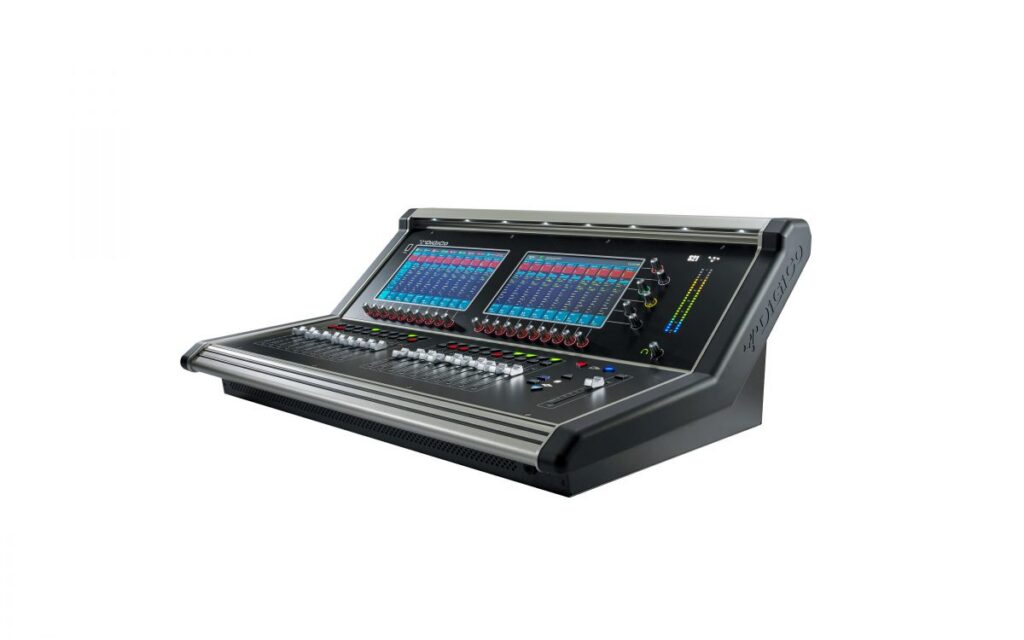
VCA stands for Voltage-Controlled Amplifier. A VCA is an analog circuit that varies signal gain in response to a control voltage. The audio signal passes through the analog VCA chip (typically an SSL VCA, dbx VCA, or similar) on its way to the channel output, and the gain varies based on the control voltage applied. VCAs are physical components in analog and hybrid consoles.
DCA stands for Digitally-Controlled Amplifier in some usages, or Digital Control Assignment in others. A DCA in a digital console controls the digital level of an audio signal in DSP — there’s no physical amplifier component, just a software gain stage that responds to the fader position assigned to the DCA group.
The fundamental functional difference: VCAs control physical amplifier circuits in the analog signal path; DCAs control digital gain stages in DSP. In operational terms, both are used the same way — assign multiple channels to a group fader, move the group fader, and all assigned channels move proportionally. The technical implementations are fundamentally different.
For broader signal flow context, see mixing console signal flow pro explained.
Why the distinction matters
Several practical implications follow from the technical difference:
1. Signal path integrity. Moving a VCA group fader changes the analog control voltage to the assigned VCA chips, varying analog signal gain. The audio signal stays in the analog domain throughout. Moving a DCA group fader changes the digital gain in DSP — entirely within the digital domain. There’s no analog-to-digital conversion involved with DCAs because the signal is already digital.
2. Audible difference. In well-designed VCA chips (such as the THAT Corporation 2150 and 2180 series, descended from dbx designs), coloration from the VCA itself is minimal at typical operating levels, although a VCA does add a little noise and distortion compared with a plain passive fader. In digital DCA implementations, there’s no audible difference at all because it’s just digital gain math. In practice, both VCA and DCA grouping are sonically transparent; engineers shouldn’t expect either to add character.
3. Behavior at extreme settings. VCAs have measurable distortion characteristics at high signal levels approaching their linear operating limits. Modern flagship VCAs (THAT 2180A) handle extreme dynamics gracefully but can produce detectable harmonics at very hot input signals. DCA gain changes in DSP add no measurable distortion at any gain setting — the only constraint is internal precision (high-resolution fixed- or floating-point processing in flagship digital consoles).
4. Failure modes. VCAs can fail in analog consoles after long service — a common vintage console maintenance issue. DCAs can’t fail in any analogous way because they’re software constructs. This affects long-term ownership economics. See pro mixing console maintenance and care guide.
Where you find each in 2026
VCA grouping appears on:
- Analog flagship consoles with VCA-based automation and grouping (SSL Duality δelta, XL 9000 K) — note that SSL ORIGIN has no VCA groups or automation, and many Neve and API consoles (e.g. API 1608-II with Final Touch) use moving-fader automation rather than VCA groups
- Vintage flagship consoles such as the SSL 4000 E/G+, whose channel faders and group masters are VCA-based (by contrast, the Neve VR used Flying Faders moving-fader automation with no VCA in the audio path)
- Hybrid analog-digital consoles where the analog signal path uses VCAs and the digital control surface manages the assignment
DCA grouping appears on:
- All digital consoles (DiGiCo Quantum, Avid VENUE S6L, Yamaha Rivage PM, Midas Pro X, Studer Vista, Lawo mc², Calrec)
- DAW-based mixing in any pro DAW (Pro Tools, Logic, Cubase)
- Hybrid consoles where the DSP control is digital even when the signal path is analog
In hybrid consoles, the terminology gets fuzzy. Some manufacturers describe their digital control of analog VCAs as “VCA grouping” (because the actual amplification is VCA-based) while others describe it as “DCA grouping” (because the control is digital). The technical reality is that both descriptions are partially correct.
How VCA and DCA grouping is used in pro applications
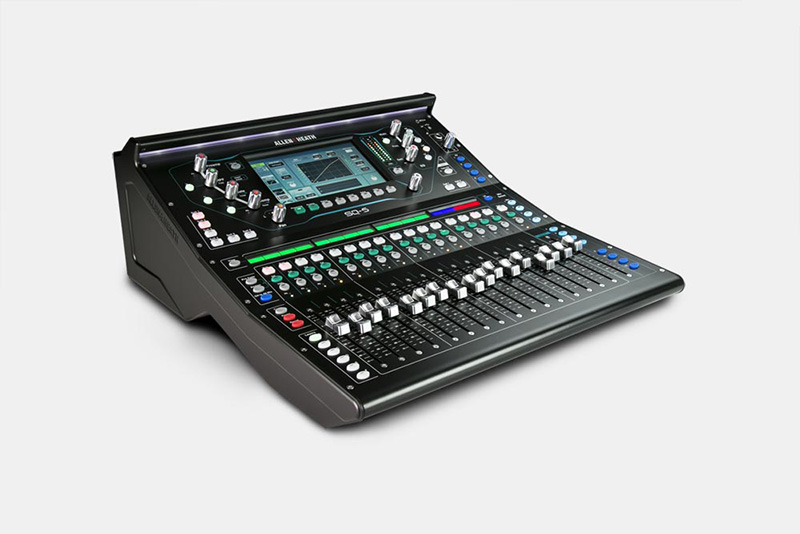
The functional applications are essentially identical regardless of underlying technology:
Drum kit grouping. Assigning kick, snare, toms, overheads, room mics to a drum VCA/DCA. The engineer can ride the entire drum bus with one fader.
Vocal stack grouping. Lead vocal, harmonies, doubles, ad-libs assigned to a vocal VCA/DCA. The engineer rides the entire vocal section with one fader.
Orchestral section grouping. Strings, brass, woodwinds, percussion each assigned to their own VCA/DCA. The conductor’s section levels can be ridden as units.
Live sound band grouping. All instruments to “band” VCA/DCA, all vocals to “vocals” VCA/DCA, allowing fast band-vs-vocals balance adjustments during a show.
Theater/musical grouping. Each scene’s active mics assigned to scene-specific VCA/DCAs, allowing fast scene transitions via single fader moves.
Broadcast grouping. Each program element (talent, music, ambient, effects) on its own VCA/DCA for fast production mixing.
For specific live sound applications, see arena/festival live sound setup walkthrough.
VCA/DCA spill, mute, and additional functions
Beyond simple level grouping, modern consoles offer additional VCA/DCA functions:
Spill (or “open” or “expand”) — pressing the VCA/DCA’s spill button sends the assigned channels to the layer-1 fader bank for individual fader access without leaving the group view. Most flagship digital consoles support multiple-level spill.
Mute group integration. VCA/DCA groups can be combined with mute groups for complex muting behavior — for example, muting all drums for an a capella verse without disturbing fader settings.
Solo group integration. Soloing the VCA/DCA solos all assigned channels at once, useful for isolating a section while still hearing internal balance.
Surround panning groups. On flagship surround consoles, VCA/DCA grouping can include linked surround pan position, allowing entire sections to be panned as a unit.
Snapshot recall. VCA/DCA assignments are typically part of the snapshot recall system — a single snapshot can change all group assignments instantly for scene-based productions.
Common technical confusions
Several technical confusions appear repeatedly:
1. “VCAs sound better than DCAs.” This is wrong. Modern VCAs and DCAs are both essentially transparent at typical operating levels. Engineers who believe they hear a difference are usually responding to something else (analog signal path coloration, console-specific sonic character, operational ergonomics).
2. “DCAs add latency.” This is wrong. DCAs are essentially gain math in DSP — no additional latency beyond what’s already in the console’s digital signal path. The console’s overall latency is determined by its DSP architecture, not by whether you use DCA grouping.
3. “VCA grouping changes the analog character of the channels.” This is wrong. VCAs control the level of an already-existing analog signal; they don’t change the harmonic content or character of that signal. Whatever character your channel strips deliver is independent of whether they’re VCA-grouped.
4. “VCAs pre-fader/post-fader behavior is the same as DCAs.” This is mostly correct but with subtleties. Both VCA and DCA masters act at the channel fader stage, so post-fader sends follow the group master while pre-fader sends do not.
5. “DCA grouping lets you ride sends without affecting the fader.” This is correct in some implementations and not others — depends on the specific console’s implementation. Worth checking on your specific console.
VCA vs subgroup buses: a different distinction
A separate confusion involves VCA/DCA versus actual subgroup buses:
VCA/DCA grouping controls multiple channels with one fader without summing them to a separate bus. The signal still goes to its original destination (typically the master bus); the VCA/DCA just controls level proportionally.
Subgroup buses sum multiple channels to a separate stereo (or mono) bus, which is then routed to the master. Subgrouping changes the signal path; VCA/DCA grouping doesn’t.
This matters because:
- Subgroup buses allow group-level processing (compression, EQ) on the summed group signal
- VCA/DCA grouping doesn’t allow group-level processing — it’s just level control
- For drum bus compression, subgroup is required, not just VCA/DCA grouping
- For simple level riding, VCA/DCA is more efficient than subgrouping
Many flagship consoles offer both subgrouping AND VCA/DCA grouping, with the engineer choosing which approach best fits each application.
Bottom line
VCA and DCA grouping are functionally similar tools for controlling multiple channels with one fader, but they’re technically different — VCAs are analog amplifier circuits, DCAs are digital gain stages. In modern flagship consoles, both are essentially transparent and operationally equivalent. Engineers should understand the distinction for technical accuracy and for context when comparing analog and digital console architectures, but in daily operation, the right answer is usually whatever group control your console provides — VCA or DCA.
For the broader context on professional mixing consoles, return to our professional mixing console 2026 expert guide.
Read also: Mixing console signal flow: complete pro audio technical guide · Pro mixing console maintenance and care: complete owner’s guide
Useful accessories
Gear4music / Thomann affiliate links: the price is the same for you, the commission funds our tests. Products checked on 28/09/2026; price and stock on the retailer page.
- DI box : Radial Pro DI
- XLR cable : Studiospares Plus XLR (5 m)
- Console lamp : Littlite 18XR-4-LED
- Monitoring headphones : beyerdynamic DT 770 Pro (250 ohms)