Catégorie : Buyer Guides

  • Best high-end mixing console for pro recording studio 2026

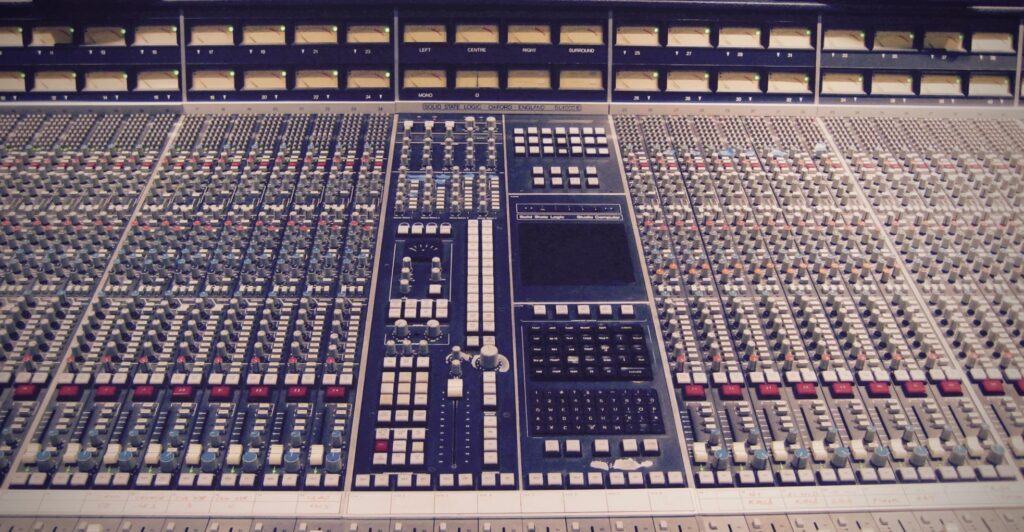
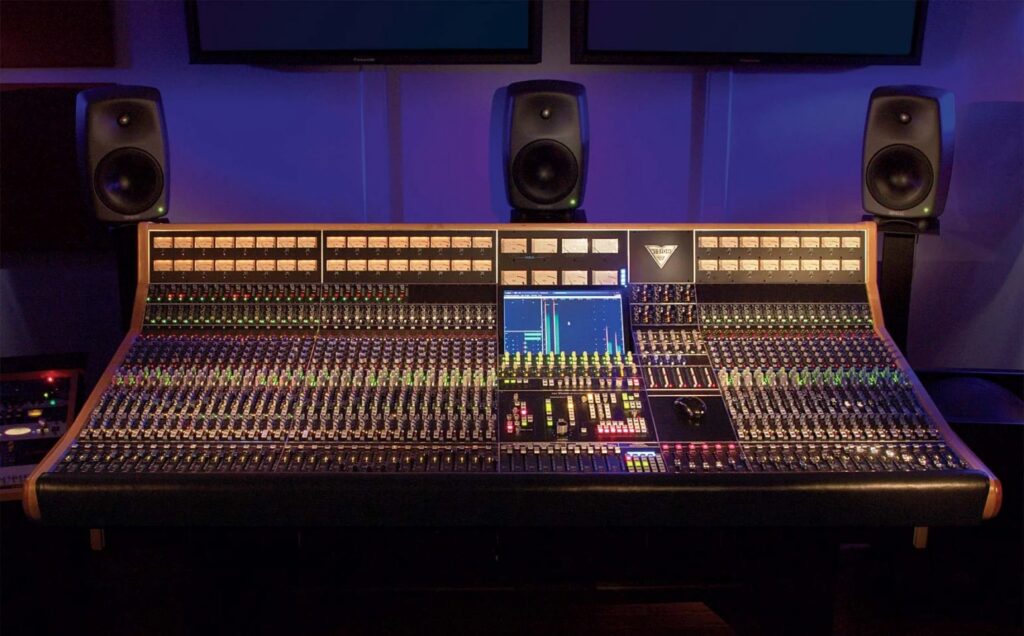
    For commercial recording studios investing in a flagship mixing console in 2026, the choice involves more than spec comparisons. The console you specify defines your studio’s sonic identity, the kinds of clients you can attract, your operational economics, and your maintenance burden for the next 10-25 years. This guide cuts through marketing language to give working pro audio buyers a useful framework for selecting a high-end recording console — what to consider, what each major option delivers, and how to match the console to your specific studio’s market position.
    This guide focuses on the flagship and upper-mid tier for commercial recording — consoles in the 80,000 to 700,000+ USD range. For mastering rooms see best mixing console for mastering studio 2026. For broadcast see best mixing console for broadcast 2026. For touring live sound see best digital mixing console for arena tour 2026.

    Buying framework: what defines a « best » choice

    Before specific recommendations, the right framework for evaluating high-end recording consoles:

    1. Define your client tier. Major-label commercial work justifies different console economics than independent and mid-budget productions. Studios targeting flagship-tier clients (major-label A&R, top-tier producers, A-list artists) can amortize a 400,000 USD console investment over premium day rates. Studios targeting independent and mid-budget clients need consoles that deliver flagship character at lower capital cost.

    2. Define your sonic philosophy. The single biggest decision is between SSL clean/punchy character and Neve warm/harmonic character — see SSL vs Neve comparison. API discrete topology offers a third path. Vintage consoles offer character + heritage at the cost of maintenance burden.

    3. Define your channel count requirement. Most modern hybrid workflows need 24-48 console channels at most — the DAW handles the rest. Larger channel counts (60-96) are needed primarily for orchestral scoring or full-band tracking applications.

    4. Define your maintenance commitment. Vintage flagships (SSL 4000G+, Neve VR, legacy 80-series) deliver world-class sound but require dedicated technical staff and 8,000-20,000 USD annual maintenance budgets. Modern flagships need significantly less ongoing investment.

    5. Define your DAW integration depth. Some studios need the console to function as a Pro Tools control surface with deep DAW integration (SSL Duality δelta). Others prioritize standalone analog operation with the DAW as a separate recording target.

    The flagship tier: 200,000-700,000+ USD

    For studios targeting flagship-tier commercial work:

    AMS Neve 88R (350,000-900,000+ USD) — the modern Neve flagship. Class AB topology with progressive transformer design preserving the Neve harmonic richness. 48-96 channels, integrated 5.1/7.1/Atmos surround monitoring on the master section, mature Encore automation. Major installations include Capitol Studios (Hollywood), Skywalker Sound (Marin), AIR Lyndhurst (London). The right specification for a flagship facility targeting major-label, film scoring, or orchestral clients.

    SSL Duality δelta (130,000-220,000 USD for 24-48 channels) — the modern SSL hybrid flagship. Combines analog SuperAnalogue signal path with deep DAW integration. Every fader is motorized and controls Pro Tools/Logic/Cubase via HUI/MCU. The right specification for a flagship commercial studio targeting modern pop, hip-hop, R&B with hybrid workflow as central operational pattern.

    API Vision (250,000-480,000 USD for 40-64 channels) — the modern API flagship. Discrete signal path with 2520 op-amp throughout, output transformers, proportional-Q EQ. The right specification for a flagship facility targeting rock, pop, hip-hop production where API aggressive transient detail and brightness are the explicit specification.

    Vintage Neve 80-series (8068, 8088, 8078) — restored frames trade at 250,000-800,000+ USD depending on size. The right specification for studios able to invest in dedicated technical staff and willing to manage 25-year vintage ownership horizon.

    The high-end commercial tier: 80,000-200,000 USD

    For studios targeting high-end commercial work without the flagship tier client base:

    SSL Origin (~80,000 USD for 32 channels) — the cleanest entry into the modern SSL ecosystem. Pure analog tracking and mixing with SuperAnalogue topology, integrated bus compressor, 500-series module slots in center section. The right specification for high-end commercial studios wanting modern SSL character at sub-100K capital investment.

    Neve Genesys G16/G32/G48 (80,000-220,000 USD depending on channel count) — the high-end Neve hybrid flagship. 1073-derived mic preamps, in-line monitoring, integrated DAW control. The right specification for high-end commercial studios wanting modern Neve character with mid-tier capital investment.

    API 1608-II (~85,000 USD for 16 channels, ~130,000 for 32 channels) — the modern API in-line console. 550A/560 EQ topology, discrete signal path, 500-series in center section. The right specification for high-end studios specializing in rock, pop, hip-hop where API character is the explicit specification.

    Vintage SSL 4000G+ and Neve VR60 — restored frames trade at 80,000-180,000 USD. The right specification for studios willing to commit to vintage ownership in exchange for character and heritage. See vintage mixing console restoration guide.

    The boutique tier: 30,000-80,000 USD

    For high-end commercial studios with constrained capital but flagship-tier sonic ambitions:

    Rupert Neve Designs 5088 (60,000-90,000 USD for 16-32 channels) — Rupert Neve’s later boutique design. Custom transformers, distinct from AMS Neve sonic character. The right specification for studios wanting « Rupert Neve sound » at boutique scale.

    SSL ORIGIN16/32 (6,500-12,000 USD for 16-32 channels of summing) — rack-format summing system. Not a full console — no channel processing, just summing. The right specification for studios mixing primarily ITB but wanting analog summing on the master bus.

    Trident 88, Toft Audio ATB-32, BAE 1073-style frames — boutique British analog consoles. Vintage character at sub-50K capital investment. The right specification for project-tier-plus commercial studios.

    For deeper analog-under-30K context, see best analog mixing console under 30,000 USD 2026.

    How to choose: decision framework

    For a flagship facility (major-label tier) doing hybrid workflow with rock/pop/R&B focus:

    • First choice: AMS Neve 88R (the heritage flagship, broad genre fit)
    • Second choice: SSL Duality δelta 48 (modern hybrid, faster operation)
    • Third choice: Vintage SSL 4000G+ 72 channels restored (heritage character)

    For a flagship facility with film scoring or orchestral focus:

    • First choice: AMS Neve 88R 96 channels with full surround monitoring
    • Second choice: Vintage Neve 80-series (if technical staff available)

    For a high-end commercial studio targeting modern pop/hip-hop:

    • First choice: SSL Origin 32 (clean modern, hybrid-friendly)
    • Second choice: SSL Duality δelta 36 (deeper hybrid integration)
    • Third choice: Neve Genesys G32 (if Neve character is explicit specification)

    For a high-end commercial studio targeting rock/heritage production:

    • First choice: API 1608-II 32 channels (aggressive character, broad rock fit)
    • Second choice: Vintage SSL 4000G+ 48 channels (heritage)
    • Third choice: Neve Genesys G32 (warmer alternative)

    For a boutique commercial studio with capital constraints:

    • First choice: SSL Origin 32 (flagship character at 80K USD)
    • Second choice: Rupert Neve Designs 5088 16ch + 32ch summing (Neve character at boutique scale)
    • Third choice: SSL ORIGIN32 + outboard preamp rack (hybrid summing approach)

    For application context, see our flagship recording studio mixing console setup walkthrough.

    Where to buy

    New flagship and high-end commercial consoles are available from:

    • Sweetwater (US) — comprehensive pro audio inventory, dedicated sales engineers for high-end purchases, white-glove installation support
    • B&H Photo (US) — broadcast and pro audio specialist, good for institutional purchases
    • Thomann (EU) — competitive European pricing, particularly on Genesys, API, and Rupert Neve Designs
    • Vintage King Audio (US) — specialty in pro and vintage gear, known for white-glove service on flagship purchases

    For vintage frames, the specialist dealers are Funky Junk (UK), Vintage King Audio’s restoration team (US), and occasional listings on Reverb.com from established brokers. Avoid eBay listings without specialist verification.

    Bottom line

    For pro recording studios in 2026, the best high-end mixing console is the one that matches your client tier, sonic philosophy, and operational pattern. AMS Neve 88R for flagship heritage facilities; SSL Duality δelta for modern hybrid commercial; API Vision for rock/pop production; Neve Genesys, SSL Origin, and API 1608-II for high-end commercial; vintage frames for studios able to commit to heritage ownership. The « best » answer depends on your specific studio’s positioning, not on universal rankings.

    For the broader context on professional mixing consoles, return to our professional mixing console 2026 expert guide.

  • Best mixing console for mastering studio 2026: pro buyer guide

    The mastering console market is structurally different from recording or live sound console markets. Volume is dramatically lower (a few hundred installations worldwide versus tens of thousands for recording flagships), the manufacturers are predominantly boutique European specialists, and the technical requirements emphasize stereo signal path quality, M/S processing depth, and monitoring matrix sophistication over channel count or routing flexibility. For mastering engineers building a new room or replacing an aging console in 2026, this guide covers the major options, the framework for choosing between them, and the operational considerations that matter for long-term ownership.
    This guide focuses on dedicated mastering consoles — purpose-built for the stereo (or M/S, or 2.1, or stereo + immersive) workflow of professional mastering. For mixing consoles in general recording applications, see our best high-end mixing console for pro studio 2026 guide.

    What a mastering console actually does

    Before discussing specific products, the technical role of a dedicated mastering console:

    1. Stereo (or M/S) signal path with absolute quality. Every component matters because the signal passes through with no other tracks to mask flaws. Mastering consoles use the highest-spec discrete amplifiers, the most carefully selected components, and the cleanest topology in pro audio.

    2. M/S encoding and decoding. Converting stereo to Mid+Side and back, allowing independent processing of mid and side information. This is essential for modern mastering work.

    3. Multiple insert points for outboard processors at different positions in the signal chain. Mastering work involves swapping outboard between sessions, and the console needs to accommodate flexible signal flow.

    4. Sophisticated monitoring matrix — multiple speaker pairs, multiple sample-rate sources, integrated dim/cut/sum/mono controls, headphone routing, talkback for client communication.

    5. Sum, parallel, and serial processing topology. Modern mastering work often involves parallel chains (clean signal + processed signal blend) and serial chains (multiple processing stages in sequence). The console needs to handle both.

    6. Reference monitoring switching. Comparing the mastered signal to reference tracks, to alternate masters, and to source material with instant A/B switching.

    For broader context on what defines mastering as distinct from mixing, see console vs DAW pro recording studios comparison and digital vs analog pro mixing console comparison.

    The major options in 2026

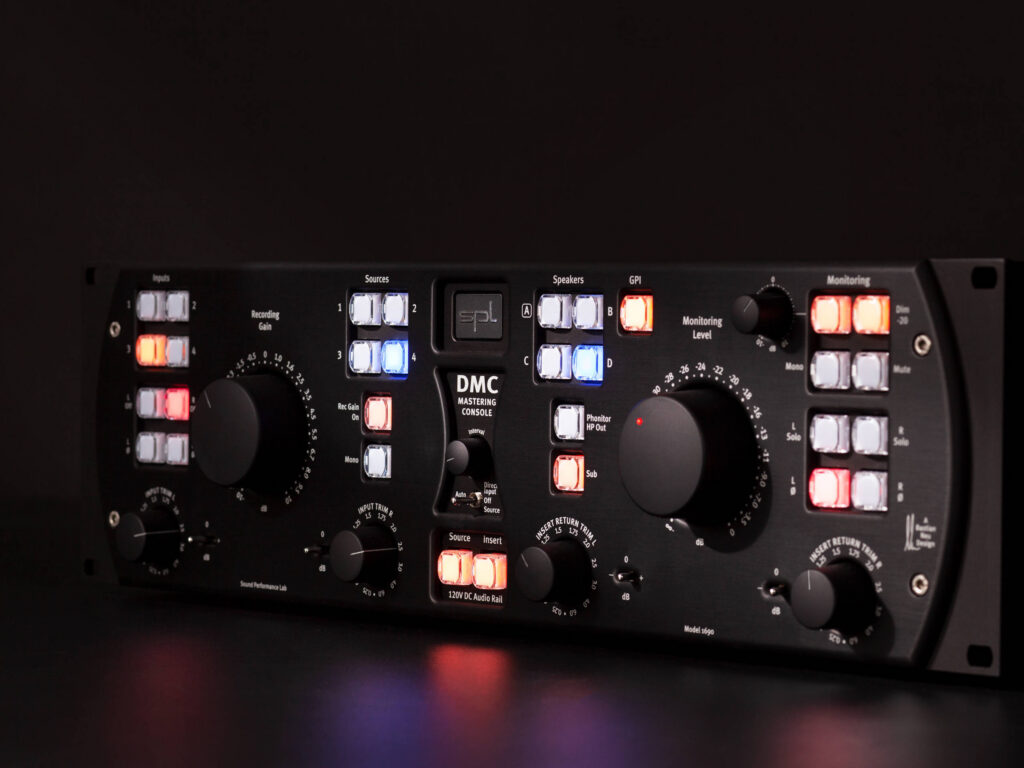
    SPL DMC (Dual Mastering Console)

    The SPL DMC is the most comprehensive integrated mastering console in active production. SPL’s 120V audio rail technology delivers exceptional headroom and a distinctive sonic signature. Pricing typically 35,000-55,000 USD depending on configuration.

    Strengths: integrated SPL ecosystem (DMC + PQ + Iron + Hermes works as a coherent system), 120V topology delivers measurable headroom, comprehensive monitoring matrix, wide deployment in European mastering rooms.

    Weaknesses: sonic character is German-engineered (clean with controlled enhancement) — engineers wanting more character may prefer Maselec or Crookwood. Smaller US footprint than competitors.

    Best for: new mastering rooms starting fresh with coherent SPL ecosystem, European mastering operations, engineers who specifically prefer the 120V sonic signature.

    Maselec MTC-1 / MTC-6

    The Maselec MTC is the UK boutique standard, in continuous production since the late 1980s under designer Leif Mases. Pricing 25,000-35,000 USD (MTC-1) or 45,000-65,000 USD (MTC-6).

    Strengths: distinctive Maselec sonic character (subtle but consistent presence in low-mids), proven major-label pedigree (Sterling Sound, Bernie Grundman, Gateway Mastering), 30+ year production track record, UK boutique craftsmanship.

    Weaknesses: smaller production runs mean longer lead times, less integrated ecosystem than SPL (typically used with separate outboard processing), MTC-1 has fewer insert points than competitors.

    Best for: mastering rooms wanting British boutique character with proven major-label heritage, engineers prioritizing sonic signature over feature count.

    Crookwood Mastering Console

    Crookwood takes a bespoke approach — every console is semi-custom built to specification for the particular room and engineer. Pricing 40,000-90,000 USD depending on configuration.

    Strengths: fully customizable to engineer workflow, exceptional component quality, proven flagship deployment (Abbey Road, Stardelta, Universal Music mastering rooms), 25+ year service support.

    Weaknesses: 6-12 month lead time for new builds, requires engineering consultation for specification (often involves UK travel), highest pricing in the dedicated mastering console category.

    Best for: flagship mastering rooms wanting bespoke build matched to specific room and workflow, operations with 20-25 year ownership horizon, engineers willing to invest in semi-custom design process.

    Dangerous Music Liaison and Master / Bax EQ

    Dangerous Music offers a more compact and less expensive approach — purpose-built mastering monitor controllers and signal flow utilities rather than a full mastering console. The Liaison (insertion point manager) and Master (monitor controller with summing) plus Bax EQ (mastering EQ) cover much of what a dedicated mastering console provides at significantly lower cost. Total system pricing typically 8,000-18,000 USD.

    Strengths: dramatically lower capital cost than dedicated mastering consoles, proven reliability, US-based manufacturer with good support, modular approach allows incremental upgrades.

    Weaknesses: less integrated than dedicated mastering consoles, requires more rack space and patching, less of a « flagship room » aesthetic for client-facing operations.

    Best for: smaller mastering operations, engineers transitioning from mixing to mastering, rooms with capital constraints, mobile mastering workflows.

    Tube-Tech and other component-based approaches

    Some mastering engineers build their mastering « console » as a chain of dedicated outboard processors connected through patchbays and a high-quality monitor controller, without a centralized console. This DIY-style approach allows complete customization of signal flow and is widely used in boutique mastering operations.

    Strengths: maximum flexibility, total customization, can scale incrementally, allows highly specific outboard selections (e.g., mastering-grade Manley, Maselec, Tube-Tech, Cranesong, Crookwood electronics chained together).

    Weaknesses: requires deep technical commitment, significant patchbay infrastructure, less coherent client-facing aesthetic.

    Best for: experienced mastering engineers with strong technical skills, engineers who specifically want non-standard signal paths, operations willing to invest in custom infrastructure.

    How to choose: decision framework

    For a flagship mastering room targeting major-label and high-budget independent clients:

    • First choice: Crookwood Mastering Console (bespoke, flagship aesthetic)
    • Second choice: SPL DMC + full SPL ecosystem (PQ, Iron, Hermes)
    • Third choice: Maselec MTC-6 + selected outboard

    For a high-end mastering room with constrained capital:

    • First choice: SPL DMC entry configuration (~35,000 USD)
    • Second choice: Maselec MTC-1 + outboard
    • Third choice: Dangerous Music ecosystem (Liaison + Master + Bax EQ)

    For a small mastering operation or transitioning mix engineer:

    • First choice: Dangerous Music Liaison + Master + outboard EQ/compression
    • Second choice: Hybrid approach with DAW-based mastering plus high-end monitor controller
    • Third choice: Used SPL DMC if available

    For mastering operations with immersive (Atmos) requirements:

    • Most dedicated stereo mastering consoles handle stereo only — for Atmos and immersive work, additional infrastructure is required (Avid MTRX, Trinnov MC processor, dedicated Atmos monitoring)
    • Some mastering consoles (Crookwood, custom builds) can be specified with Atmos integration

    For broader context on individual products, see SPL DMC mastering console guide and Maselec and Crookwood boutique mastering consoles guide.

    Operational considerations beyond the console

    A mastering room’s quality depends on more than just the console. Critical co-investments:

    Reference monitoring. ATC, PMC, Dynaudio, Genelec — flagship mastering monitoring runs 30,000-150,000 USD per pair, plus subwoofer, plus calibration. The monitoring matters as much as the console.

    Acoustic treatment. A mastering room needs to be the most acoustically refined space in the operation. Treatment, room geometry, and calibration typically run 30,000-100,000 USD.

    Outboard processing. Mastering EQs (Maselec MEA-2, SPL PQ, Pultec MEQ-5, Crookwood C2-EQ), compressors (Manley Variable Mu, SPL Iron, Crookwood C2-LIM), and clipping/limiting (specialized mastering peak limiters). Outboard rack typically 50,000-150,000 USD.

    Monitor controllers and routing. Even with an integrated mastering console, additional routing and switching infrastructure is often needed for client comparison, alternate master switching, and reference playback.

    For broader mastering room infrastructure context, see our vintage mixing console restoration guide for components, and our pro mixing console maintenance and care guide for long-term ownership.

    Where to buy

    New mastering consoles are available through specialist dealers:

    • Sweetwater (US) — handles SPL and some boutique mastering products
    • B&H Photo (US) — pro audio with mastering specialty
    • Thomann (EU) — strongest European pricing on SPL gear (German-built, natural EU channel)
    • Vintage King Audio (US) — dedicated mastering team handling SPL, Maselec, and boutique mastering products
    • Atlas Pro Audio (US) — specialist in mastering and high-end pro audio

    For Crookwood specifically, factory direct is essentially the only path. Maselec is sometimes available through Sweetwater and Vintage King but more often direct from the factory. Used mastering consoles rarely appear on the market — most installations stay in service for decades.

    Bottom line

    For mastering studios in 2026, the best mixing console depends on the specific operational tier and sonic philosophy:

    • Flagship boutique mastering room: Crookwood (bespoke) or Maselec MTC-6 (heritage)
    • High-end mastering operation: SPL DMC (integrated ecosystem) or Maselec MTC-1
    • Smaller mastering operation or budget-conscious: Dangerous Music ecosystem
    • Immersive/Atmos mastering requirement: Custom builds with dedicated immersive monitoring

    The mastering console is a 20-25 year investment. Choose based on long-term sonic philosophy and ownership commitment, not on short-term spec comparisons.

    For the broader context on professional mixing consoles, return to our professional mixing console 2026 expert guide.

  • Best mixing console for broadcast TV/radio 2026: pro buyer guide

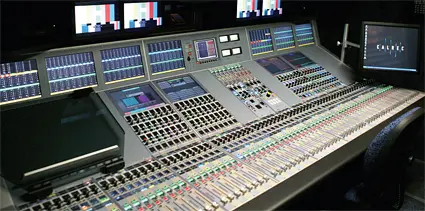
    The broadcast mixing console market in 2026 is dominated by four major players — Studer Vista, Lawo mc², Calrec, and SSL System T — plus credible alternatives from Avid (VENUE S6L for music broadcast) and Yamaha (Rivage PM and CL series). For broadcast facility planners specifying a new console in 2026, the choice involves not just sonic and operational considerations, but deep questions about IP infrastructure, redundancy architecture, regional service support, and engineer training continuity.
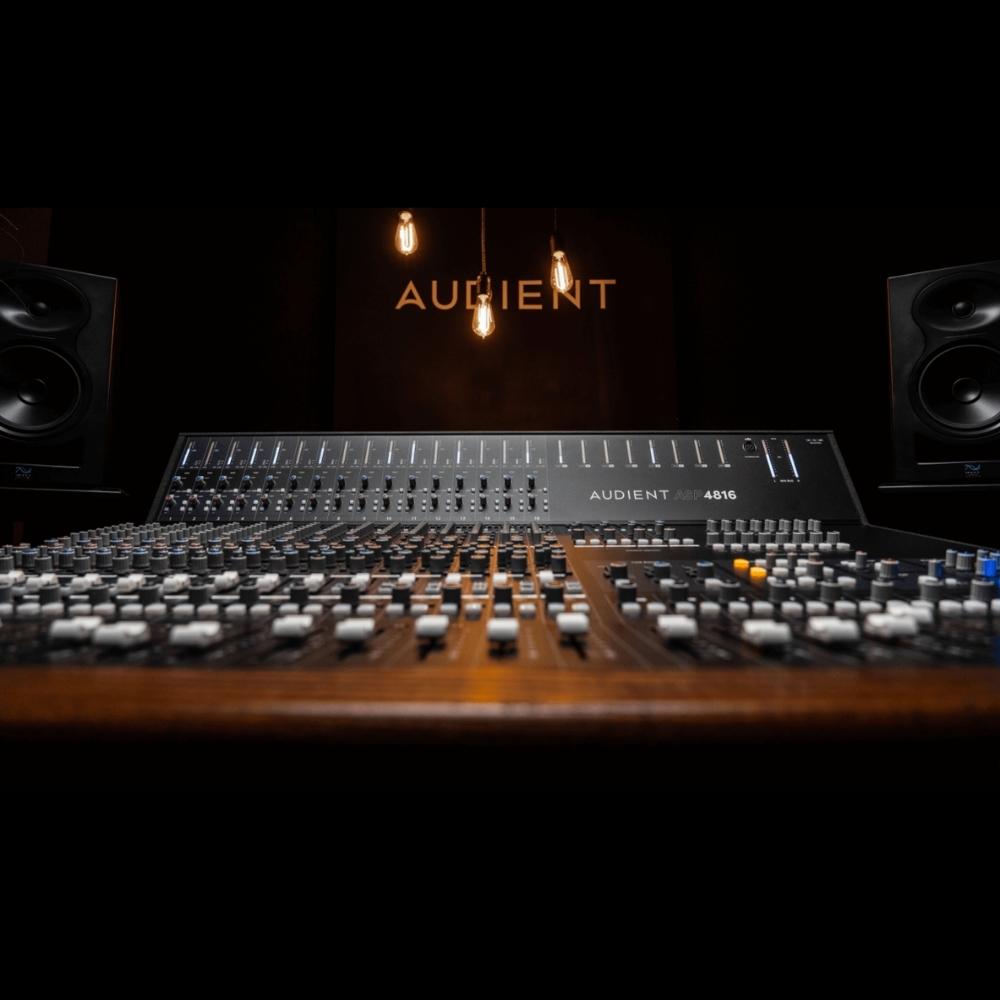
    This guide cuts through manufacturer marketing to give working broadcast engineers and facility planners a useful framework for choosing a broadcast mixing console — what to consider, what each major option delivers, and how to match the console to your specific broadcast operation.

    Buying framework: what defines a « best » broadcast console

    Several factors uniquely matter in broadcast that don’t apply to recording or live sound:

    1. IP infrastructure compatibility. SMPTE ST 2110, AES67, NMOS IS-04/IS-05 — modern broadcast facilities are transitioning to IP-native infrastructure. A console specified in 2026 should be IP-native or have a credible IP-transition path. Legacy MADI/SDI workflows still exist but are increasingly being phased out at the major broadcast tier.

    2. Redundancy architecture. Broadcast operations cannot tolerate audio dropouts. Console specifications must include redundant power, redundant DSP engines, automatic failover, and dual-redundant network paths.

    3. Service support cycle. Major broadcasters expect 15-25 year operational lifespan from a console. Specifications must include long-term parts availability, software update commitments, and regional service support.

    4. Operator workflow ergonomics. Live broadcast operations require fast, eyes-up operation under pressure. Touchscreen-only approaches are problematic; physical controls with consistent layouts matter enormously for skilled operator productivity.

    5. Snapshot recall reliability. Broadcast operations switch between programs, commercials, and live segments rapidly. The console’s snapshot system must be fast and recall-accurate.

    6. Multi-format routing. Modern broadcast handles stereo, 5.1, 7.1, immersive (Atmos, MPEG-H), and multiple language feeds simultaneously. The console must handle these formats without operational complexity. See multi-format routing for broadcast mixing consoles.

    7. Engineer training continuity. Major broadcasters have engineering staff trained on specific console families. Switching brands creates retraining cost and operational risk.

    The major options for broadcast in 2026

    Studer Vista series

    Studer Vista is the European public broadcast standard. Vista 1, 5, 9, X, and the IP-native Vista V cover the full range from regional radio to flagship TV production.

    Strengths: Vistonics interface (uniquely effective hybrid touchscreen-rotary control), 25+ year service support, deep European public broadcast incumbency (BBC, ARD, ZDF, RAI, France Télévisions), proven snapshot recall system.

    Weaknesses: less aggressive on IP-native architecture than Lawo (Vista V is IP-native but less mature than mc²), smaller US footprint than Calrec or Avid.

    Best for: European public broadcasters with installed Studer base, post-production houses, large OB trucks, institutional broadcast (university, government).

    Pricing: Vista 1 from 90,000 USD; Vista 5 at 180,000-280,000 USD; Vista 9 at 280,000-500,000+ USD; Vista X at 500,000-1,200,000+ USD.

    Lawo mc² series

    Lawo mc² is the IP-native broadcast flagship. mc² 36, 56, 96 cover the full range with Ravenna AES67 / SMPTE ST 2110 native networking.

    Strengths: most mature IP-native architecture in broadcast, deep integration with Lawo Nova73 router (audio + video + control on single fabric), strong incumbent position in German-speaking and Eastern European markets, scalable from regional broadcaster to flagship facility.

    Weaknesses: smaller historical install base than Studer or Calrec, requires retraining for engineers without Lawo background, learning curve for IP-native workflow.

    Best for: new broadcast facility builds with IP-native architecture as explicit requirement, ST 2110 transition projects, integrated audio/video facilities, remote production workflows.

    Pricing: mc² 36 at 90,000-180,000 USD; mc² 56 at 250,000-450,000 USD; mc² 96 at 600,000-1,500,000+ USD.

    Calrec Apollo, Summa, Brio, Argo

    Calrec is the UK broadcast standard and dominates major sports broadcast worldwide.

    Strengths: unmatched track record in major sports broadcast (NFL, Premier League, Olympics, World Cup), Hydra2 networking is widely regarded as the most reliable proprietary broadcast network, exceptional channel count scalability (up to 1,020 inputs), strong UK service support.

    Weaknesses: legacy Apollo and Summa are not IP-native (Argo is the IP-native flagship for new builds), proprietary Hydra2 network limits interoperability, primarily UK-centric service and training infrastructure.

    Best for: major sports broadcast (OB trucks for major events), UK broadcast facilities, large international broadcast with multi-feed requirements, applications where Hydra2 reliability is critical.

    Pricing: Brio at 50,000-80,000 USD; Summa at 200,000-400,000 USD; Apollo at 500,000-2,000,000 USD; Argo at 350,000+ USD.

    SSL System T

    SSL System T is SSL’s IP-native broadcast flagship, gaining traction at major broadcasters.

    Strengths: IP-native architecture from the ground up, Tempest processing engine, integration with Dante and ST 2110, growing deployment at major broadcasters (Sky Sports, BBC outside broadcast, NHK).

    Weaknesses: smaller install base than Studer/Lawo/Calrec, less mature ecosystem than competitors, fewer regional integrators globally.

    Best for: broadcasters wanting an IP-native alternative to Lawo, applications where SSL brand and engineering pedigree are valued, mid-tier broadcast facilities.

    Pricing: S300 from 90,000 USD; S500 at 200,000-400,000 USD; flagship configurations at 500,000+ USD.

    Avid VENUE S6L (broadcast applications)

    Avid VENUE S6L is widely deployed in US broadcast for music TV and live performance applications where Pro Tools integration matters.

    Strengths: Pro Tools integration class-leading (essential for broadcast music applications), AAX plugin parity with studio sessions, strong US broadcast incumbency (NFL Sunday TV, network late-night bands, award shows).

    Weaknesses: not designed for general broadcast routing (better for music broadcast specifically), less robust multi-format routing than dedicated broadcast specialists.

    Best for: broadcast music applications (TV bands, award shows, NFL halftime), Broadway and theatrical live broadcast, hybrid live-and-recording applications.

    Pricing: S6L-32D system at 150,000-220,000 USD typical.

    Yamaha Rivage PM and CL series

    Yamaha Rivage PM10/PM7 and CL5 are widely deployed in broadcast, particularly in Asian markets and for mid-tier broadcast applications.

    Strengths: mature Dante networking (interoperable with most other manufacturers), strong reliability track record, competitive pricing, broad parts availability, deep Asian market presence.

    Weaknesses: less IP-native than Lawo, less specialized for broadcast than dedicated broadcast specialists.

    Best for: Asian broadcasters, mid-tier broadcast facilities, broadcast operations with Dante-centric infrastructure, budget-conscious flagship broadcast builds.

    Pricing: Rivage PM7 at 110,000-165,000 USD; CL5 at 28,000-65,000 USD (full system).

    How to choose: decision framework

    For a flagship European public broadcaster:

    • First choice: Studer Vista X or Vista 9 (incumbent, long-term support)
    • Second choice: Lawo mc² 56 or 96 (IP-native if new build)
    • Third choice: Calrec Apollo (if UK-affiliated or major sports requirements)

    For a major US broadcaster (network TV music or sports):

    • First choice (sports): Calrec Apollo Plus (NFL/NBA-tier sports broadcast)
    • First choice (music TV): Avid VENUE S6L (Pro Tools integration)
    • Second choice: Lawo mc² 56 (for new IP-native broadcast facilities)

    For a new IP-native broadcast facility build:

    • First choice: Lawo mc² 56 or 96 (most mature IP-native architecture)
    • Second choice: Calrec Argo (Calrec’s IP-native flagship for new builds)
    • Third choice: SSL System T (IP-native alternative)

    For a major sports broadcast OB truck:

    • First choice: Calrec Apollo Plus (the proven sports broadcast flagship)
    • Second choice: Lawo mc² 96 (for IP-native sports broadcast operations)
    • Third choice: Studer Vista X (for broadcasters with installed Studer base)

    For a mid-tier broadcast facility:

    • First choice: Lawo mc² 36 (IP-native, future-proof)
    • Second choice: Calrec Summa (proven mid-flagship)
    • Third choice: Yamaha Rivage PM7 (cost-effective with Dante)

    For a regional radio or smaller TV studio:

    • First choice: Studer Vista 1 or Calrec Brio (entry into specialist broadcast brands)
    • Second choice: Yamaha CL5 (broad capability at competitive pricing)
    • Third choice: Lawo mc² 36 in compact configuration

    For application-specific guidance, see broadcast TV/radio mixing console setup guide.

    Where to buy

    Broadcast consoles are typically sold through factory direct (manufacturer regional offices) or authorized broadcast integrators rather than through general pro audio retail. Sweetwater (US) and Thomann (EU) carry smaller broadcast configurations (Brio, Vista 1, mc² 36 compact). Major installations go through:

    • Studer/Evertz factory teams
    • Lawo regional offices (Lawo USA, Lawo Asia, Lawo AG Germany)
    • Calrec North America for US/Canadian installations
    • SSL Live specialists for System T
    • Avid Pro Solutions specialists for S6L broadcast installations

    Regional broadcast integrators (Soundvision, Storyline in Europe; AVI-SPL, Diversified, GRA in US) handle major facility builds with custom integration.

    Bottom line

    For broadcast TV/radio facilities in 2026, the best mixing console depends on operational tier, regional context, and infrastructure strategy:

    • European public broadcast (incumbent base): Studer Vista X/9
    • New IP-native broadcast facility: Lawo mc² 56/96
    • Major sports broadcast: Calrec Apollo Plus
    • US broadcast music TV: Avid VENUE S6L
    • Mid-tier broadcast or Asian market: Yamaha Rivage PM7

    The broadcast console is a 15-25 year capital investment with major operational implications. Choose based on infrastructure strategy and engineer training continuity, not on short-term spec comparisons.

    For the broader context on professional mixing consoles, return to our professional mixing console 2026 expert guide.

  • Best digital mixing console for arena tour 2026: pro buyer guide

    For arena and major festival touring in 2026, the digital mixing console market is dominated by four flagship choices: DiGiCo Quantum 7, Avid VENUE S6L, Yamaha Rivage PM10, and Midas Pro X. Each has distinct strengths, distinct market positioning, and distinct operational characteristics. For touring engineers and production companies specifying a flagship FOH or monitor console in 2026, the choice has long-term implications — show files don’t transfer between brands without significant rebuild work, engineer training is brand-specific, and rental house compatibility matters when the touring operation needs backup or replacement consoles in remote markets.
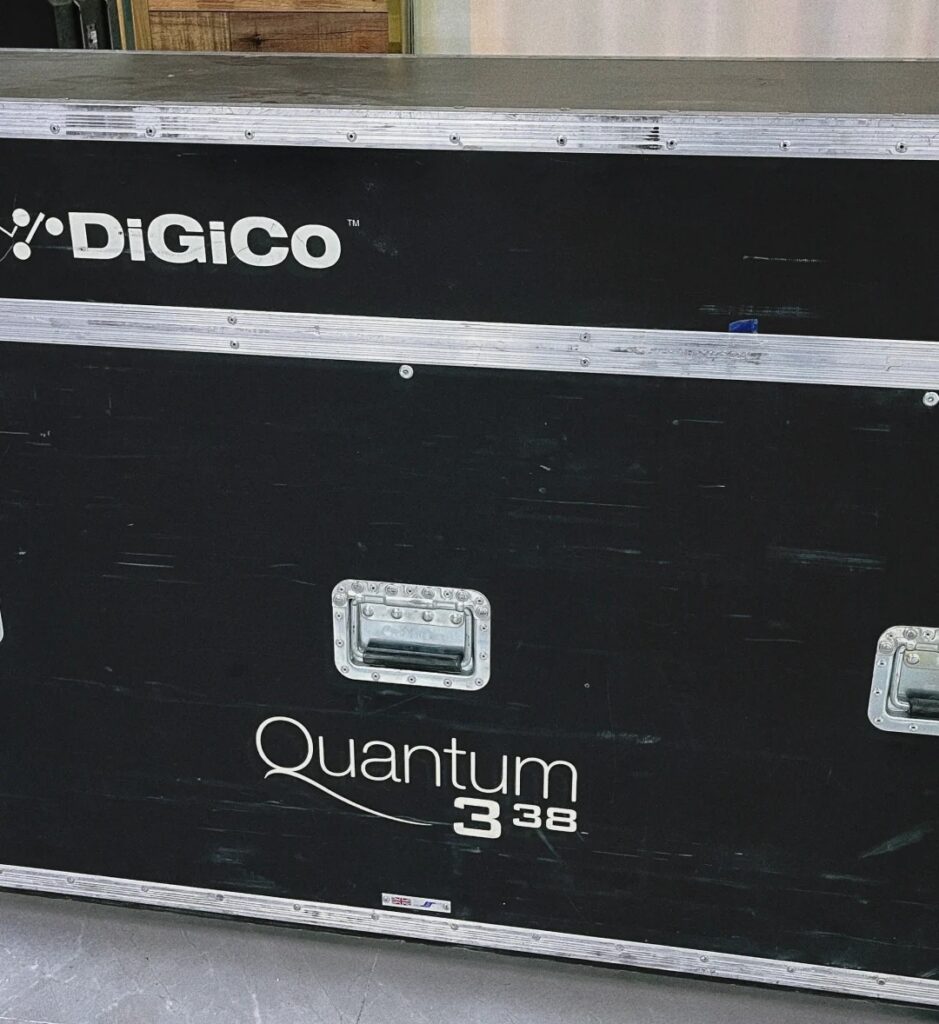
    This guide focuses on flagship-tier digital consoles for arena and major festival touring — the 75,000-200,000 USD range. For smaller touring applications and theater, see lower-tier configurations (DiGiCo Quantum 5 or 338, S6L-24, CL5, Pro 2). For broadcast see best mixing console for broadcast 2026.

    Buying framework: what defines a « best » arena touring console

    Several factors uniquely matter in arena touring that don’t apply to recording or installed broadcast applications:

    1. Channel count headroom for festival stages. Arena tours with full production typically need 80-128 input channels. Festival main stages often run 150+ inputs across multiple acts. Console processing capacity must comfortably handle festival headlining requirements without compromising plugin/processing depth.

    2. Network audio reliability and reach. Arena and stadium environments require 100+ meter cable runs from FOH to stage, redundant network paths, and bulletproof reliability under high-load conditions. Optocore (DiGiCo), proprietary Avid network, TWINLANe (Yamaha), and AES50 (Midas) all serve these needs, but with different operational characteristics.

    3. Monitor mixing capability. Modern touring frequently uses the same console family for FOH and monitors, with shared show files between positions. Console must offer monitor-specific feature depth (deep aux send routing, extensive in-ear management, fast monitor send-on-fader operation).

    4. Snapshot recall for festival changeover. Festival main stage operation requires changing between bands every 15-30 minutes, with complete show file recall between acts. Snapshot system must be fast and recall-accurate.

    5. Rental house ecosystem compatibility. When the touring operation arrives in a remote market and needs a backup console from a local rental house, having a brand with mature rental house presence is operationally critical.

    6. Engineer training continuity. Most professional touring engineers have deep specialization in one or two console brands. Switching brands creates retraining cost and increases operational risk on a tour where mistakes have visible consequences.

    For broader live sound infrastructure context, see arena/festival live sound mixing console setup walkthrough.

    The major flagship options for arena touring in 2026

    DiGiCo Quantum 7

    The dominant flagship for major arena and festival touring. DiGiCo Quantum 7 is specified on a substantial majority of major arena tours where the touring engineer has discretion.

    Strengths: Stealth Core 2 processing engine (lowest end-to-end latency at the flagship tier, highest channel count headroom with full processing), mature Optocore networking with 1+1 fiber redundancy, comprehensive Mustard processing modules for channel character, deepest rental house ecosystem worldwide.

    Weaknesses: steeper learning curve than some competitors, higher capital cost than Midas, less Pro Tools integration than Avid for hybrid live/recording applications.

    Best for: major arena tours, festival main stages, touring monitor positions, applications where Optocore reliability and Stealth Core 2 processing depth are decisive.

    Pricing: Quantum 7 system (surface + 2x SD-Rack + Optocore + redundant power) typically 110,000-180,000 USD.

    Avid VENUE S6L

    The flagship for Pro Tools-integrated touring applications. Avid VENUE S6L-32D is specified for tours where multitrack recording, plugin parity with studio sessions, or theatrical-style production matters.

    Strengths: Pro Tools integration is class-leading (essential for tours that record every show or use studio plugin chains live), AAX plugin processing on the engine with parity to studio sessions, strong incumbent position in broadcast music TV (which influences touring artist preferences), excellent virtual soundcheck capability.

    Weaknesses: lower channel count flexibility than DiGiCo Quantum 7, less mature rental house ecosystem outside North America, slightly higher latency than DiGiCo (1-1.5 ms vs 0.7 ms typical).

    Best for: tours that record every show for live album/streaming use, theatrical touring productions, hybrid live-and-recording applications, tours with broadcast TV component.

    Pricing: S6L-32D system (surface + E6L-192 engine + 2x Stage 64 + redundant power) typically 150,000-220,000 USD.

    Yamaha Rivage PM10

    The flagship for Asian markets and broadcast-touring crossover applications. Yamaha Rivage PM10 offers the highest channel count of the major flagships and excellent monitor capability.

    Strengths: highest channel count at the flagship tier (144 channels at 96 kHz), comprehensive VCM processing library for vintage character emulation, mature TWINLANe and Dante networking, excellent monitor-specific feature depth, strong reliability track record.

    Weaknesses: larger surface footprint than competitors, smaller rental house ecosystem outside Asia, higher capital cost for full Rivage system than DiGiCo or Midas equivalents.

    Best for: Asian touring (Yamaha is dominant), tours with high channel count requirements, monitor positions where Rivage’s monitor feature depth is operationally valuable, broadcast-touring crossover applications.

    Pricing: Rivage PM10 system (CS-R10 surface + DSP-RX engine + 2x Rio3224-D2) typically 180,000-280,000 USD.

    Midas Pro X

    The flagship for tours wanting analog character at flagship-tier capability. Midas Pro X offers Heritage 3000 processing engine character at competitive pricing.

    Strengths: built-in analog character (Heritage 3000 engine emulates legacy XL series sonics), substantially lower capital cost than DiGiCo/Avid/Yamaha equivalents, mature DL-series stage I/O, AES50 networking proven on major tours.

    Weaknesses: smaller rental house ecosystem than DiGiCo, less channel count headroom than Yamaha PM10 or DiGiCo Quantum 7, AES50 less interoperable than Dante for non-Music Tribe gear.

    Best for: heritage rock and country touring, tours wanting analog character as default sound, budget-conscious flagship touring builds, Music Tribe ecosystem integration (Midas + Behringer + Klark Teknik + Lake).

    Pricing: Pro X system (Pro X surface + 2x DL231 stage I/O + AES50 network) typically 65,000-100,000 USD.

    For head-to-head context, see DiGiCo vs Avid VENUE comparison and Yamaha vs Midas Pro flagship live comparison.

    How to choose: decision framework

    For a major arena tour with experienced FOH engineer:

    • First choice: DiGiCo Quantum 7 (default flagship, broad rental house compatibility)
    • Second choice: Avid VENUE S6L (if Pro Tools integration matters)
    • Third choice: Yamaha Rivage PM10 (if Asian touring or high channel count required)

    For a heritage rock or country touring act:

    • First choice: Midas Pro X (Heritage character matches genre aesthetic)
    • Second choice: DiGiCo Quantum 7 with Mustard processing (clean default + opt-in character)
    • Third choice: Yamaha Rivage PM7 with VCM (clean default + opt-in vintage)

    For a touring act that records every show:

    • First choice: Avid VENUE S6L (Pro Tools integration class-leading)
    • Second choice: DiGiCo Quantum 7 with MADI-to-Pro-Tools rig (more complex but higher channel count)
    • Third choice: Yamaha Rivage PM10 with Dante-to-recording (good integration)

    For a touring monitor position:

    • First choice: DiGiCo Quantum 7 (deepest monitor feature set)
    • Second choice: Yamaha Rivage PM10 (monitor capability class-leading)
    • Third choice: Avid VENUE S6L (good for monitor with Pro Tools integration)

    For a festival main stage rental flagship:

    • First choice: DiGiCo Quantum 7 (broadest engineer training base, deepest rental fleet)
    • Second choice: Avid VENUE S6L (specifically requested by some artists)
    • Third choice: Yamaha Rivage PM10 (if Asian or hybrid broadcast requirements)

    For a budget-conscious flagship arena tour:

    • First choice: Midas Pro X (60-70% of competitor pricing for comparable capability)
    • Second choice: Yamaha Rivage PM7 (smaller flagship at lower cost than PM10)
    • Third choice: DiGiCo Quantum 5 (Quantum capability at lower cost than Quantum 7)

    For complete touring infrastructure context, see arena/festival live sound setup walkthrough.

    Where to buy

    Touring flagship consoles are typically purchased through:

    • Sweetwater (US) — comprehensive pro audio inventory with touring-specific support
    • B&H Photo (US) — broadcast and live sound specialist
    • Thomann (EU) — competitive European pricing on all major flagships
    • Vintage King Audio (US) — pro audio with strong live sound team
    • Group One Limited (US) — DiGiCo’s primary US distributor
    • Avid Pro Solutions specialists for S6L touring installations

    Many touring companies acquire consoles through their primary rental house relationships rather than direct purchase — Clair Global, PRG, Eighth Day Sound, and similar companies maintain large console inventories and provide ongoing engineer support across tours.

    Bottom line

    For arena and major festival touring in 2026, the best digital mixing console depends on operational tier, genre context, and engineer training:

    • Major arena tour, default specification: DiGiCo Quantum 7
    • Pro Tools-integrated or theatrical touring: Avid VENUE S6L
    • Asian markets or high channel count: Yamaha Rivage PM10
    • Heritage rock/country or budget-conscious flagship: Midas Pro X
    • Touring monitor position: DiGiCo Quantum 7 or Yamaha Rivage PM10

    The flagship touring console is a 5-10 year capital investment with major operational implications. Choose based on engineer training, rental house compatibility in target markets, and genre-fit sonic philosophy.

    For the broader context on professional mixing consoles, return to our professional mixing console 2026 expert guide.

  • Best analog mixing console under 30,000 USD 2026: pro buyer guide

    For commercial recording studios and high-end producer-engineer rooms targeting analog sound character without flagship-tier capital investment, the under-30,000 USD analog console market in 2026 offers credible options that would have been impossible at this price point a decade ago. Modern boutique manufacturers have brought British analog console design — discrete amplifier topology, transformer coupling, in-line monitoring — into accessible price tiers. While these consoles don’t replace flagship SSL Origin, Neve Genesys, or API 1608-II frames, they deliver meaningful analog character at roughly one-third the capital investment.

    This guide focuses on dedicated analog consoles under 30,000 USD for serious commercial recording applications. For under-2,000 USD project mixers and mid-tier digital alternatives, other resources will serve better.

    What « under 30,000 USD » actually means in pro audio

    At this price tier, expectations need calibration:

    What you get: Genuine analog signal path with discrete amplifier topology, transformer coupling on key components, character-driven sonic signature, professional-grade build quality, 16-32 channel count typical, basic monitoring matrix, modest automation or manual operation.

    What you don’t get: SSL/Neve/API flagship sonic character (those consoles are 80,000+ USD for a reason), comprehensive automation systems, integrated bus compression at the SSL Quad level, deep DAW integration with motorized faders, large-format frame size with full surround monitoring.

    Who this market serves: High-end producer-engineer rooms doing primarily ITB workflow with analog summing through the console, boutique commercial studios competing on character at constrained budget, smaller commercial rooms targeting independent and mid-budget production, project studios stepping up to genuine analog signal path.

    For broader analog vs flagship context, see best high-end mixing console for pro studio 2026.

    The major options under 30,000 USD

    Trident 88

    The Trident 88 is the modern reissue of the legacy Trident A-Range topology in a 16-channel in-line frame. Manufactured by PMI Audio Group, the Trident 88 uses transformer-coupled inputs and outputs, the legacy Trident EQ topology, and discrete amplifier circuitry. Pricing typically 20,000-28,000 USD for the 16-channel frame.

    Strengths: genuine Trident A-Range sonic character (musical EQ, transformer warmth), professional build quality, solid construction, broad channel count flexibility (24-channel and 32-channel configurations available at higher price points).

    Weaknesses: in-line topology means smaller frame than equivalent split-style consoles, automation is basic, DAW integration is functional but not sophisticated.

    Best for: boutique commercial studios wanting Trident-character analog signal path, producer-engineer rooms with hybrid workflow, studios targeting acoustic/jazz/singer-songwriter material where Trident-style EQ excels.

    Toft Audio ATB-32 and ATB-24

    The Toft ATB series was designed by Malcolm Toft (former Trident engineer) and manufactured by PMI Audio. The ATB-32 (32 channels) and ATB-24 (24 channels) use British console topology with transformer-coupled inputs and Trident-influenced EQ. Pricing typically 20,000-28,000 USD for ATB-32.

    Strengths: British analog character at very competitive pricing, 32-channel count provides reasonable headroom for full-band tracking, designed by an experienced flagship console designer.

    Weaknesses: build quality is good but not at flagship level (component selection and chassis construction are competitive but not flagship-tier), used market for Toft consoles is thin.

    Best for: commercial studios stepping up from project-tier mixers, boutique rooms wanting British character at minimal capital investment, rooms doing primarily summing-and-tracking with DAW-centric workflow.

    BAE 1073-style consoles and discrete frames

    BAE Audio (Brent Averill Enterprises) manufactures small-format analog consoles using genuine 1073-style channel strips. Frame sizes range from 8 to 16 channels with API-style or Neve-style discrete topology. Pricing varies significantly by configuration; 16-channel BAE-format frames can run 25,000-35,000 USD.

    Strengths: authentic 1073-style or API-style channel strip character (BAE is known for component-level fidelity to legacy designs), modular configuration allows highly specific channel strip selection, reputation for build quality.

    Weaknesses: smaller channel counts than competitor offerings, configuration complexity (many module choices), pricing approaches the upper limit of the under-30K bracket.

    Best for: boutique rooms wanting flagship-character channel strips at modest channel count, producer-engineer rooms with hybrid workflow, studios specializing in tracking with rich front-end character.

    Rupert Neve Designs 5088 (entry configurations)

    The Rupert Neve Designs 5088 at smaller channel counts (16 channels) approaches the upper limit of under-30K pricing. While larger 5088 configurations (32 channels) push into the 60,000-90,000 USD range, smaller 16-channel frames can be specified at 25,000-35,000 USD.

    Strengths: Rupert Neve’s later boutique design with custom transformers, distinctive sonic signature different from AMS Neve heritage, pristine build quality, factory direct from a major manufacturer.

    Weaknesses: 16-channel count is restrictive for full-band tracking, sonic character is « Rupert Neve later » not « vintage Neve » (different aesthetic — engineers should listen carefully before committing).

    Best for: producer-engineer rooms wanting Rupert Neve sonic signature at modest channel count, hybrid workflow with primarily summing operation, boutique rooms with character-focused production.

    Used vintage frames

    The under-30,000 USD market includes used vintage frames at smaller scale:

    • Smaller vintage Neve frames (24-32 channel 8014, BCM10) occasionally appear at this price tier
    • Used SSL 4000B at smaller channel counts (24-channel frames in unrestored condition)
    • Used Trident A-Range at smaller scale
    • MCI JH-600 at 16-24 channels

    These vintage options deliver flagship-tier sonic character but require significant ongoing maintenance investment. For comprehensive context, see vintage mixing console restoration guide.

    SSL ORIGIN16/32 and summing-only approaches

    For studios doing primarily ITB workflow with analog summing, the SSL ORIGIN16/32 (6,500-12,000 USD) provides analog summing without full console signal path. This is a fundamentally different proposition than a full analog console — no channel processing, just summing — but it delivers genuine SSL summing character at a fraction of full console pricing.

    Other summing-only options include the Dangerous Music 2-Bus+ (~3,500 USD), Roll Music Folcrom passive summing (~1,500 USD), Rupert Neve Designs 5057 Orbit summing mixer (~3,000 USD), and various boutique alternatives.

    For studios where ITB workflow is the primary operational pattern, summing-only approaches plus high-quality outboard preamps can deliver flagship-tier results at sub-15K total investment.

    How to choose: decision framework

    For a boutique commercial studio targeting acoustic/jazz/singer-songwriter:

    • First choice: Trident 88 24-channel (Trident character is class-leading for acoustic/vocal material)
    • Second choice: Used vintage Neve BCM10 or smaller 80-series frame (if maintenance commitment available)
    • Third choice: BAE 1073-style 16-channel frame (flagship-character channel strips at modest count)

    For a producer-engineer room doing modern hybrid workflow:

    • First choice: SSL ORIGIN32 + outboard preamp rack (clean SSL summing + curated front-end)
    • Second choice: Rupert Neve Designs 5088 16-channel (Rupert Neve character at modest scale)
    • Third choice: Toft ATB-32 (British character, full channel count, sub-30K)

    For a commercial studio targeting rock/aggressive production:

    • First choice: BAE 1073-style frame with API-style modules where available
    • Second choice: Used vintage smaller-format Neve or Trident
    • Third choice: Toft ATB-32 with selective outboard EQ/dynamics

    For a studio stepping up from project tier:

    • First choice: Toft ATB-32 (most accessible entry into genuine British analog)
    • Second choice: Trident 88 16-channel (smaller frame, flagship character)
    • Third choice: Used vintage frame (if technical staff available)

    For application context, see flagship recording studio setup walkthrough — much of which applies in scaled-down form to boutique-tier rooms.

    What to expect at this price tier

    Realistic expectations matter:

    1. Channel count limitations. 16-32 channels is the maximum at this tier. Full-band tracking with 50+ inputs requires creative routing, splitting, or hybrid console+DAW approaches.

    2. Modest automation. Full Total Recall, motorized faders, and deep DAW integration are flagship-tier features. Sub-30K consoles typically have basic mute and fader recall, with manual operation for most parameters.

    3. Limited surround monitoring. Comprehensive 5.1/7.1/Atmos monitoring requires flagship-tier center sections. Boutique consoles typically support stereo monitoring only.

    4. Maintenance still matters. Even modern boutique analog consoles need annual cleaning, periodic capacitor replacement (typically every 20-25 years), and fader maintenance. Budget 2,000-5,000 USD annually for active operation.

    5. Sonic difference vs flagship is real. A flagship SSL Origin or Neve Genesys is not in the same category as a Toft ATB-32. The flagship consoles deliver more character, more refinement, more headroom, more reliability — and cost 3-5x more. The under-30K market is a starting point for analog character, not a flagship replacement.

    For long-term ownership context, see pro mixing console maintenance and care guide.

    Where to buy

    Under-30K analog consoles are available through:

    • Sweetwater (US) — handles Trident, Toft, BAE, and most boutique manufacturers
    • B&H Photo (US) — pro audio specialty with selected boutique offerings
    • Thomann (EU) — competitive European pricing
    • Vintage King Audio (US) — boutique focus, including used vintage frames at smaller scale
    • Reverb.com — used market for both modern boutique and vintage frames

    For BAE and Rupert Neve Designs, factory direct or through specialist dealers (Atlas Pro Audio, Mercenary Audio) is often the best path.

    Bottom line

    For commercial recording operations under 30,000 USD console budget in 2026, credible options exist that didn’t a decade ago. Trident 88 and Toft ATB-32 deliver British analog character; BAE delivers flagship-style channel strips at modest count; Rupert Neve Designs 5088 entry configurations deliver Rupert Neve sonic signature; SSL ORIGIN32 delivers SSL summing for hybrid workflows. None replace flagship consoles — but at one-third the capital cost, they bring meaningful analog character to studios that couldn’t otherwise afford it.

    For the broader context on professional mixing consoles, return to our professional mixing console 2026 expert guide.